

Chef's Knives
Kitchen Knife Supply: Sourcing a Wholesale Line That Sells
Jul
Kitchen Knife Supply: How to Source a Line That Actually Sells
Anyone can find a factory that makes knives. Finding a kitchen knife supply partner who ships the same knife on the third reorder as the one you fell in love with in the sample box — that’s the trick.
Get it wrong and you’re the proud owner of a pallet of knives nobody wants, slowly becoming furniture in your stockroom. Get it right and reorders basically place themselves. Here’s how to land on the right side of that line.
Cheap-per-unit is a trap
Unit price is the shiny lure. The hook underneath is everything that happens after the quote.
Real supply means the knife you approved is the knife that keeps showing up. That comes down to four things: steel and heat treat that don’t wander batch to batch, a finish that survives a rough shipping journey without looking like a different product, lead times you can actually plan a season around, and a minimum order that lets you dip a toe in before you commit to a shipping container.
Nail those four and the price makes sense. Miss one and that bargain unit cost turns into a very expensive lesson.
Start with the steel, not the sales pitch
Every knife decision starts at the blade, because steel quietly decides everything your customers will love or return — sharpness, edge life, how easily it sharpens, whether it rusts if someone looks at it wrong.
Meet AUS-10, a useful benchmark. It’s a high-carbon Japanese stainless with chromium, molybdenum, and vanadium in the mix: takes a wicked edge, holds it, and won’t throw a tantrum like reactive carbon steels that need drying the second they’re washed. Run as a single layer — plain monosteel, no laminated core drama — it sharpens clean and behaves the same on unit one and unit ten thousand. Boring? For a supplier, boring is the dream. Boring is what makes your reorders show up predictable and calm.
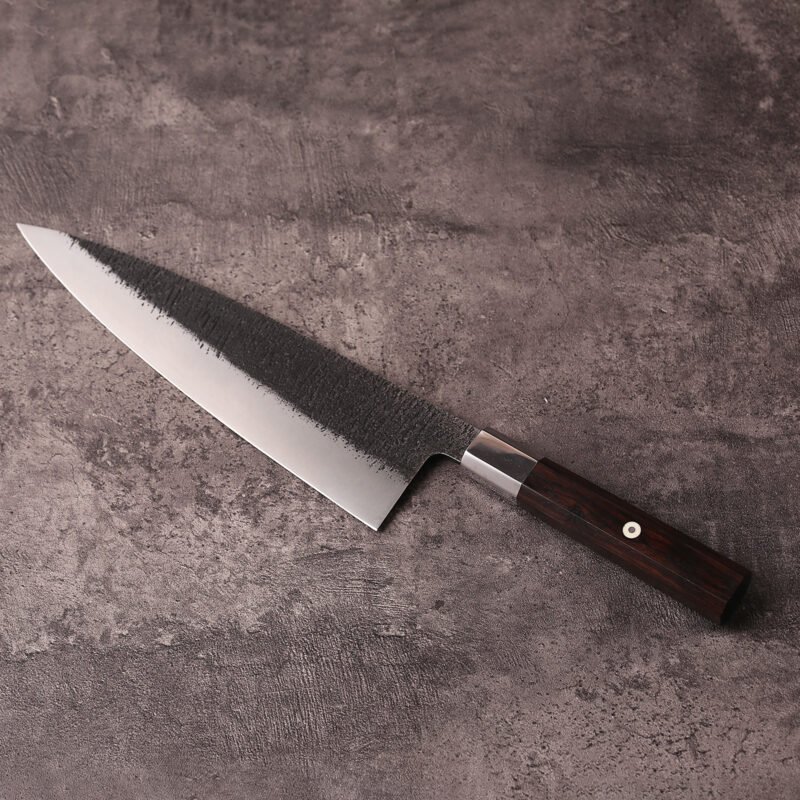
Then there’s the look. A kurouchi blade — that rugged black forge texture up top melting into a bright, hand-finished bevel — isn’t just for the photos. It hides patina, helps food slide off, and frankly makes the knife look like it costs more than it does. Run that same finish across a whole family of knives and a retailer suddenly has a matching set that merchandises itself.
Stock a line, not a junk drawer
Here’s the classic blunder: buying a bunch of unrelated knives and calling it a range. That’s not a range. That’s a junk drawer with a price list.
A real line covers different jobs and different budgets while telling one visual story — so a shopper sees a family, and you can nudge them up from the starter knife to the showpiece. Three profiles show how tight and coherent should look — same AUS-10 steel, same kurouchi finish, three completely different personalities:
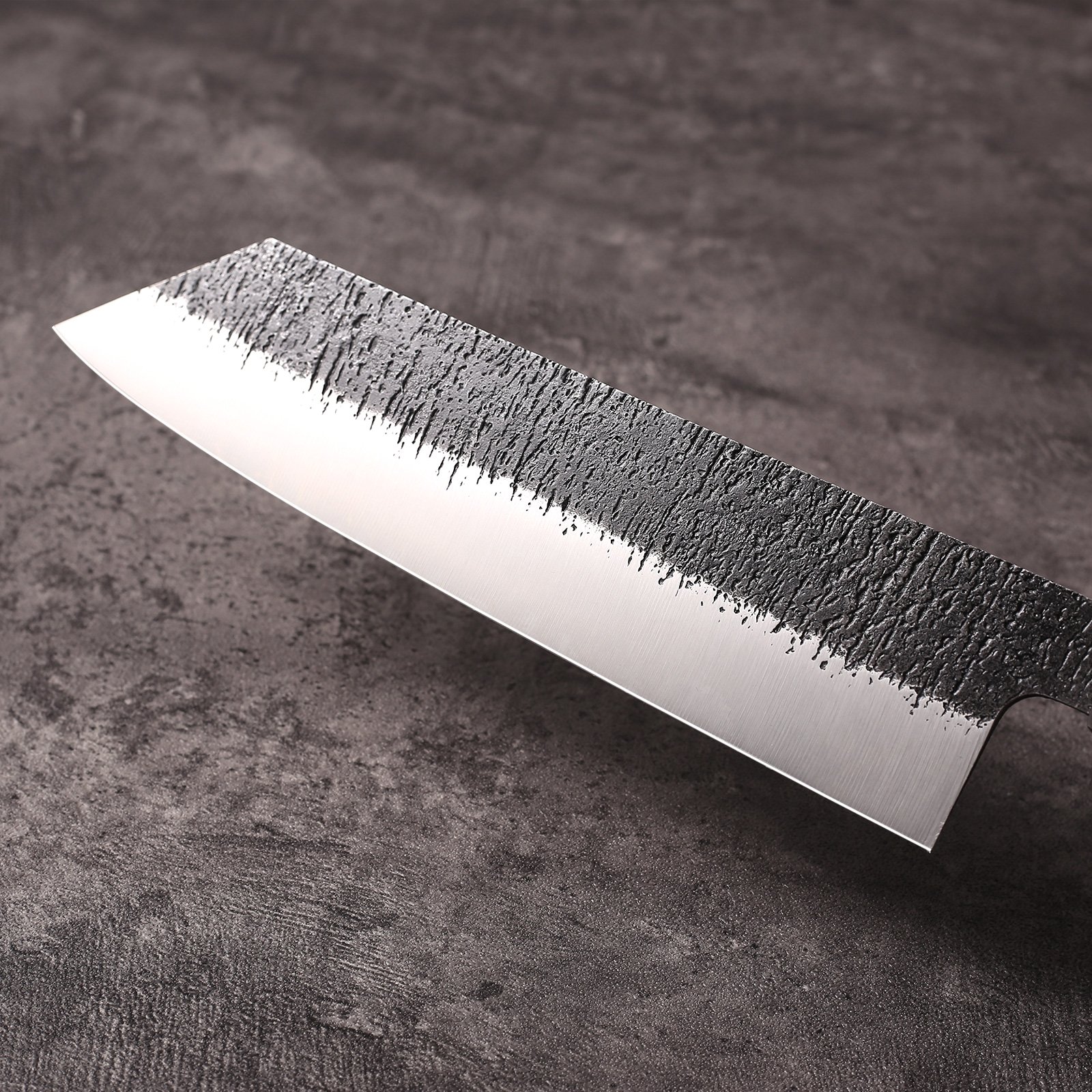
The AUS-10 Kiritsuke is the show-off — in the best way. Long flat edge, sharp angled reverse-tanto tip, built for precision and control. It’s the knife that whispers “I know what I’m doing” and quietly carries your best margin. Every lineup needs a hero, and this is it.
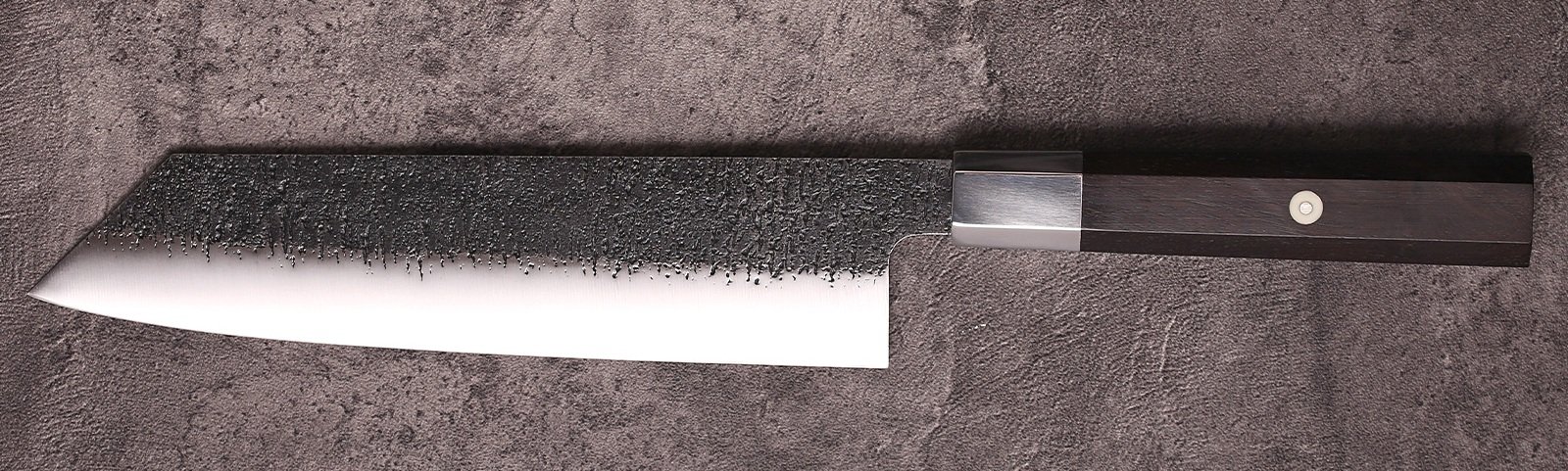
The 210mm AUS-10 Gyuto is the one that pays the bills. Curved belly that rocks, slices, and chops through a whole dinner’s prep, nimble enough for a cramped home kitchen or a tight line. It’s the crowd-pleaser everybody buys first and nobody regrets — your volume seller, full stop.
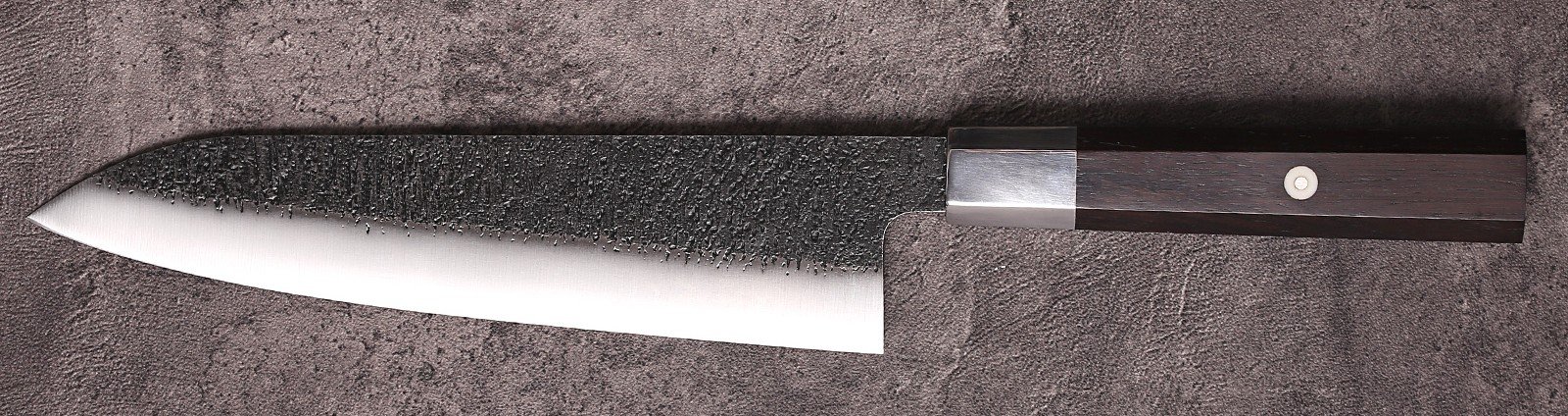
The 240mm AUS-10 Chef Knife is the gyuto that hit the gym. Same trusted shape, more blade, more reach — big cuts, fast prep, exactly what a busy restaurant line or a confident home cook wants when 210mm starts feeling short.
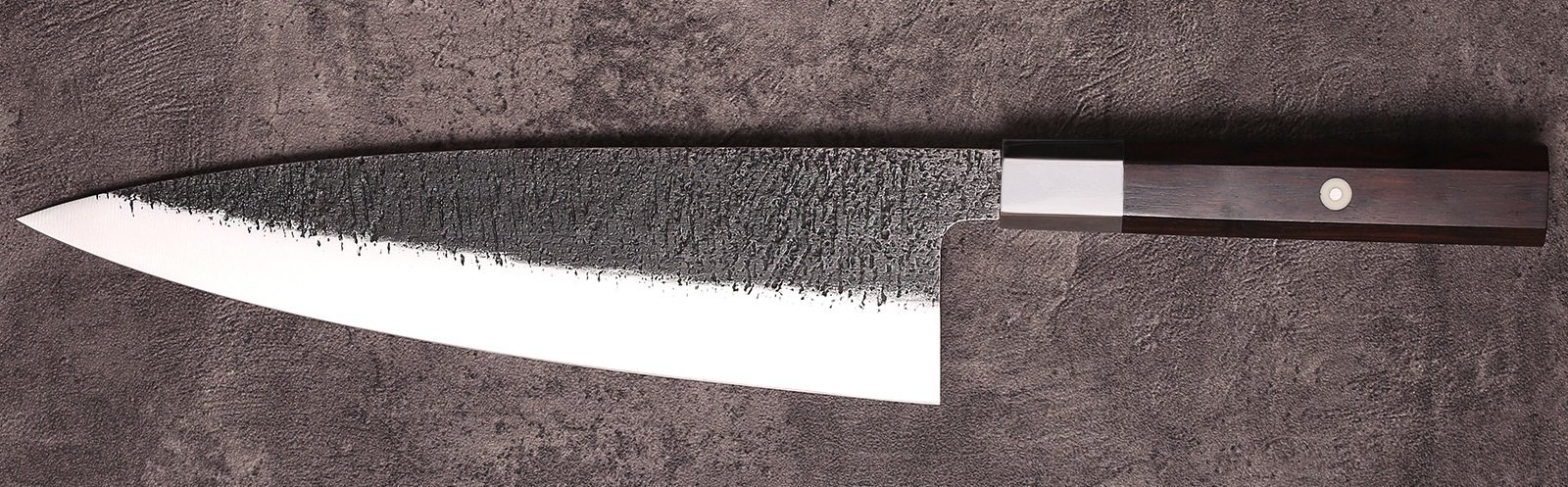
One steel story, three price points, one shelf that looks like it was planned by someone with taste. That sells across your whole customer base instead of to one corner of it — and it’s a lot easier to reorder than three orphan knives from three different factories.
Supply that grows up with you
The best supply relationships don’t stay still. Start with finished knives to test the water. Move to bare blanks if you finish in-house. Then, once a line proves it can sell, put your own name on it — your logo, your handle spec, your packaging. Low MOQs let you prove the idea before you bet big; steady heat treat and factory-direct pricing keep your margin healthy the whole climb.
That’s the line between a vendor and a partner. One sells you knives. The other helps you build something with your name on it.
So, where to start
Sourcing a kitchen knife line that sells isn’t complicated, it’s just disciplined: lead with the steel, demand batch consistency, build a coordinated range instead of a junk drawer, and pick a partner who can walk you from sample to private label without you ever switching suppliers.
Easiest first move? Grab a matched trio and order samples: the AUS-10 Kiritsuke, the 210mm AUS-10 Gyuto, and the 240mm AUS-10 Chef Knife. Hold them, cut with them, then decide what carries your brand.
