

Chef's Knives
9-Inch vs 8-Inch Chef Knife: Which Size Actually Belongs in Your Kitchen?
Jun
You’re shopping for a chef knife. You’ve narrowed it down. And now you’re staring at two options that look nearly identical — except one is 8 inches and the other is 9.
That one extra inch. Does it matter?
Short answer: yes — but not in the way most people think. Let’s break it down.
What’s the Actual Difference Between a 9-Inch and 8-Inch Chef Knife?
It’s not just blade length. That extra inch changes the weight distribution, the stroke length, and how the knife feels on a cutting board.
Here’s a quick comparison:
| Feature | 8-Inch Chef Knife | 9-Inch Chef Knife |
|---|---|---|
| Blade Length | ~200mm | ~230mm |
| Overall Length | ~330mm | ~365mm |
| Best For | Everyday home cooking | Large prep, proteins, big hands |
| Control | Slightly easier to maneuver | More surface coverage per stroke |
| Feel | Light and nimble | Authoritative and powerful |
Neither is better. They’re built for different cooks — and different kitchens.
The Blade Profile: Built for Every Cutting Technique
Here’s something most knife buying guides skip over entirely: size alone doesn’t tell the full story. The shape of the blade matters just as much.
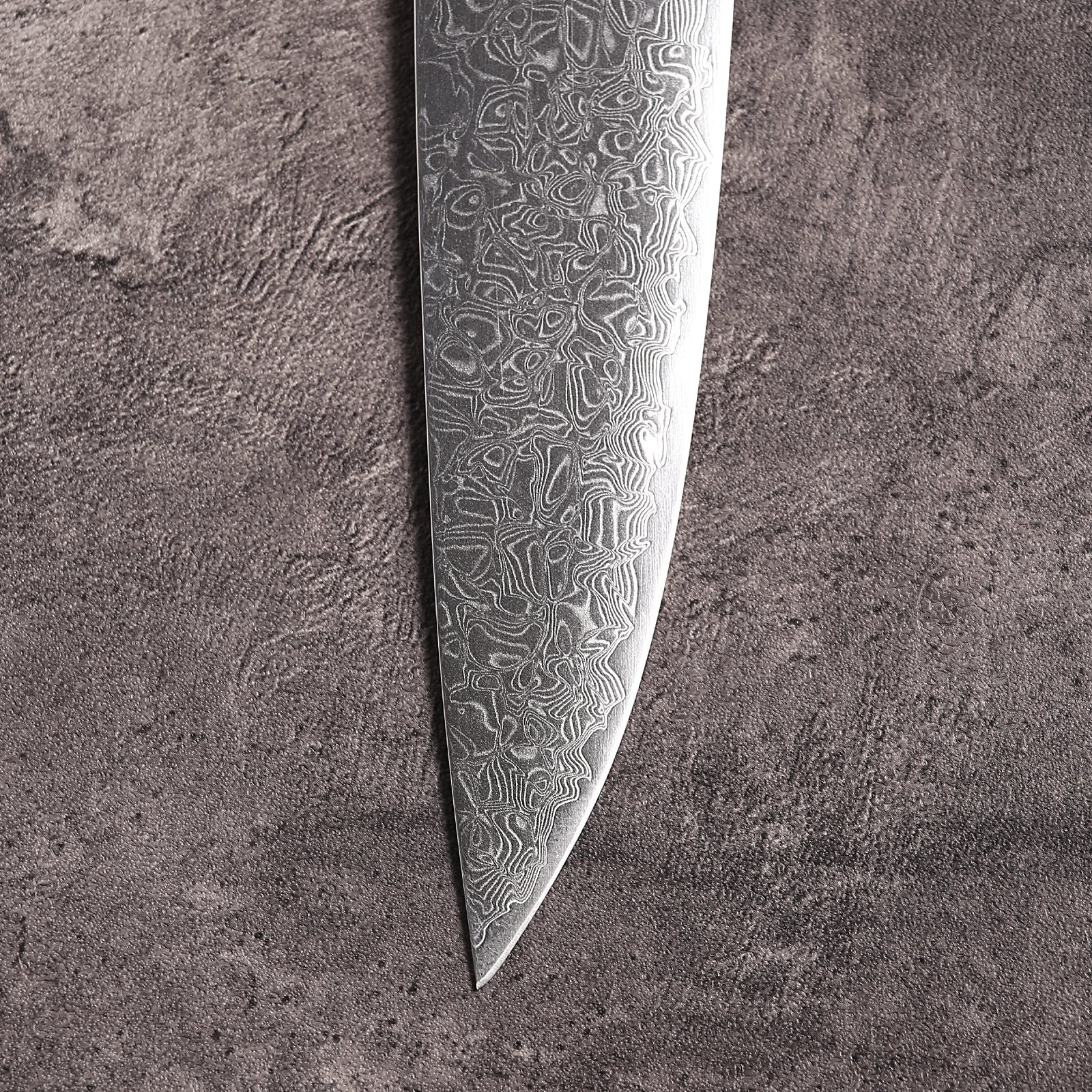
This 9-inch blade isn’t just long — it’s shaped with intention. Look at the profile and you’ll see two distinct zones working together:
The curved tip creates a natural rocking point. Plant it on the board and let it pivot — mincing garlic, herbs, and shallots becomes fast and effortless without ever fully lifting the knife. This is the rocking motion professional cooks use all day.
The long straight section at the heel is where the real slicing power lives. A straight edge means full blade-to-board contact on every stroke — clean, decisive cuts through chicken breasts, beef strips, salmon fillets, and dense vegetables in a single pull.
Most 8-inch knives have a more pronounced belly curve across the whole blade. The 9-inch profile gives you more straight edge to work with, which is exactly why it handles proteins and long slicing tasks better than its shorter sibling.
One blade. Two techniques. Zero compromise.
Who Should Use a 9-Inch Chef Knife?
1. You have big hands
An 8-inch knife can feel cramped if your hands are larger. A 9-inch gives your grip room to breathe, especially in a pinch grip (fingers wrapped around the blade heel — the correct way to hold a chef knife).
2. You’re prepping large volumes
Working through a whole watermelon, a rack of ribs, or a full head of cabbage? A longer blade means fewer strokes, less rocking, and faster work. Professional cooks and serious home chefs know this well.
3. You work on a large cutting board
A 9-inch knife on a small board is awkward. But if you have a 12×18″ or larger board, the extra length finally has room to work properly. Big board = big knife. It’s a natural match.
4. You slice proteins more than you mince herbs
The long straight heel excels at clean, sweeping slices through salmon fillets, chicken breasts, and beef strips. For fine herb work on a tiny board, an 8-inch is arguably more nimble. But for full-sized prep jobs? The 9-inch wins.
Who Should Stick With an 8-Inch?
Smaller hands or less experienced cooks who want maximum control
- Compact kitchens with limited counter space
- Cooks who do more mincing than slicing
- Anyone who finds longer knives intimidating
The 8-inch is the most popular chef knife size in the world for a reason. It’s the sweet spot for most home kitchens.
But “most home kitchens” isn’t the same as your kitchen.
Does Blade Material Matter More Than Size?
Absolutely. A badly made 9-inch knife is worse than a well-made 8-inch. This is where steel choice becomes critical.
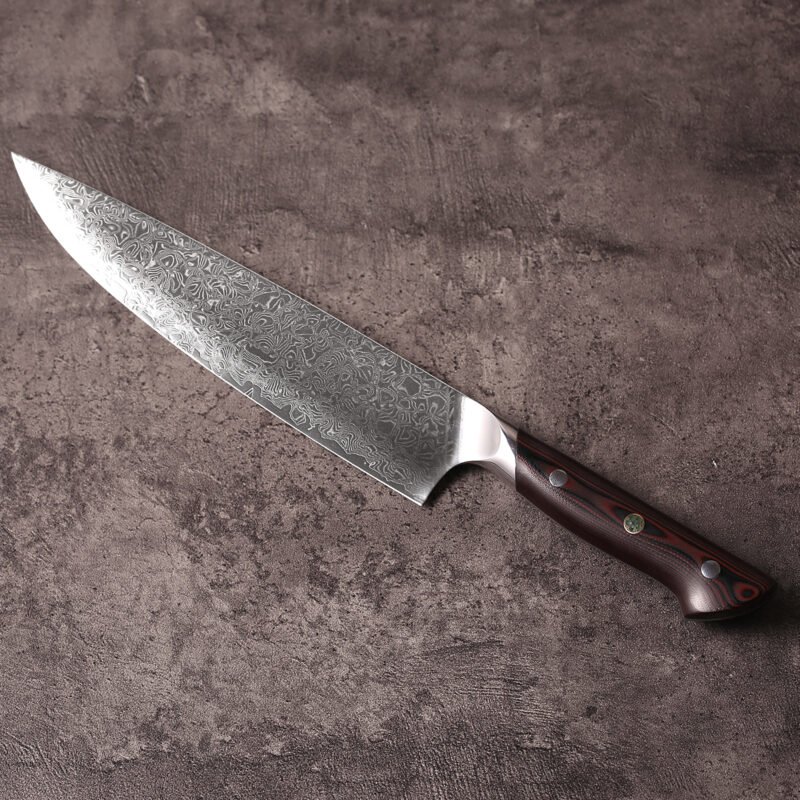
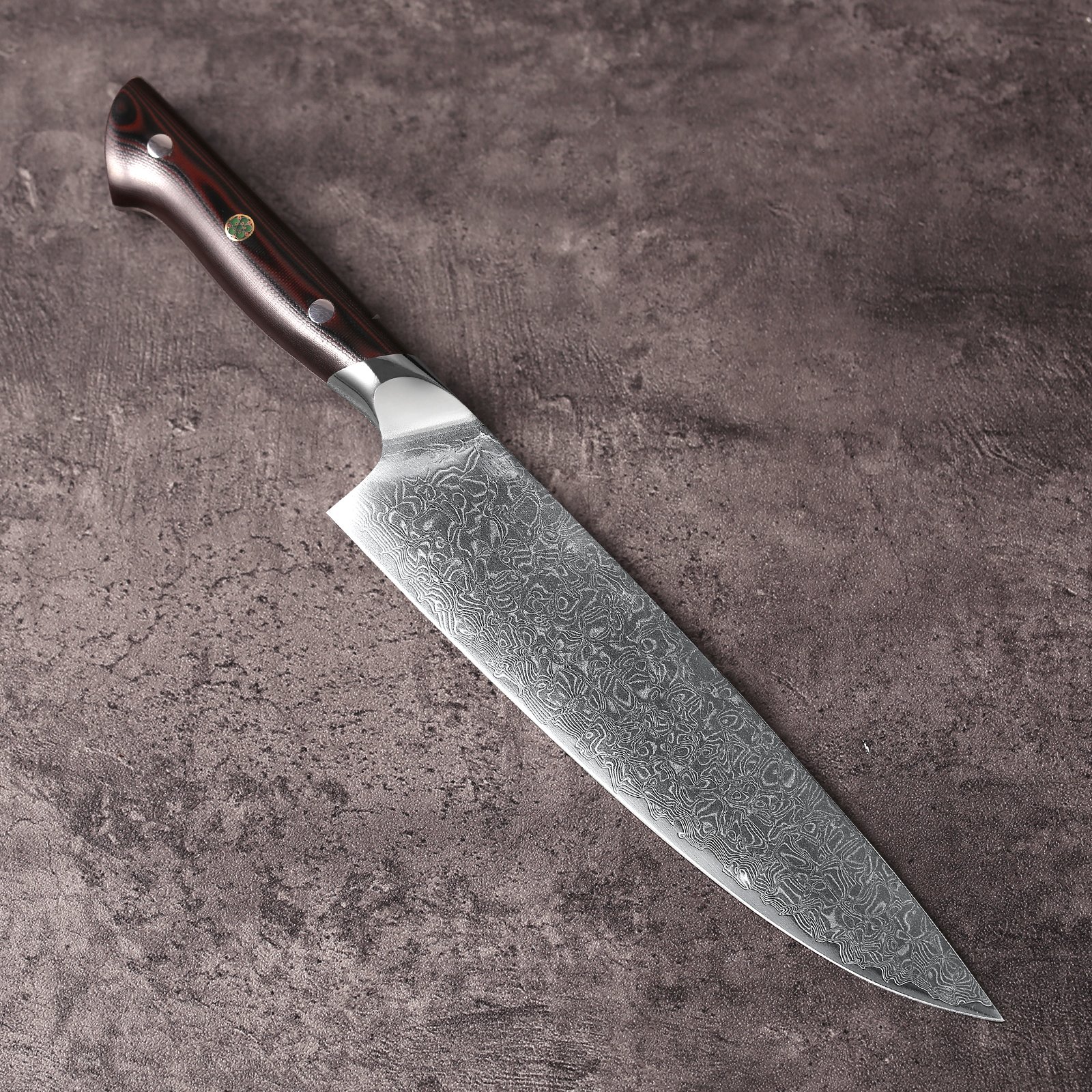
Our 9-inch Damascus Chef Knife is built from 67-layer Damascus steel with a VG-10 core, hitting 59±2 HRC — hard enough to hold a razor edge through heavy use, without being brittle. The Damascus pattern you see isn’t decorative — it’s the result of real cladding layers folded around the core steel, giving the blade both visual character and structural integrity.
For context on why Damascus construction matters — and how to tell real Damascus from fake — check out our deep-dive: The Truth About Damascus Knives: Fake, Cladding, and Hand-Folded.
The Case for Going 9-Inch Right Now
If you’re already comfortable with an 8-inch knife and you’re ready to level up — the 9-inch is the natural next step. It’s not a dramatic leap. It’s an upgrade.
The extra 30mm of blade gives you:
1. More cutting surface per stroke
2. Better clearance for your knuckles on wide vegetables
3. A longer straight heel for cleaner slicing
4. A more commanding presence on the board
And with a G10 handle that’s triple-riveted and built for extended sessions, this knife won’t fatigue your hand when the prep list gets long.
FAQ: 9-Inch Chef Knife Questions Answered
Is a 9-inch chef knife too big for home use?
Not if you have a large cutting board and you’re cooking for more than two people regularly. It’s slightly less common than the 8-inch but loved by home cooks who’ve made the switch.
Can a beginner use a 9-inch chef knife?
Yes, but it takes a little adjustment. Start with proper grip technique and give yourself a few sessions to get used to the length. Most cooks adapt quickly.
Is a 9-inch chef knife good for rocking cuts?
Yes — the curved tip is specifically designed for rocking. Plant the tip on the board and pivot through garlic, herbs, and shallots. It’s one of the most satisfying cuts you can make with this blade.
What can’t I use a 9-inch chef knife for?
Like all chef knives, it’s not designed for bones, frozen food, or hard ingredients. For those tasks, use a meat cleaver. For bread, use a bread knife. Use the right tool for the job and your knife will last for years.
What’s the weight of your 9-inch Damascus chef knife?
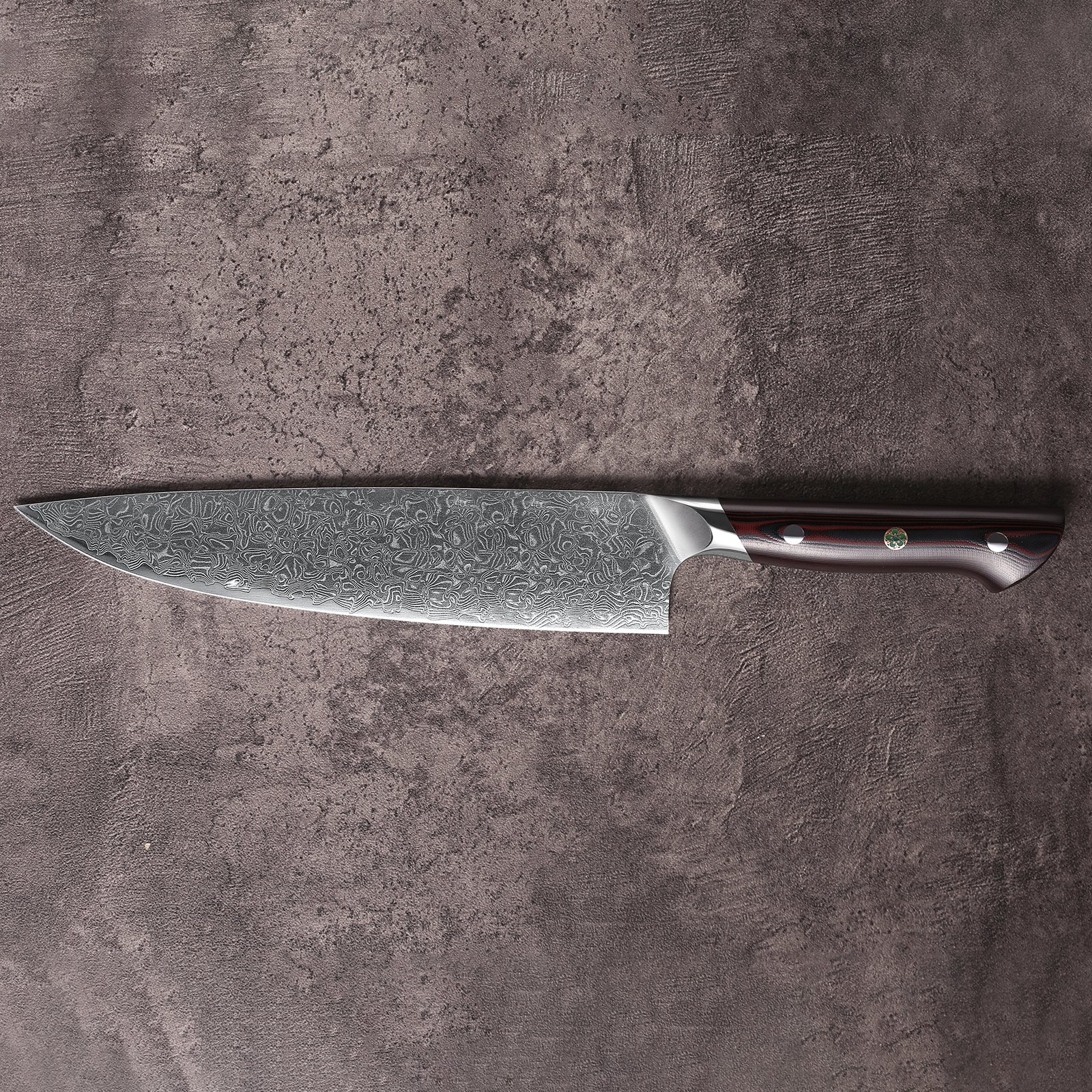
Approximately 247g — substantial enough to feel solid but balanced enough to avoid fatigue.
What steel is it made from?
67-layer Damascus cladding with a VG-10 core, hardened to 59±2 HRC.
The 8-inch vs 9-inch debate comes down to one question: what are you actually cutting, and how much of it?
For high-volume prep, larger proteins, and cooks with bigger hands — the 9-inch is the right call. The blade profile seals the deal: curved tip for rocking, straight heel for slicing. It’s a knife that covers every technique without asking you to compromise.
If you’re ready to make the move, our 9-Inch Damascus Chef Knife is in stock now at $32.90 — 67 layers of real Damascus steel, G10 handle, and built to perform.
