

What it is?
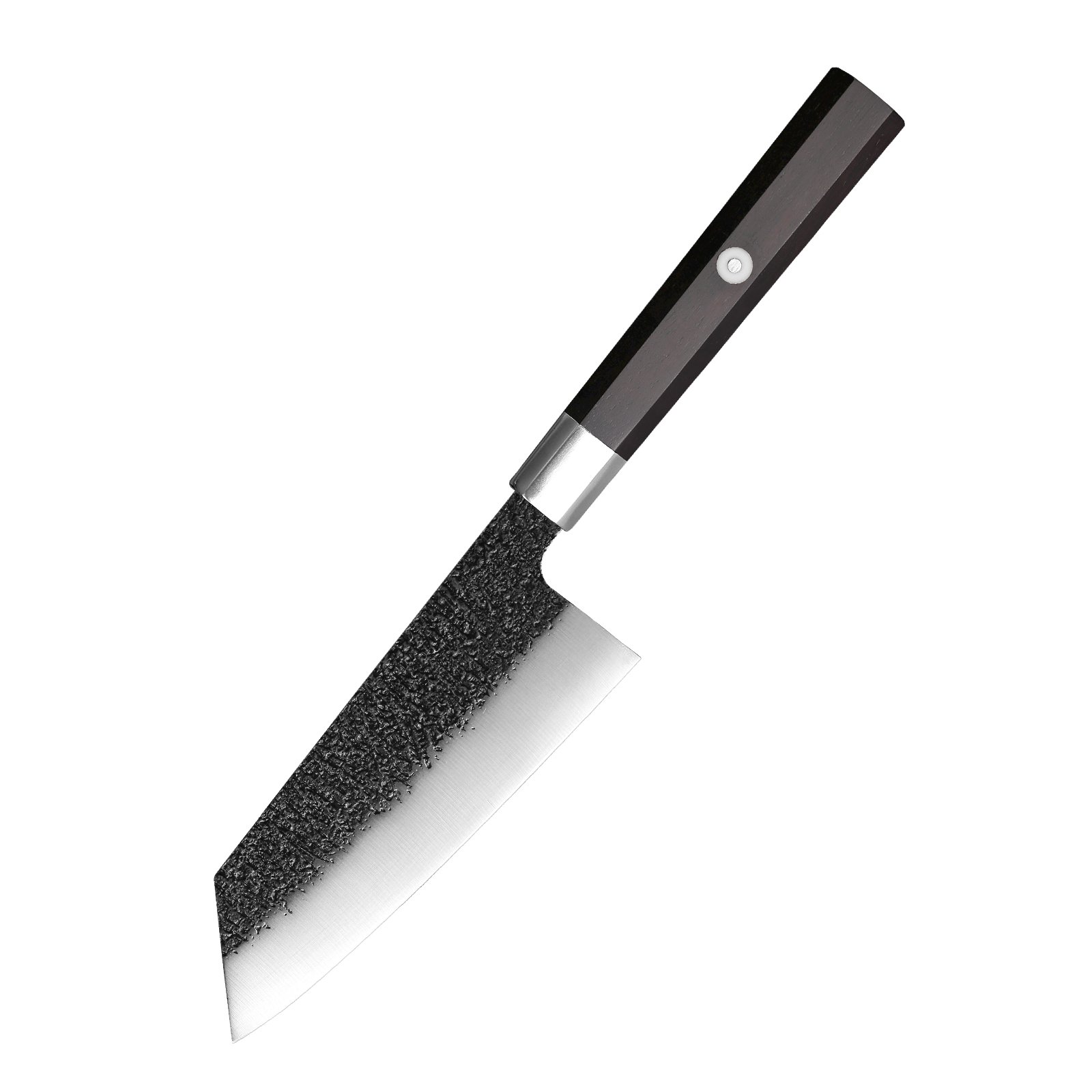
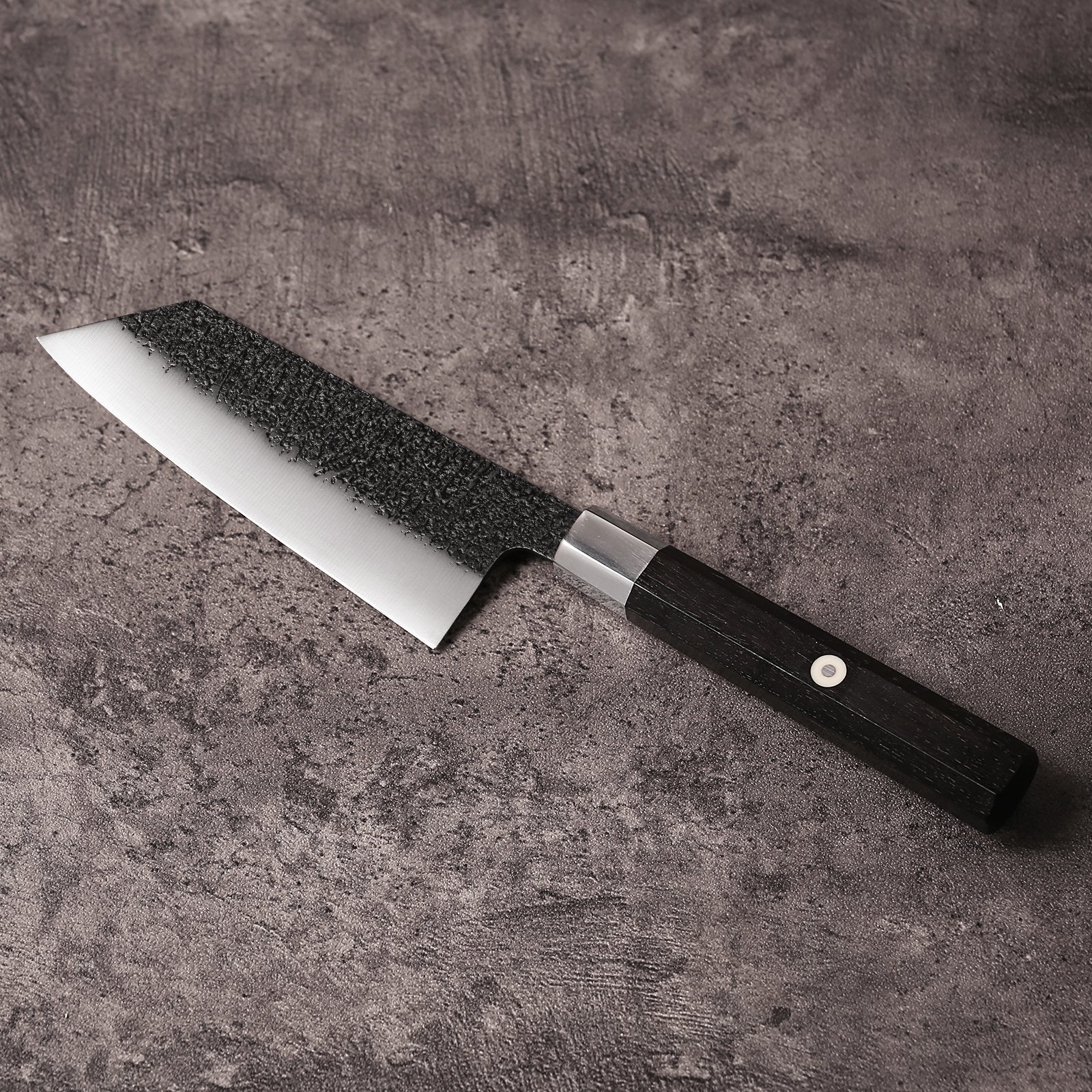
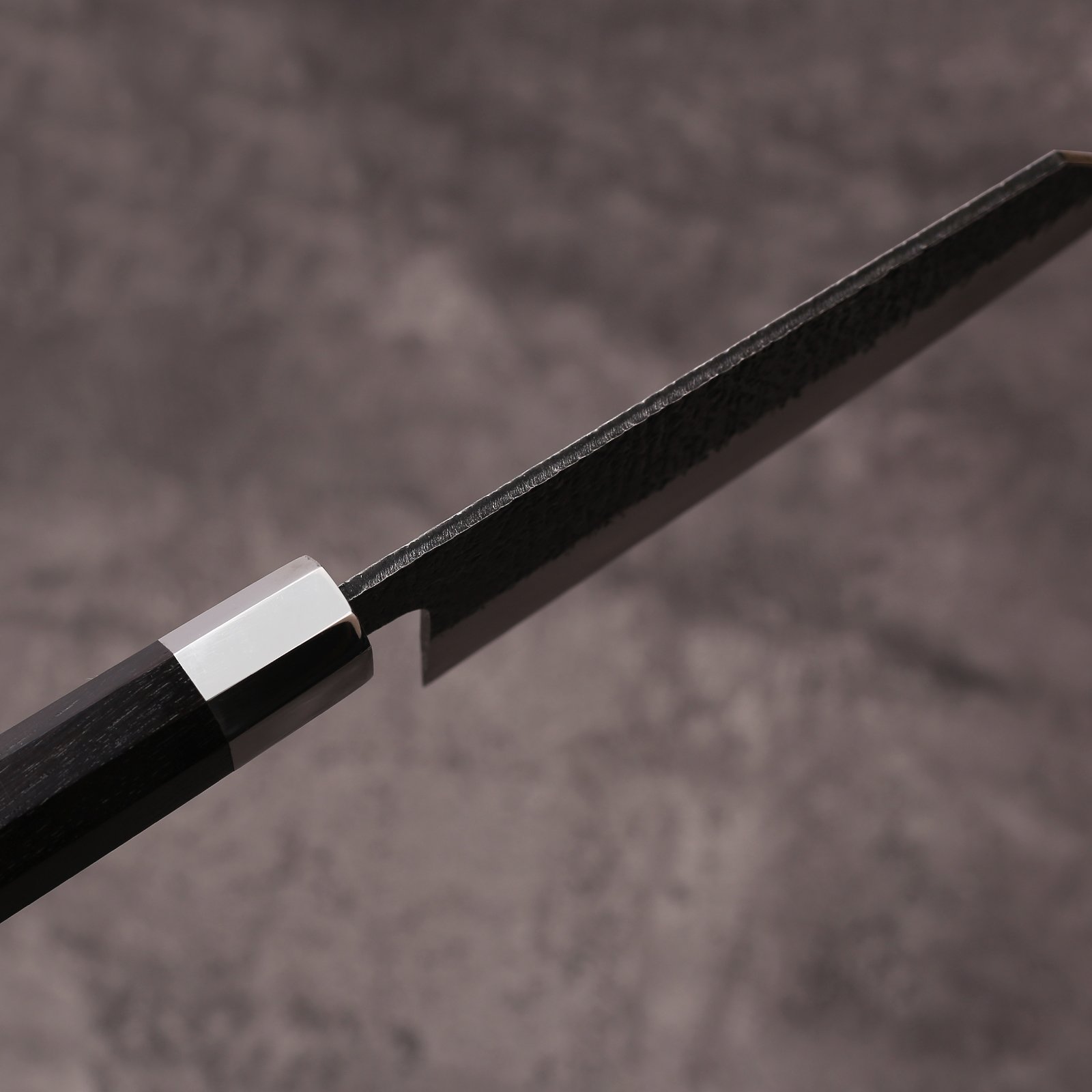
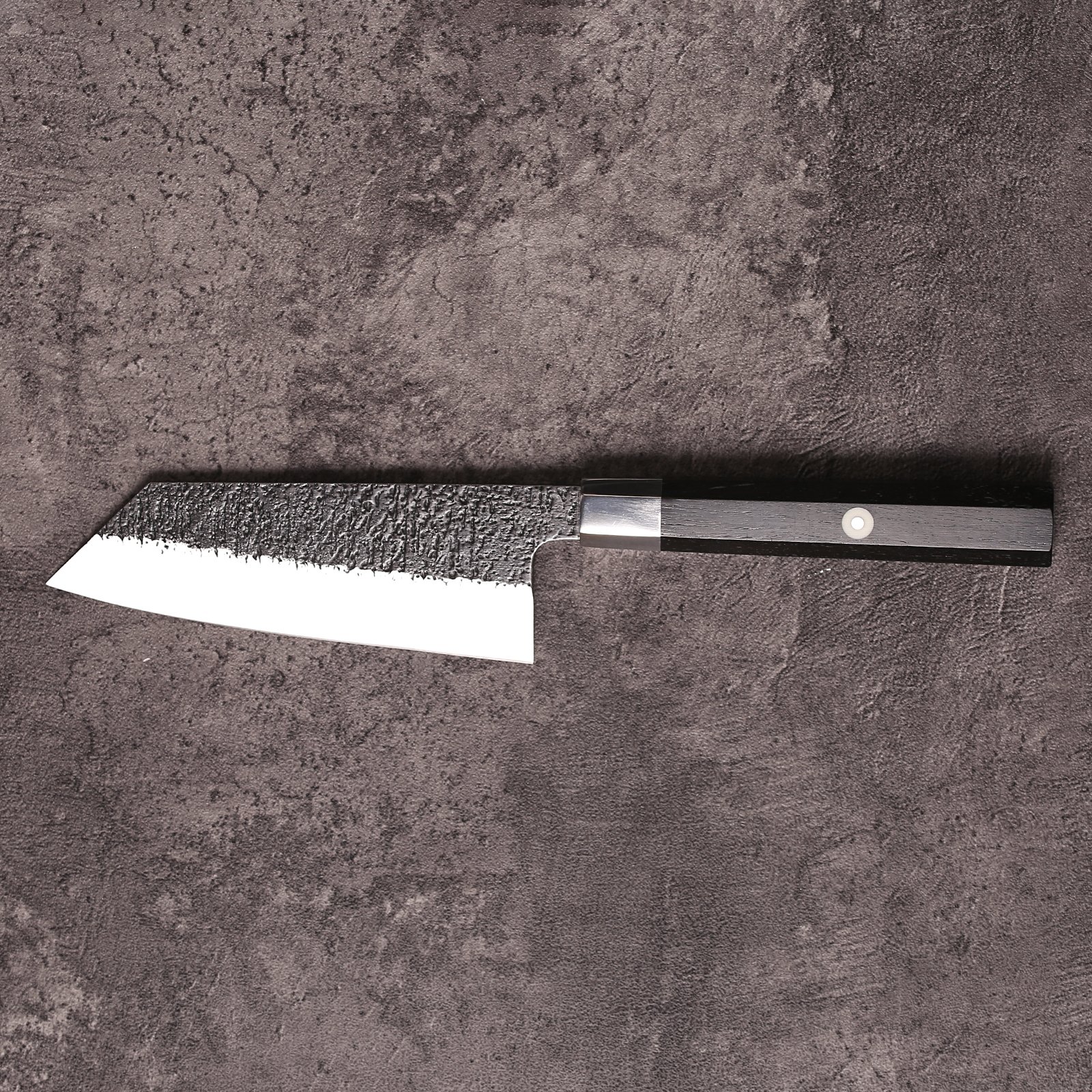
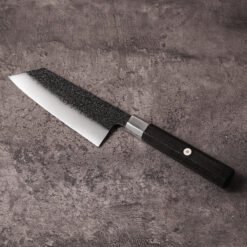
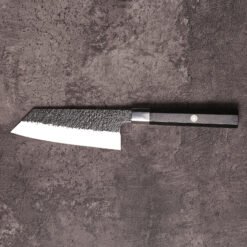
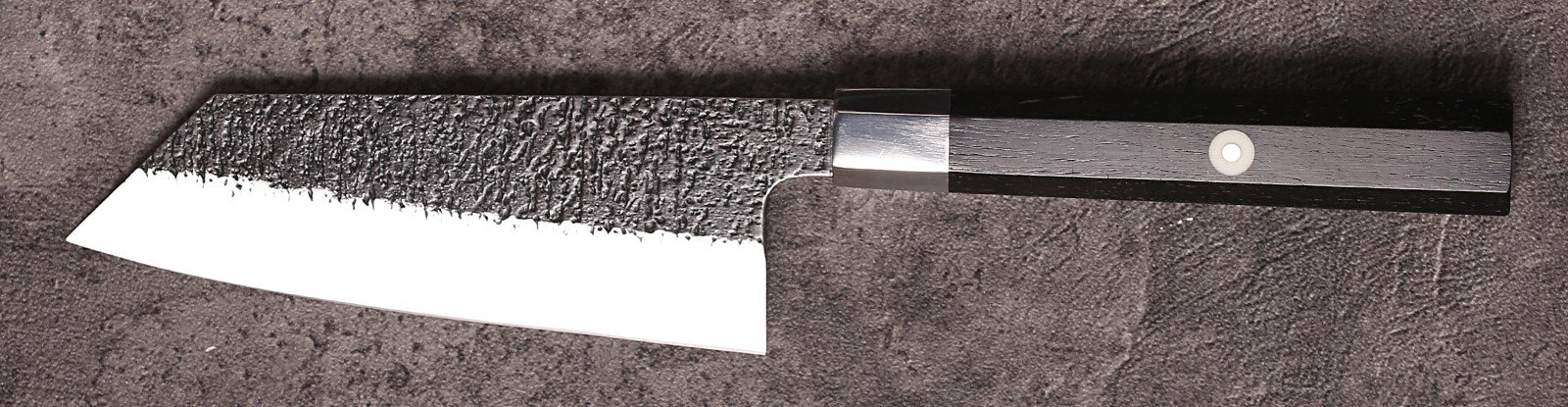
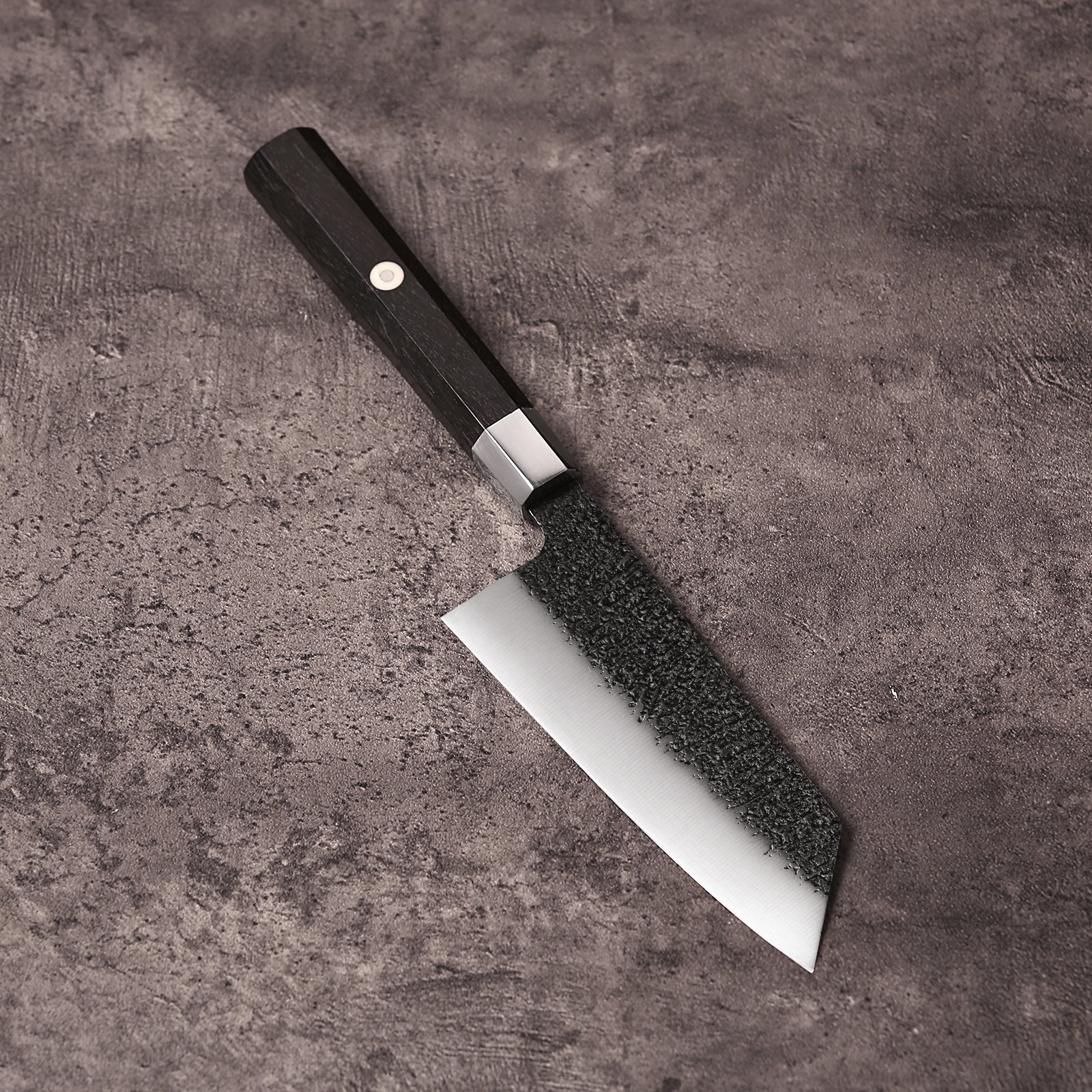
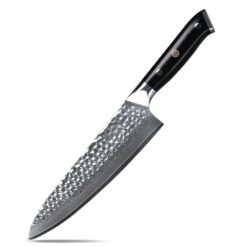
The 5″ Ko-Bunka is a compact bunka-style kitchen knife with a 125mm blade, a reverse-tanto tip and a 45mm blade width. It is forged from AUS-10 stainless steel, hardened to 60 HRC, finished with a kurouchi black forged face, and fitted with a 118mm ebony octagonal wa handle and a 410 stainless ferrule. Total length is 255mm and net weight is approximately 132g.
It is sold wholesale as a finished knife or as a blade blank. There is no minimum order quantity on this model.
What a bunka knife is used for?
A bunka is a general-purpose Japanese-style kitchen knife. It combines a flat cutting edge for push-cutting vegetables with an angled reverse-tanto tip for precision work such as scoring, trimming and detail slicing.
The 5″ Ko-Bunka is the compact size in this category. Its 45mm blade width gives it the knuckle clearance and board coverage of a chef knife, while its 125mm length makes it easier to control than a 210mm gyuto. It suits home cooks, prep stations and small commercial kitchens.
Why AUS-10 steel?
AUS-10 is a high-carbon Japanese-style stainless steel containing approximately 1.0% carbon, 13–14% chromium, plus molybdenum and vanadium.
Three practical results:
Edge retention. At 60±2 HRC it holds a working edge significantly longer than 56–58 HRC European stainless knives, which typically run 4 points softer.
Corrosion resistance. The 13–14% chromium content means no rust maintenance for the end user, unlike white or blue carbon steel knives at the same hardness.
Sharpenability. The fine carbide structure takes a keen edge on standard whetstones. It does not require diamond abrasives the way high-vanadium powder steels do.
What kurouchi means on this knife?
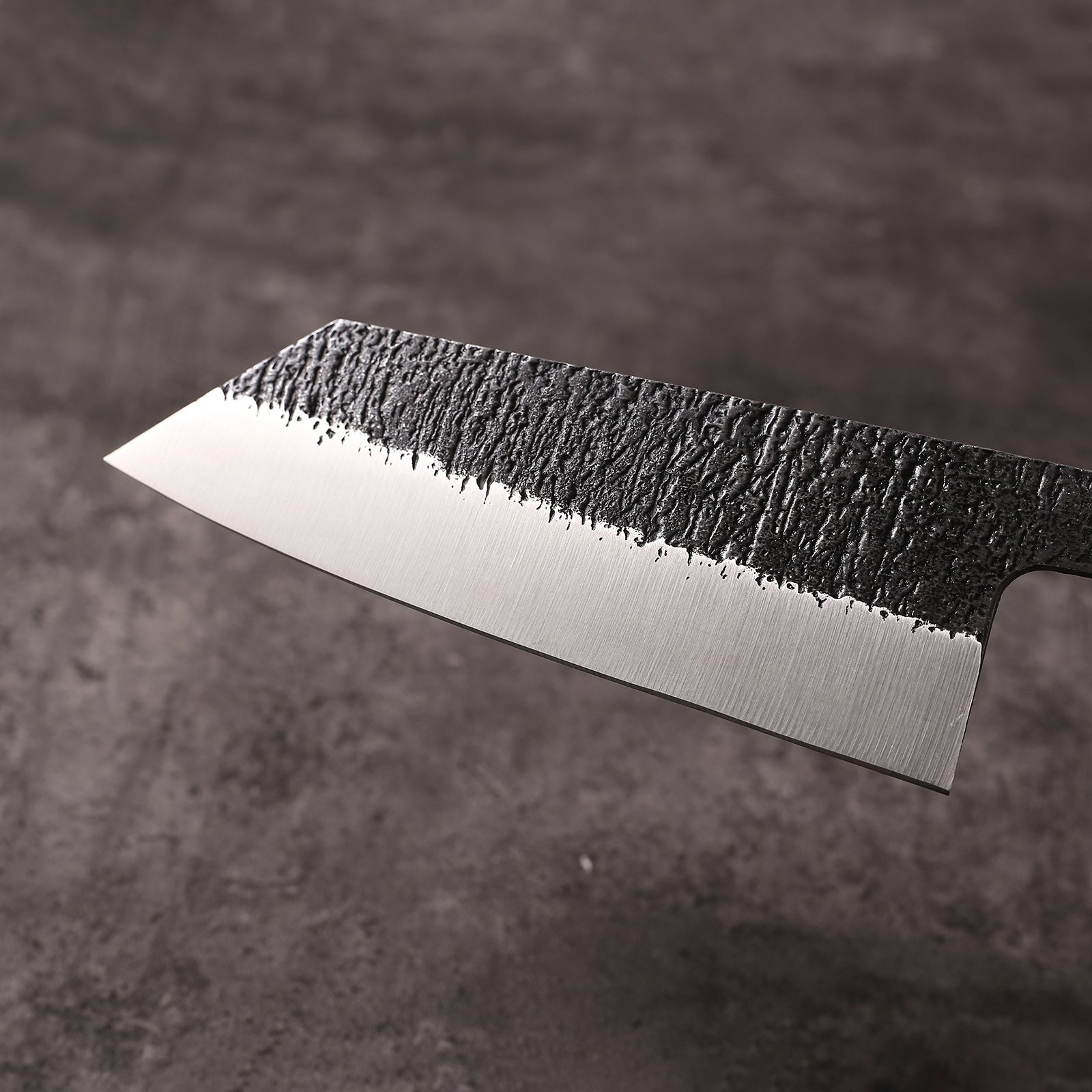
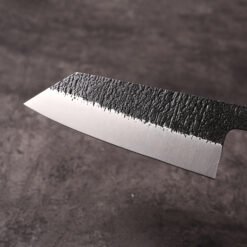
Kurouchi is the black forge scale left intact on the upper portion of the blade after forging. On the Ko-Bunka the scale is preserved across the top two-thirds of the blade face and hand-ground away below it, exposing a wide mirror-polished cutting bevel.
The functional benefit is food release: the textured surface reduces suction, so potato and cucumber slices fall off the blade instead of sticking to it.
The commercial benefit is perceived value. The visible transition line between black scale and polished bevel signals hand finishing, which supports a higher retail price point than a uniformly polished blade of the same steel.
Blade geometry
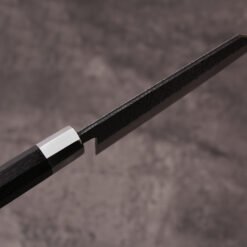
Spine thickness is 2.5mm, which is thin enough for low cutting resistance and thick enough to resist flex through dense root vegetables.
The reverse-tanto tip places a straight spine section above a fine point. This gives usable tip access for boning small proteins and scoring skin, with more material behind the point than a thin petty tip has, so it is less prone to chipping.
Handle
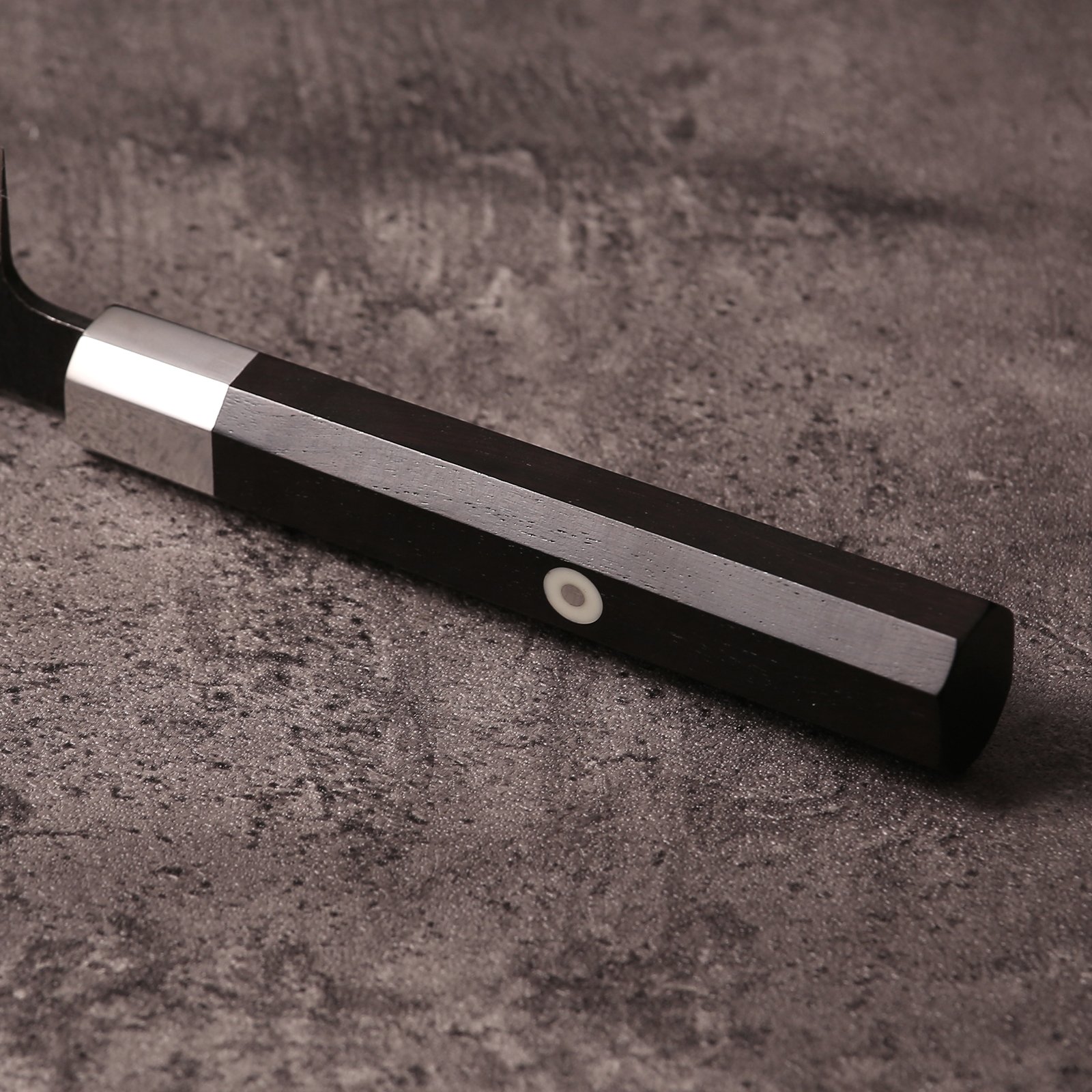
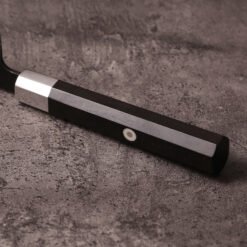
The handle is ebony, octagonal, 118mm long, in the traditional wa configuration with a 304 stainless steel ferrule and a single white mosaic pin.
Octagonal wa handles are grip-neutral, so they work for pinch grip, hammer grip and left- or right-handed users without modification. Ebony resists moisture absorption better than most stabilised hardwoods, which matters in commercial kitchen service.
Handle material can be substituted on volume orders.
Bunka compared to santoku and gyuto
Bunka: flat edge with reverse-tanto tip. Best for precision tip work plus vegetable prep. Tallest tip profile of the three.
Santoku: flat edge with a rounded sheepsfoot tip. Best for straightforward vegetable and protein prep. Least capable at tip work.
Gyuto: curved belly with a pointed tip. Best for rocking cuts and large-volume work. Typically 210–240mm, so it needs more board space.
Buyers who find a santoku limiting and a gyuto oversized usually land on a bunka.
Frequently asked questions
No. At 45mm blade width it covers a full board of prep despite the short blade. It handles most home and prep-station tasks. Buyers cutting large cabbage, watermelon or whole proteins daily should stock a 180mm or 210mm size alongside it.
They are close in performance. Both reach 59–61 HRC and both are stainless. AUS-10 carries slightly more carbon and vanadium, which tends to give marginally better edge retention. VG-10 has broader name recognition with end customers. Choose based on whether your buyers respond to spec or to brand familiarity.
No. The ebony handle and the forged finish both require hand washing. This should be stated in your own product listing to reduce return rates.
Wholesale Terms
No minimum order on stock models.
Custom-designed knives: 100 units minimum.
Custom packaging: 200 units minimum.
Available services: laser logo engraving, custom handle materials, alternative blade finishes, OEM steel substitution, blade blanks for makers, custom packaging.
Request a Quote
Send your target quantity, market and any customisation requirements. Quotes are returned within one business day. Samples are available on qualifying orders.
| Weight | 0.4 kg |
|---|
Be the first to review “Ko-Bunka Knife”
Related products

Chef Knives

Chef Knives

Chef Knives

Chef Knives

Chef Knives

Chef Knives

Chef Knives

Chef Knives
Reviews
There are no reviews yet.