

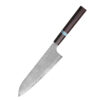
6.5 Inch AUS-10 Santoku Knife — Kurouchi Finish, Ebony Wa Handle
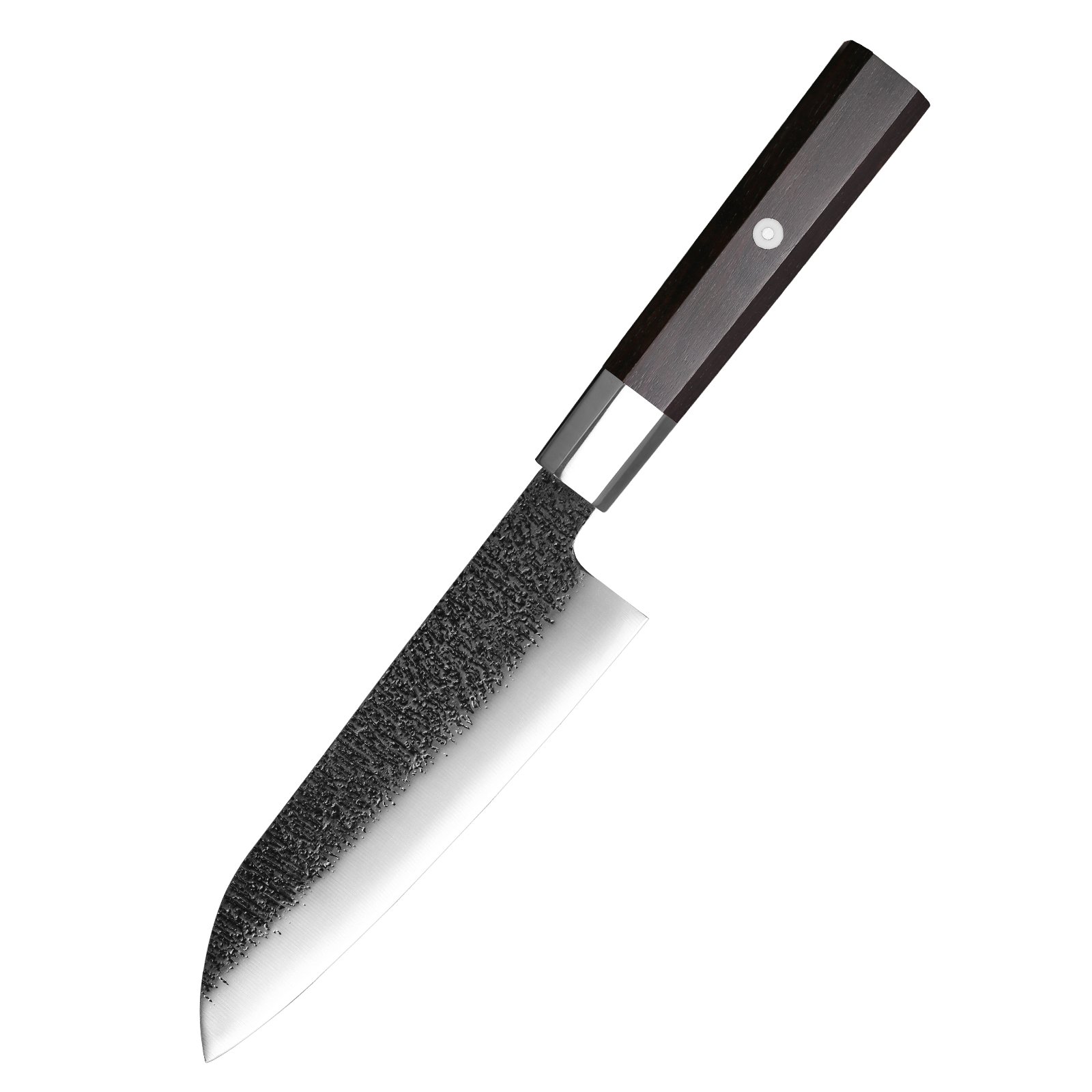
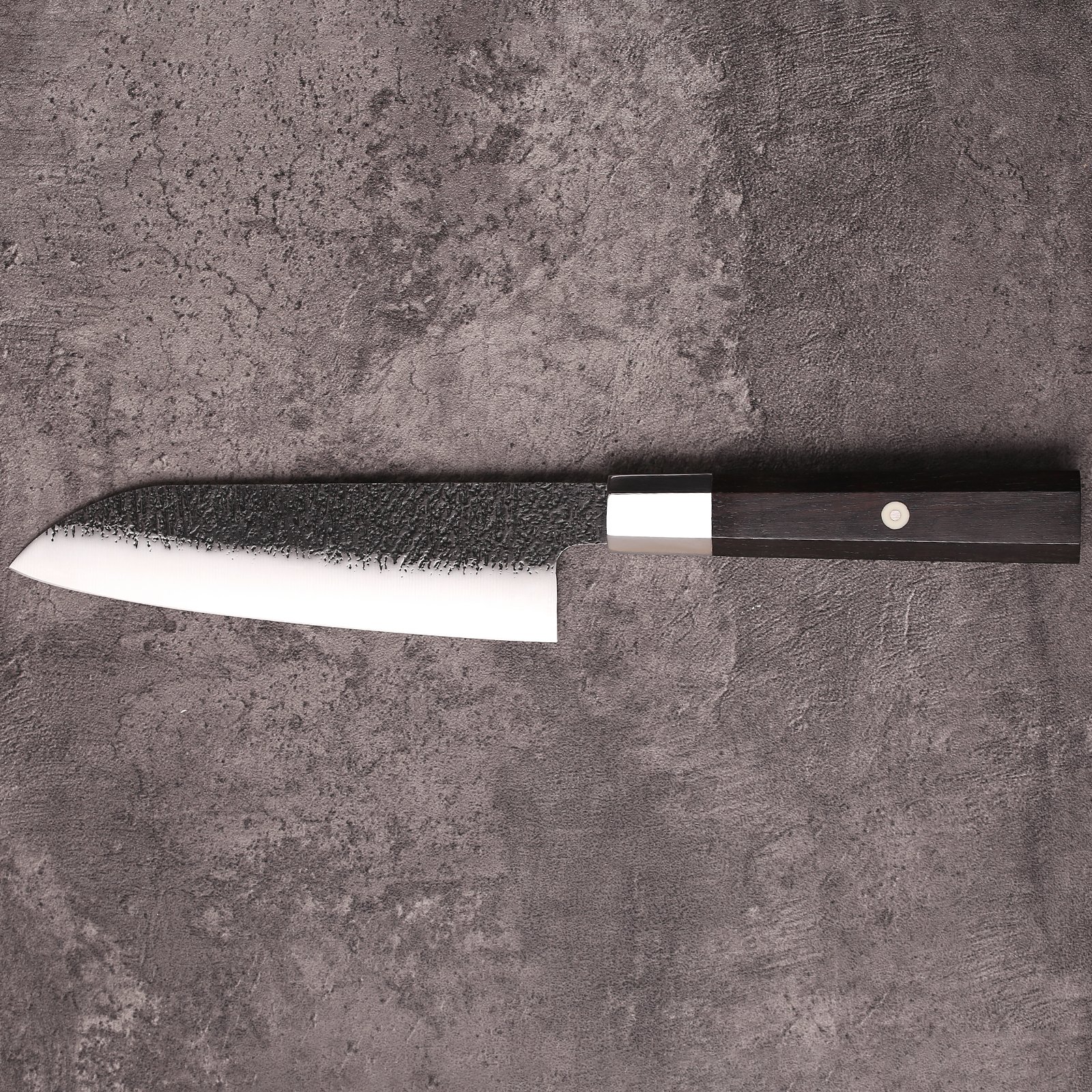
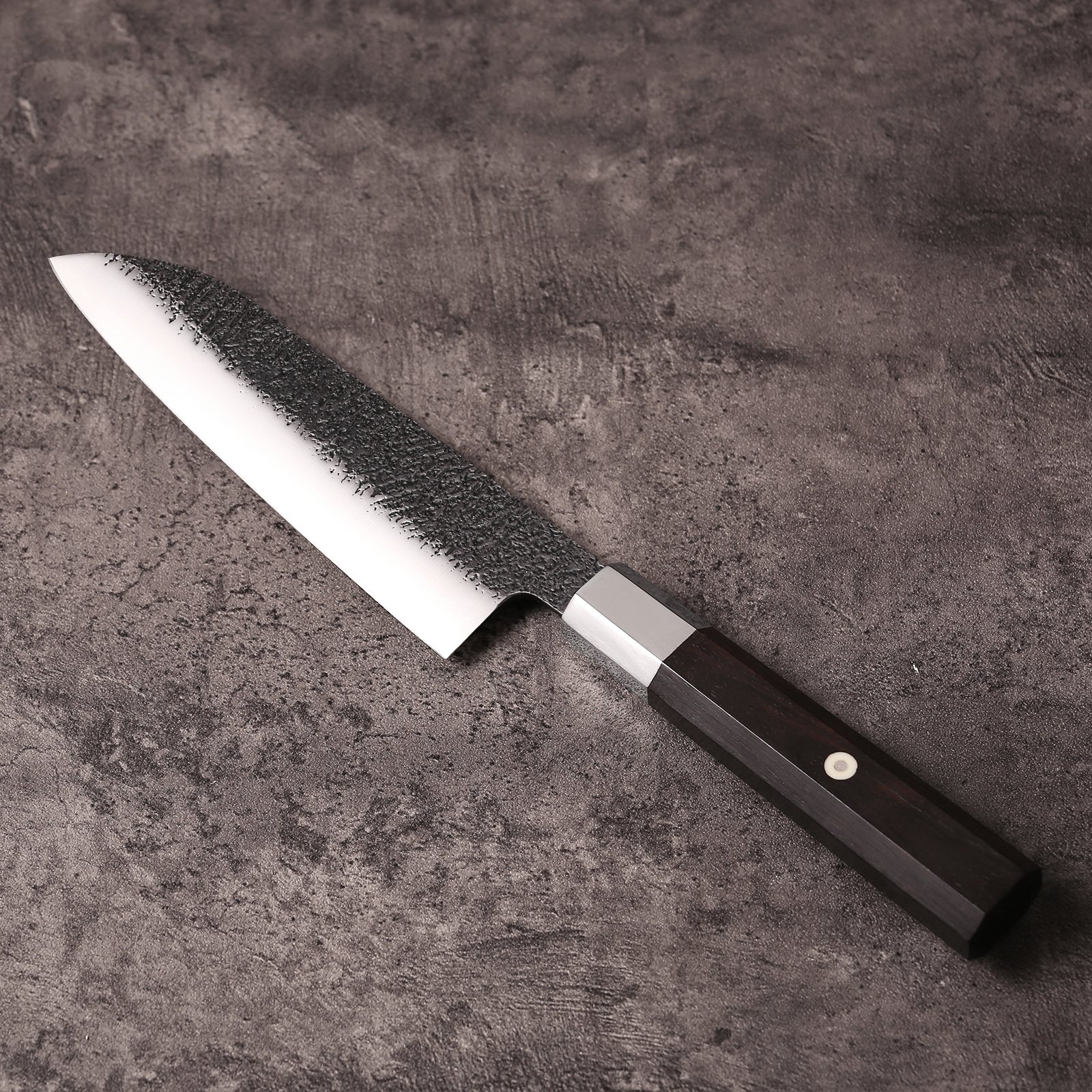
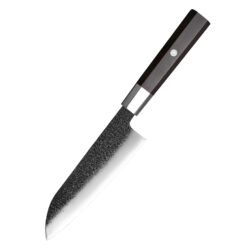
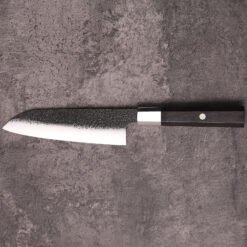
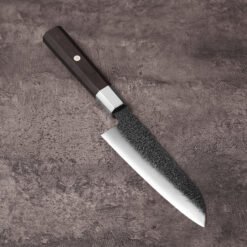
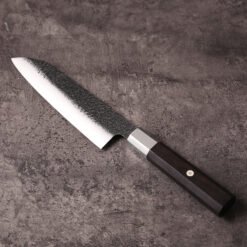
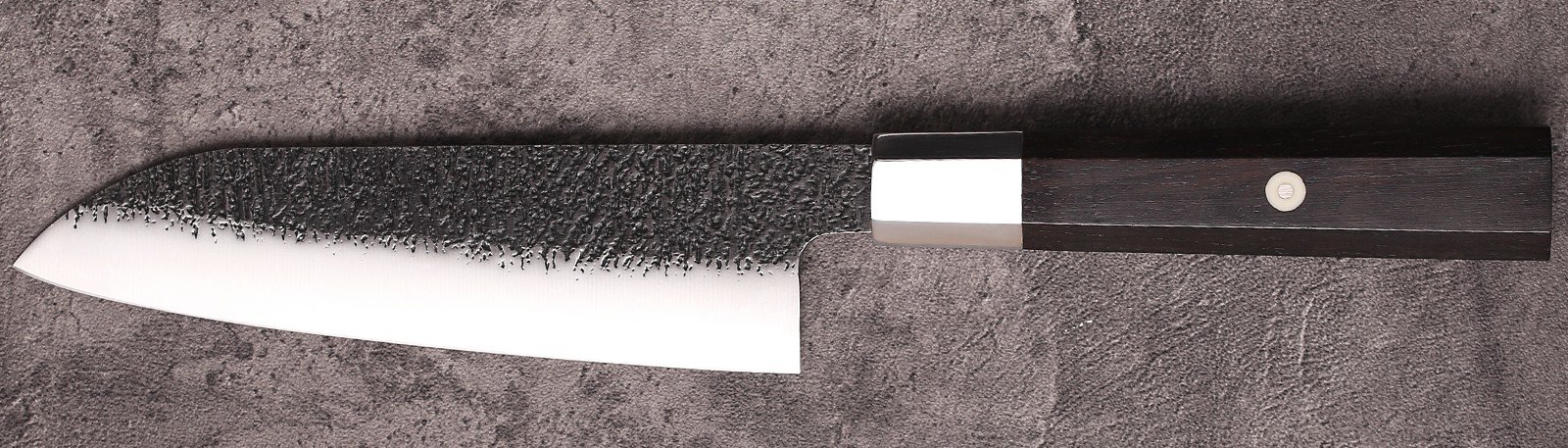
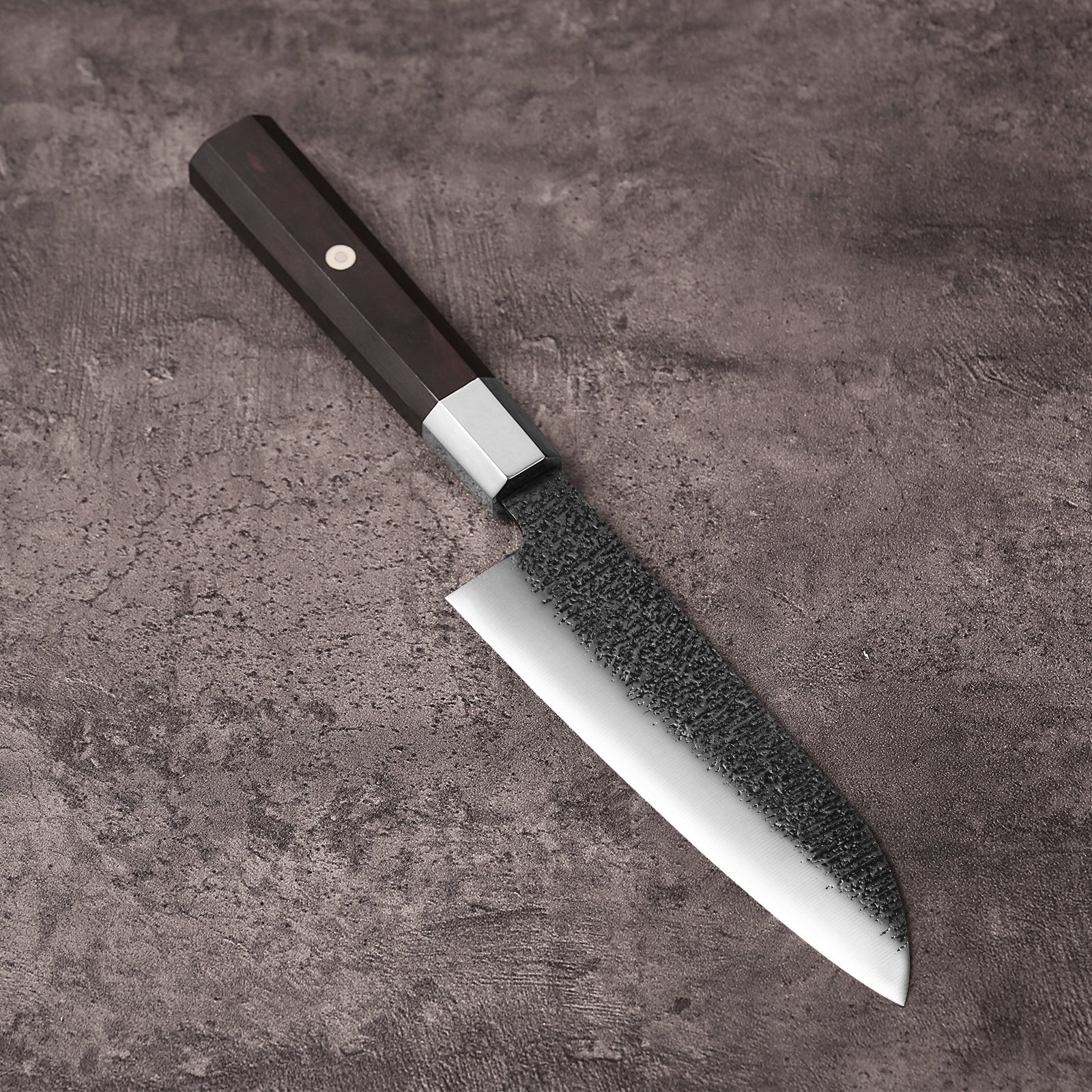
This is a 6.5-inch (165mm) santoku knife made from AUS-10 stainless steel, heat treated to 60±1 HRC. It measures 320mm overall, stands 47mm tall at the heel, carries a 2.5mm spine and weighs approximately 212g. The handle is an octagonal ebony wa handle, 138mm long, fitted with a 410 stainless steel cap.
The Steel
AUS-10 runs roughly 0.95–1.10% carbon and 13–14.5% chromium, with small vanadium and molybdenum additions. Hard carbides for edge wear, chromium for corrosion resistance, vanadium to refine grain during heat treatment.
At 60±1 HRC it holds an edge through a long prep shift and still sharpens back on a standard 1000-grit stone.
The tolerance matters as much as the number. A ±1 window is tighter than the ±2 most stainless kitchen knives ship with — less variation across a wholesale batch, so the first knife out of the carton behaves like the last one.
The Blade
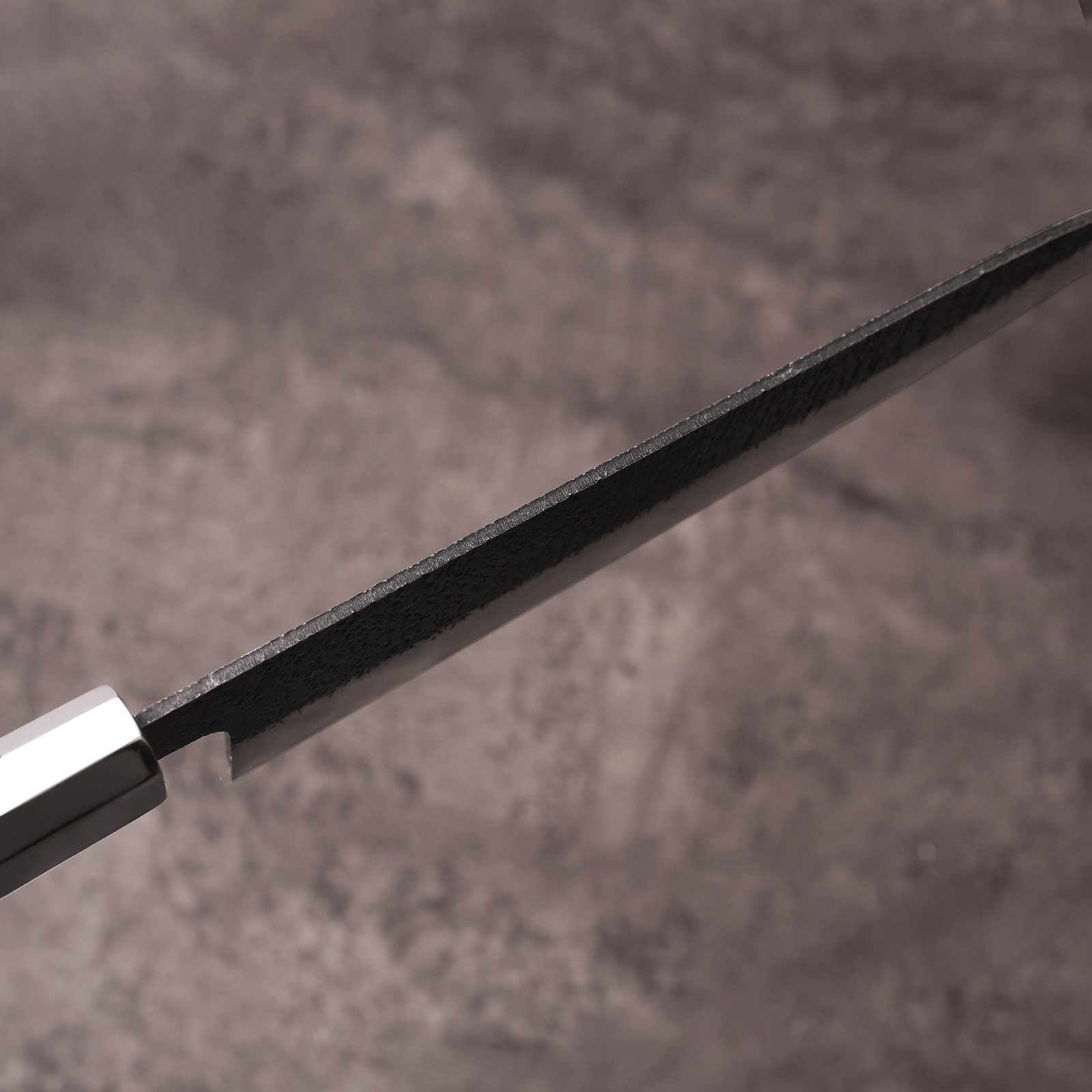
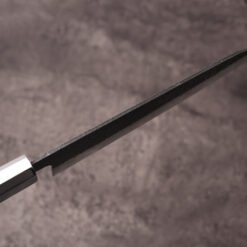
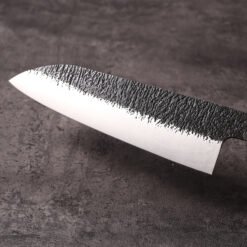
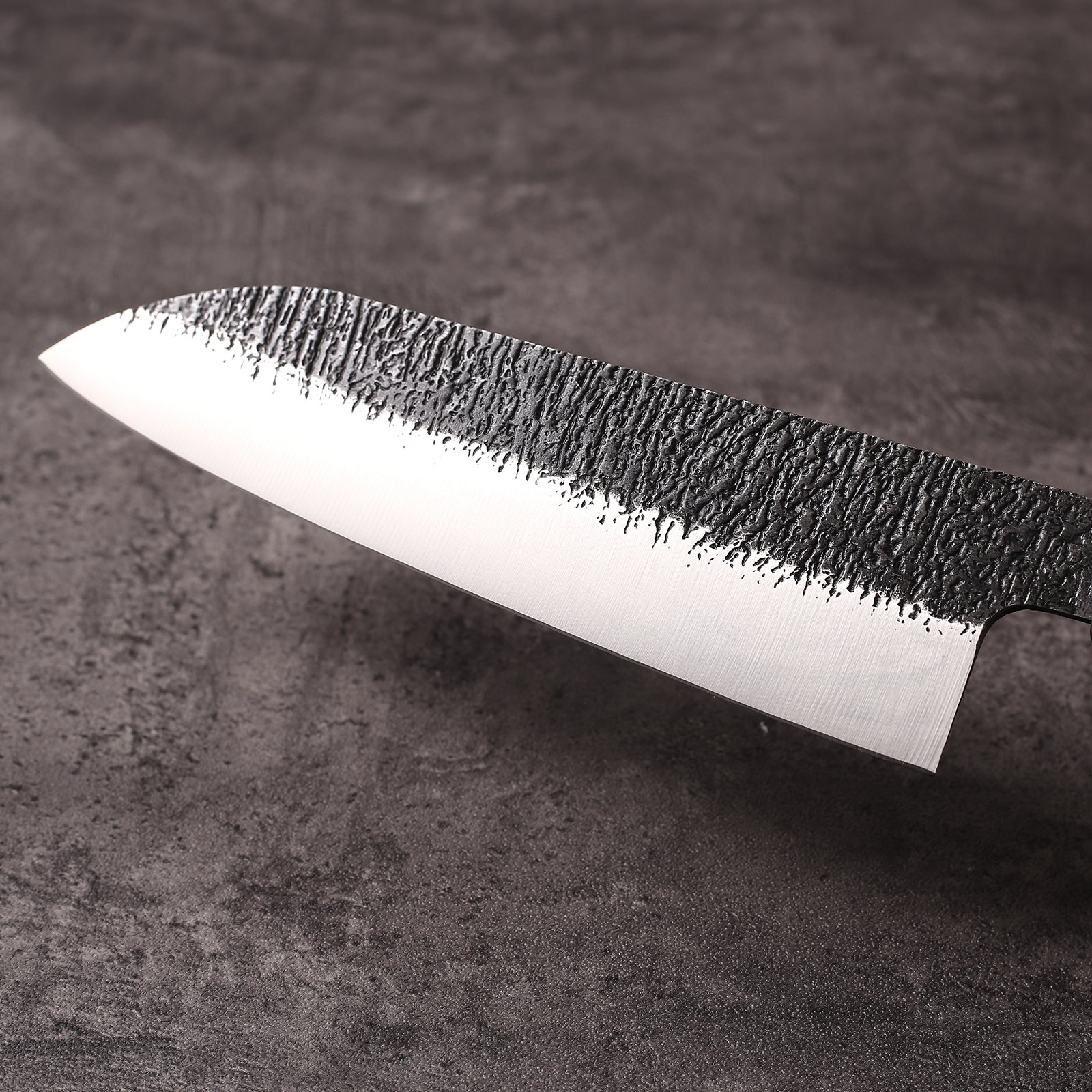
The black textured area is a kurouchi-style finish. Its rough surface cuts the contact area between steel and food, so wet slices of cucumber, potato and beet release instead of clinging. It also hides the scuffs and water spots that show up fast on a polished flat.
Below the transition line the bevel is ground and polished bright. That contrast running the length of the blade is the signature of this series.
47mm at the heel is generous for a 165mm blade — full knuckle clearance through a board of onions, and a wide face for scooping and transferring.
At about 212g this is a substantial santoku, with the mass sitting forward of the pinch grip. The blade does more of the work on dense produce. Cooks who dislike a knife that feels flimsy gravitate to this weight class.
The Handle
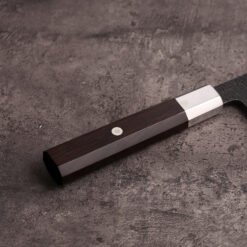
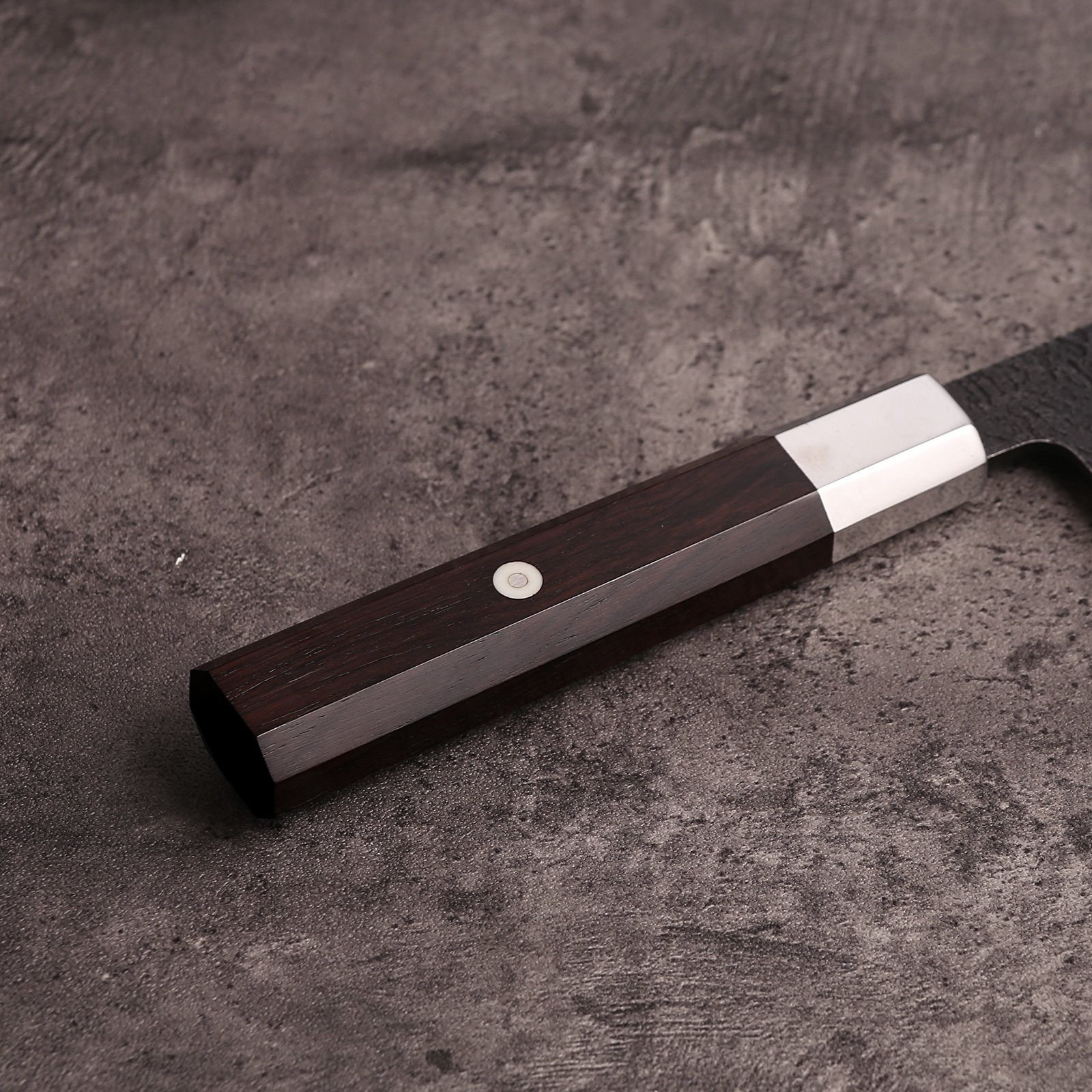
Octagonal ebony, 138mm, single decorative pin. The octagonal cross-section indexes in the hand so you feel blade orientation without looking, and it works identically for left- and right-handed users.
The cap is 410 stainless — a hardenable martensitic grade, so it takes a crisp mirror polish and holds it against knocks and drawer wear.
Care Knives
Hand wash and dry immediately. Never dishwasher — the cycle damages the ebony and dulls the edge.
Sharpen on a whetstone, 1000-grit for the working edge, 3000–6000 to refine. Avoid pull-through carbide sharpeners, which tear steel at this hardness instead of cutting it.
Wood or quality composite boards only. Not glass, stone or steel.
Frequently asked questions
1. What is the difference between a santoku and a gyuto?
A santoku has a flatter edge profile and a sheepsfoot tip suited to push cutting; a gyuto has a curved belly and pointed tip suited to rocking and detail work. Santokus are also shorter — 165–180mm against 210–240mm for a gyuto.
2. Is 165mm a good santoku length?
165mm is the most common santoku size and the safest choice for general retail. It handles the majority of home and light professional prep while fitting standard knife blocks, magnetic bars and cutting boards.
3. Can this santoku be private labeled?
Yes. Private label starts at 100 pieces with laser engraving on the blade. OEM programs with custom specifications start at 300 pieces plus a tooling fee, waived above 500 pieces.
4. Is there a minimum order quantity?
No. This is a stock model with no MOQ — any quantity ships from existing inventory. Minimums apply only to private label and OEM programs.
| Weight | 0.4 kg |
|---|
Be the first to review “Santoku Knife 165mm”
Related products

Santoku Knives

Santoku Knives
Santoku Knives

Santoku Knives
Santoku Knives

Santoku Knives

Santoku Knives

Santoku Knives
Reviews
There are no reviews yet.