

Chef's Knives
Why a Kitchen Knife Beats Flowers as a Closing Gift
Jul
Flowers are dead in a week. The wine is gone by Sunday. The gift basket is a memory by the time the boxes are unpacked.
A good kitchen knife is in that house every single day for the next twenty years.
That is the whole argument, and if you close ten or more deals a year — or you run a team or brokerage buying gifts on behalf of a dozen agents — it is worth thinking about seriously. A closing gift is not a thank-you. It is a referral asset. And handed over earlier — at a listing presentation, or to a seller still deciding between you and two other agents — the same knife is a tool for winning the business in the first place. Either way, it only works if the client still sees it a year later.
The kitchen is the room you want to live in
Think about where your gift ends up.
A candle gets burned. A bottle of wine goes to a dinner party. A framed photo of the house sits in a closet within six months, because nobody decorates with a picture of their own front door.
A knife goes on the counter, in the block, or on the magnetic bar. It gets picked up every night. And every time it does, there is a small, silent reminder of the person who handed over the keys.
That is brand recall you cannot buy with a postcard campaign.
Yes, there is an old superstition. Here is how you use it.
Some people believe giving a knife as a gift “cuts” the relationship.
Do not let this scare you off. It is one of the best things about the gift, because there is a traditional fix that makes the whole moment memorable.
The client gives you a coin in return. A penny, a quarter, whatever is in their pocket. Now it is a purchase, not a gift, and the friendship stays intact.
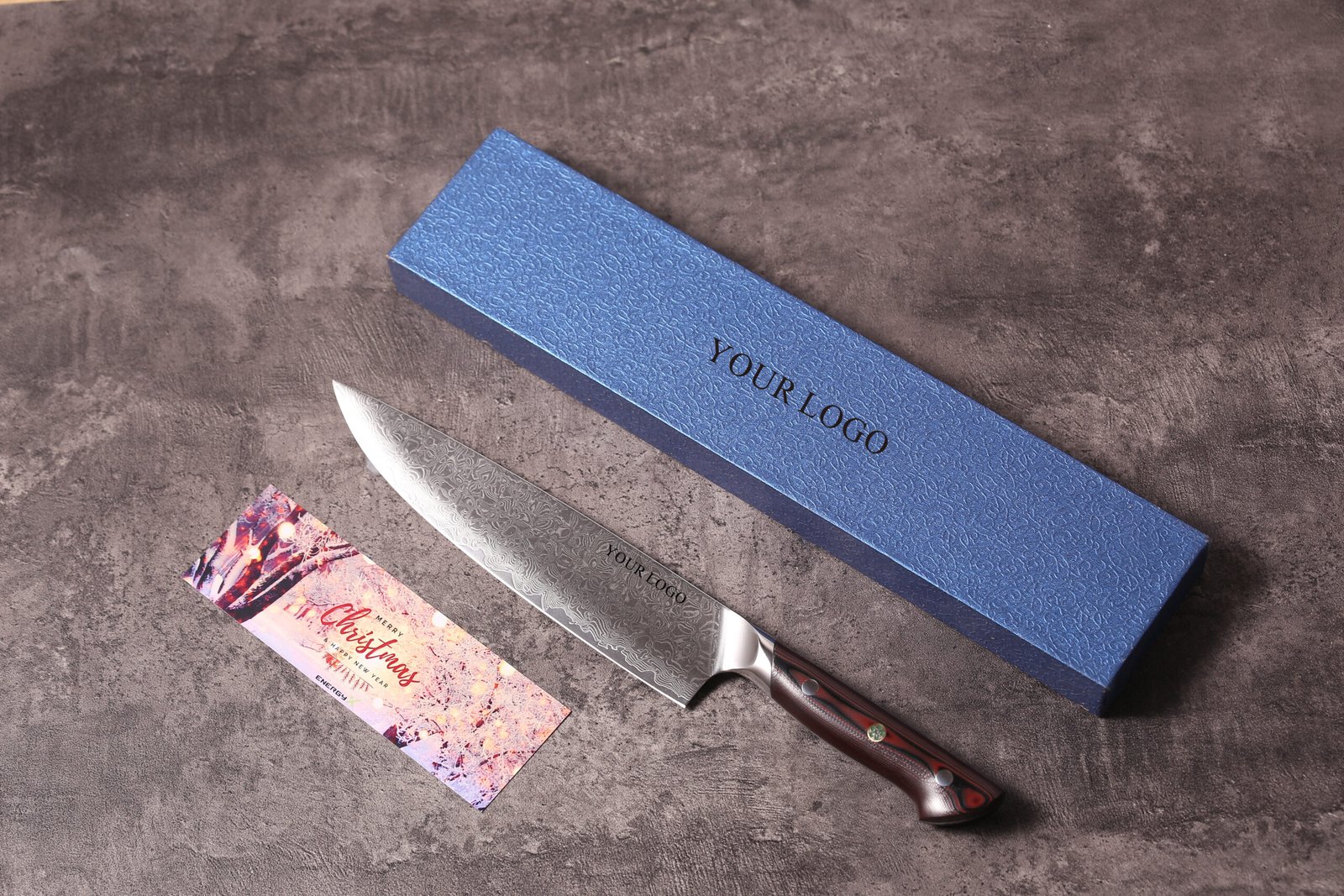
Tuck a small card into the box that explains it:
“Tradition says a knife should never be given, only sold. So this one costs one penny. Hand it over and it’s yours — along with the house.”
Nine out of ten clients will laugh, dig a coin out, and tell that story to the next three people who come over for dinner. Try getting that out of a bottle of cabernet.
What actually makes a good closing-gift knife
Most people buying gift knives get this wrong. They shop by piece count instead of by quality.
Here is what matters.
One great knife beats a set of six average ones. A cheap block set sends the message “I spent $40.” A single well-made chef knife in a proper box sends the message “I thought about this.”
It has to look expensive in the hand. Weight, balance, a clean finish, a handle that feels like real material and not molded plastic. Your client is not a chef. They will judge it in the first three seconds.
It has to be a knife they will actually use. Which brings us to size.
The right knife for the job
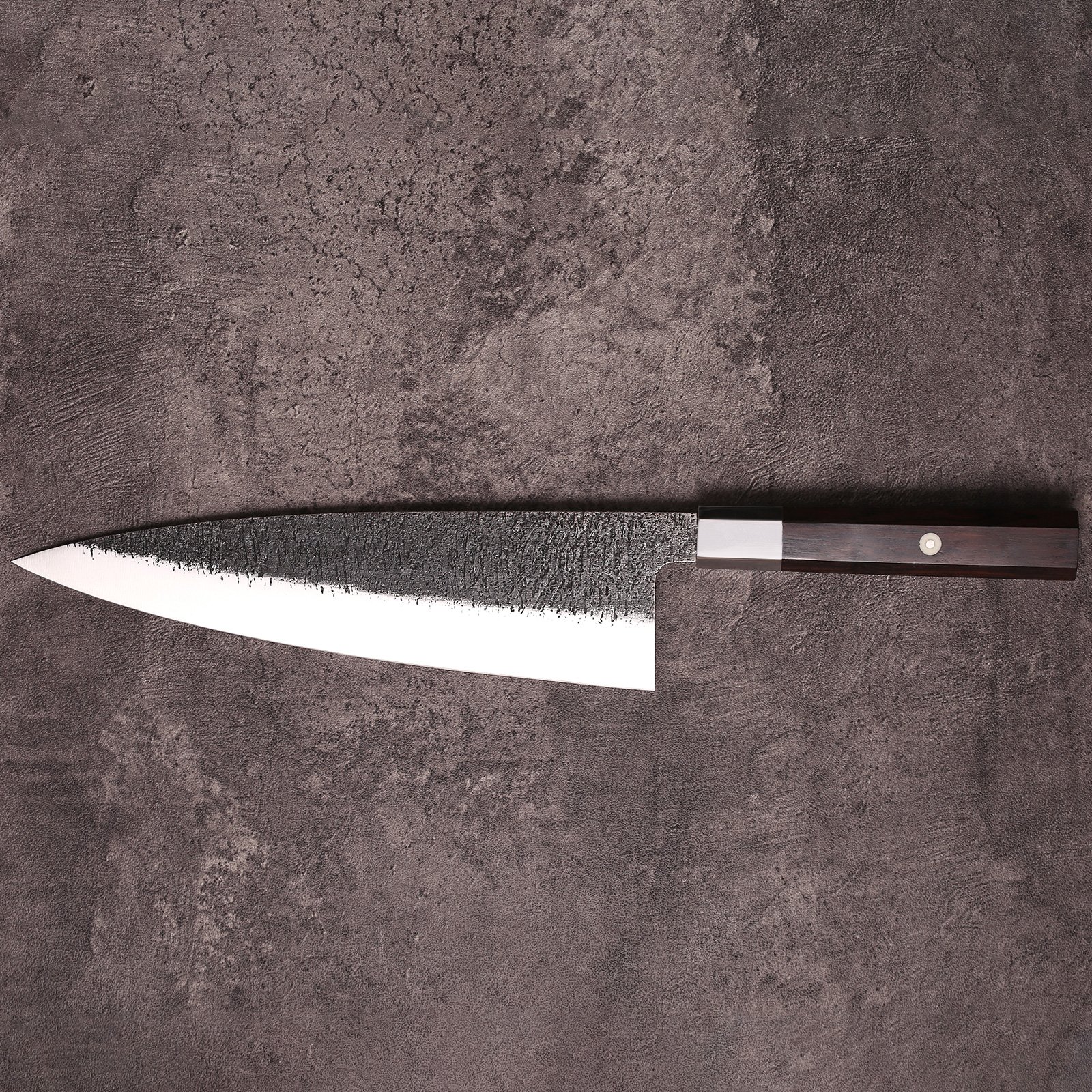
An 8-inch chef knife. The safe answer, and the right answer most of the time. It handles ninety percent of what happens in a home kitchen.
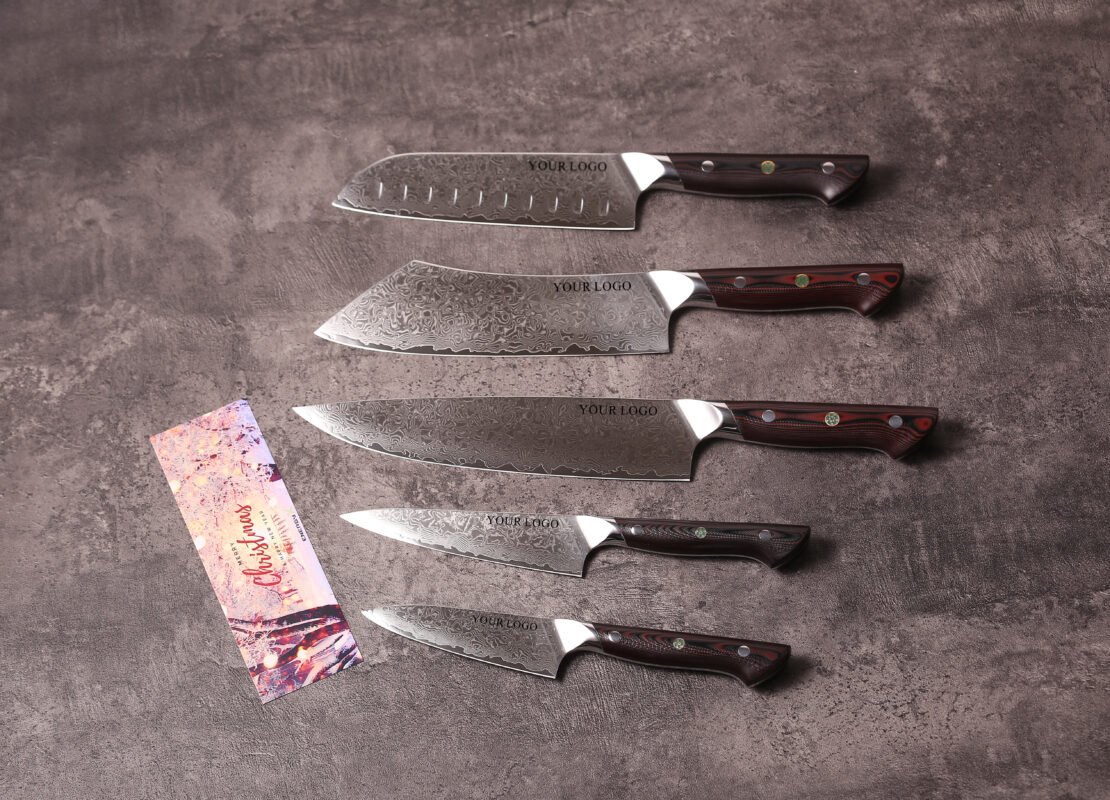
A santoku or bunka, around 7 inches. A great choice for younger buyers, condo buyers, or anyone with a smaller kitchen. Lighter, easier to control, less intimidating than a big chef knife.
A two-piece pair — chef knife plus paring knife. The upgrade option. Covers big jobs and small jobs, still feels curated rather than bulk.
A Damascus-pattern blade if you want it to be a conversation piece. The layered pattern is genuinely beautiful, and people show it to guests. It is the difference between a gift that is used and a gift that is displayed and used.
What to avoid: 10-inch and 12-inch chef knives. They look impressive in a photo and terrify normal people. Nobody wants a machete from their realtor.
Budget: what to spend
Match the gift to the commission, not to your mood.
1. Entry level — a solid single chef knife in a gift box. Good for rentals, small condos, and first-time buyers on a starter budget.
2. Mid tier — a Damascus-clad chef knife or a two-piece set with a wood handle. This is the sweet spot for most residential closings.
3. Premium — a multi-piece set in a magnetic wood block, or a high-carbon-core knife with a premium handle. Reserve it for luxury sales and repeat clients who send you business.
A useful rule: spend enough that the client cannot easily guess the price. The moment they can price your gift, it stops being a gesture and starts being a transaction.
One more practical note — business gift deductions are capped in the US, and the cap is low. Talk to your accountant before you build this into your budget.
Your logo or their name? It depends on when you give it.
This is the question everyone asks, and the answer changes depending on the moment.
Giving it before the deal closes? Put your logo on it.
A knife handed over at a listing presentation, or to a seller you are still competing for, is a marketing tool. It is doing a job. The seller may be interviewing three agents this week — you want the one object left on their counter to have your name on it. Blade engraving, handle engraving, branded box, all of it. That is the point.
The same goes for gifts to past clients you want referrals from, sphere-of-influence gifts, and anything you hand out at an open house. Brand it.
Giving it at the closing table? Consider putting them first.
Once the deal is done, the gift’s job changes from winning business to being remembered fondly. Two formats work best here:
The client’s family name on the blade, with your logo smaller on the handle, bolster, or box.
The address and closing date. This is the strongest one of all. It turns the knife into a keepsake of the house itself, and nobody ever throws that away.
You still get your branding. It just sits on the back of the handle or on the lid of the box instead of across the blade.
A practical middle path: brand the box heavily, keep the blade clean or personalized. Your logo is the first thing they see every time they open it, and the knife itself stays the kind of object people show to guests.
Whichever route you choose, lock the engraving layout once. After that, every reorder is just a text swap.
How to buy: order once, use all year
The agents and brokerages who do this well buy in one batch, usually at the start of the year or ahead of the busy season. Here is the workflow.
Pick two tiers. A standard gift and a premium gift. That covers every deal you will close without you having to think about it again.
Buy direct instead of retail. Buying a year of gifts at wholesale instead of one knife at a time from a store typically moves you up a full quality tier for the same spend. That difference is visible in the hand.
Decide the engraving format up front. Client name, or address plus closing date. Lock the layout once and every future order just swaps the text.
Order early enough. Stock knives ship fast. Custom engraving, custom boxes, and custom knife designs all add lead time, and each has its own minimum order. Build in a buffer before your busy season rather than chasing a rush job the week of a closing.
Keep boxes on the shelf. Store the inventory, send engraving details as each deal firms up, and hand the gift over at the table.
It takes one afternoon of decisions and then it runs itself.
And two years later, when someone asks your client for an agent recommendation, they will be standing in the kitchen holding your name.
Build your closing-gift program at wholesale. We supply agents, teams, and brokerages direct from the workshop — chef knives, santokus, and Damascus sets, with laser engraving and custom gift boxes available. Send us your annual closing volume and your per-gift budget, and we will come back with two or three options at wholesale pricing, plus lead times and minimums.
Samples are available before you commit to a full order.
