

Chef's Knives
Japanese Knife Blade Blanks Wholesale | Factory-Direct Damascus, San-mai, Aogami & VG10 | wholesalechefknife.com
May
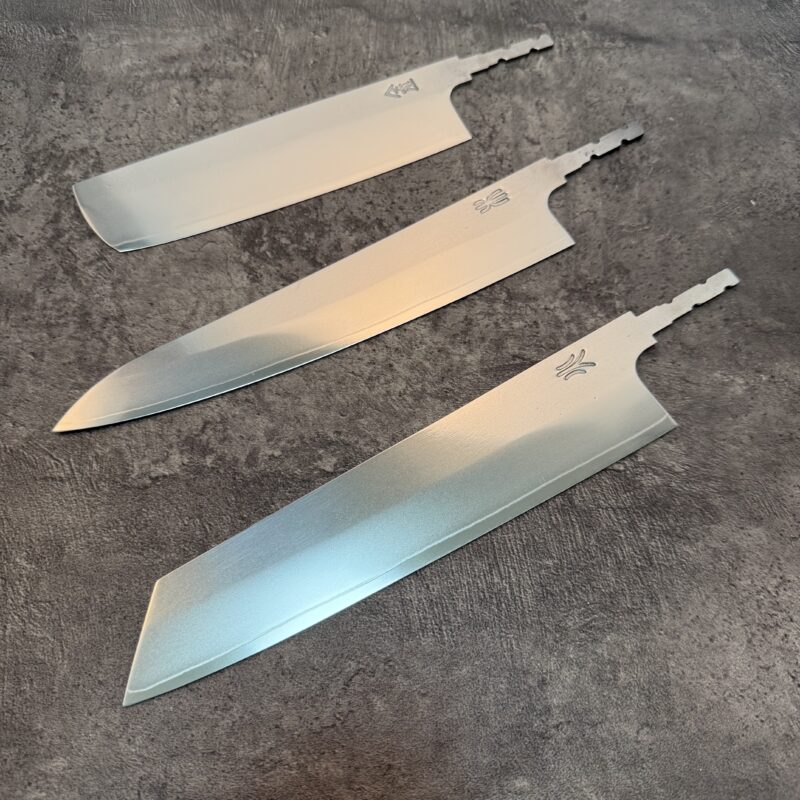
Whether you are a knife manufacturer, a custom maker, or a retailer building a Japanese knife line, the blade blank you source is the foundation of every knife you sell. The steel grade, cladding method, blade geometry, and price point you choose today determine your production cost, your finished knife quality, and your retail margin tomorrow.
At wholesalechefknife.com we supply knife blade blanks factory-direct — cutting out the middleman entirely so your per-unit cost stays low even on mixed orders. Our customers include knife manufacturers across Asia and Europe, custom makers in Japan who finish and resell our blanks at significant premiums, and culinary retailers expanding into Japanese-style knives for the first time.
This guide covers every steel type and blade profile in our range, with full specifications, a comparison table, and direct links to each product category. Use it as your sourcing reference when comparing materials or placing a wholesale enquiry.
Who buys from wholesalechefknife.com?
Knife manufacturers, OEM buyers, custom knife makers, culinary retailers, and wholesale distributors worldwide. We are factory-direct — no agents, no importers between you and the source. Many of our Japanese customers purchase blanks, fit premium handles, and resell finished knives at two to three times the blank cost. Contact Joseph directly for wholesale pricing, MOQ, and lead times.
1. What is a knife blade blank?
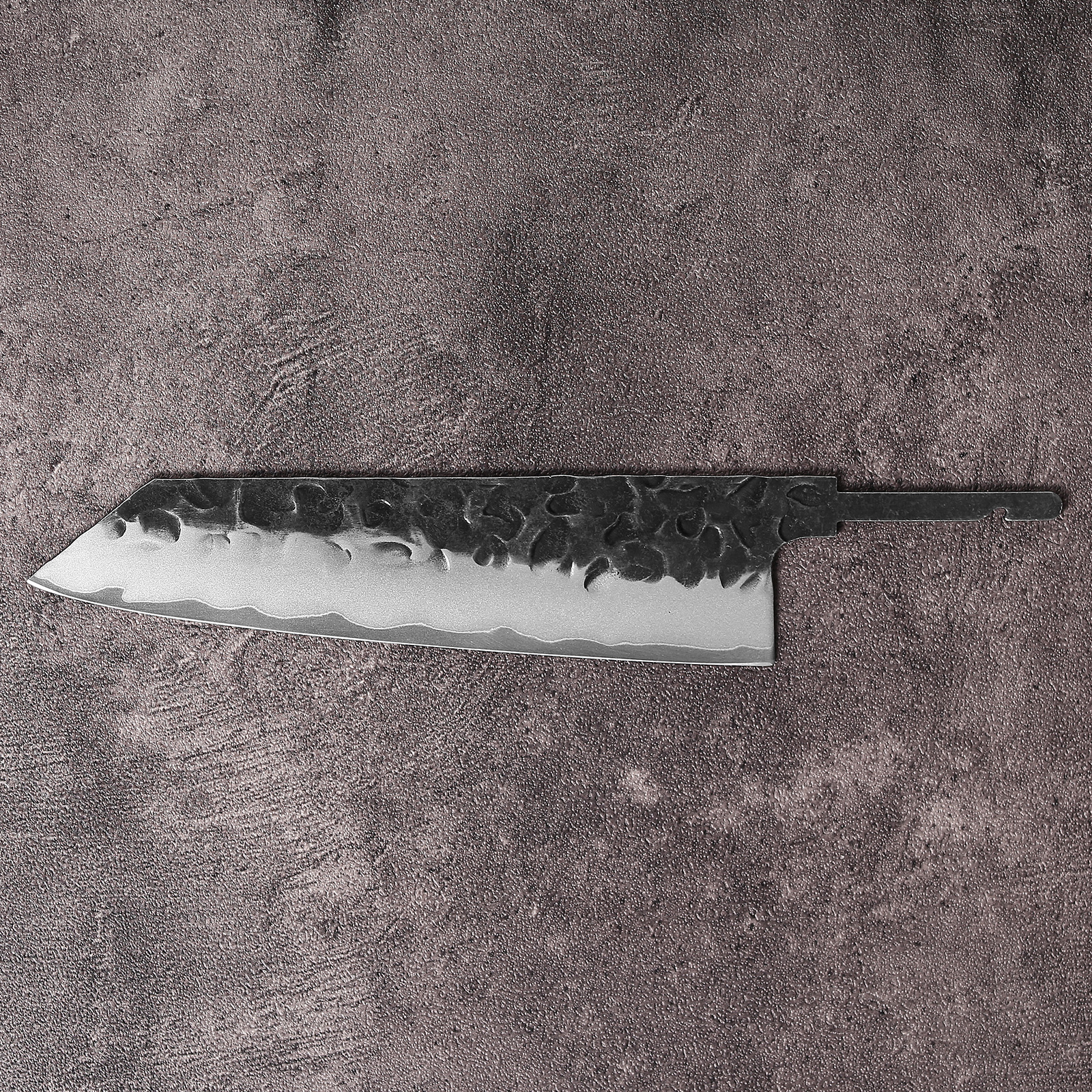
A knife blade blank — also called a blade blank, knife blank, or unfinished blade — is a shaped and heat-treated blade that has not yet been fitted with a handle. The blade geometry, bevel grind, and steel hardness are fully established. The buyer then attaches their own handle material, finishes the edge to their preferred angle, and applies any surface treatment or branding.
Sourcing blanks rather than finished knives gives manufacturers and makers three clear commercial advantages:
• Lower per-unit cost compared with fully finished OEM knives
• Freedom to apply your own handle design, blade stamp, and brand identity
• Faster lead times — blanks are stock items; finished knives require additional handle production scheduling
All blanks at wholesalechefknife.com are supplied with a machined tang ready for handle fitting. Blade geometry, surface texture, and edge bevel are consistent across production batches, making them reliable for volume production environments.
2. Why buy factory-direct from wholesalechefknife.com?
Most knife blank suppliers operate through agents, importers, or distributors. Every layer in that chain adds cost — cost that you ultimately absorb in your per-unit price. At wholesalechefknife.com, you buy directly from the factory.
Here is what factory-direct means for your business:
• Affordable pricing: no agent commissions, no importer markups. You get factory pricing on every order, whether you are buying 10 blanks or 10,000.
• Consistent quality: because there is no third party repackaging or handling our blanks between production and shipment, every batch meets the same specification you approved on your first sample order.
• Direct communication: you deal with Joseph directly. Questions about specifications, lead times, custom requirements, or production scheduling get answered by someone who knows the product — not a sales intermediary.
• Strong resale margins: many of our Japanese customers source blanks from us, fit premium wa handles and custom lacquerwork, and retail finished knives at two to three times their input cost. The combination of affordable blank pricing and high-quality Damascus or san-mai steel creates exactly the margin structure that supports a premium retail or e-commerce knife business.
• Worldwide shipping: we ship to knife makers, retailers, and manufacturers across Japan, Europe, North America, and Southeast Asia. DDP and FOB options are available for larger shipments.
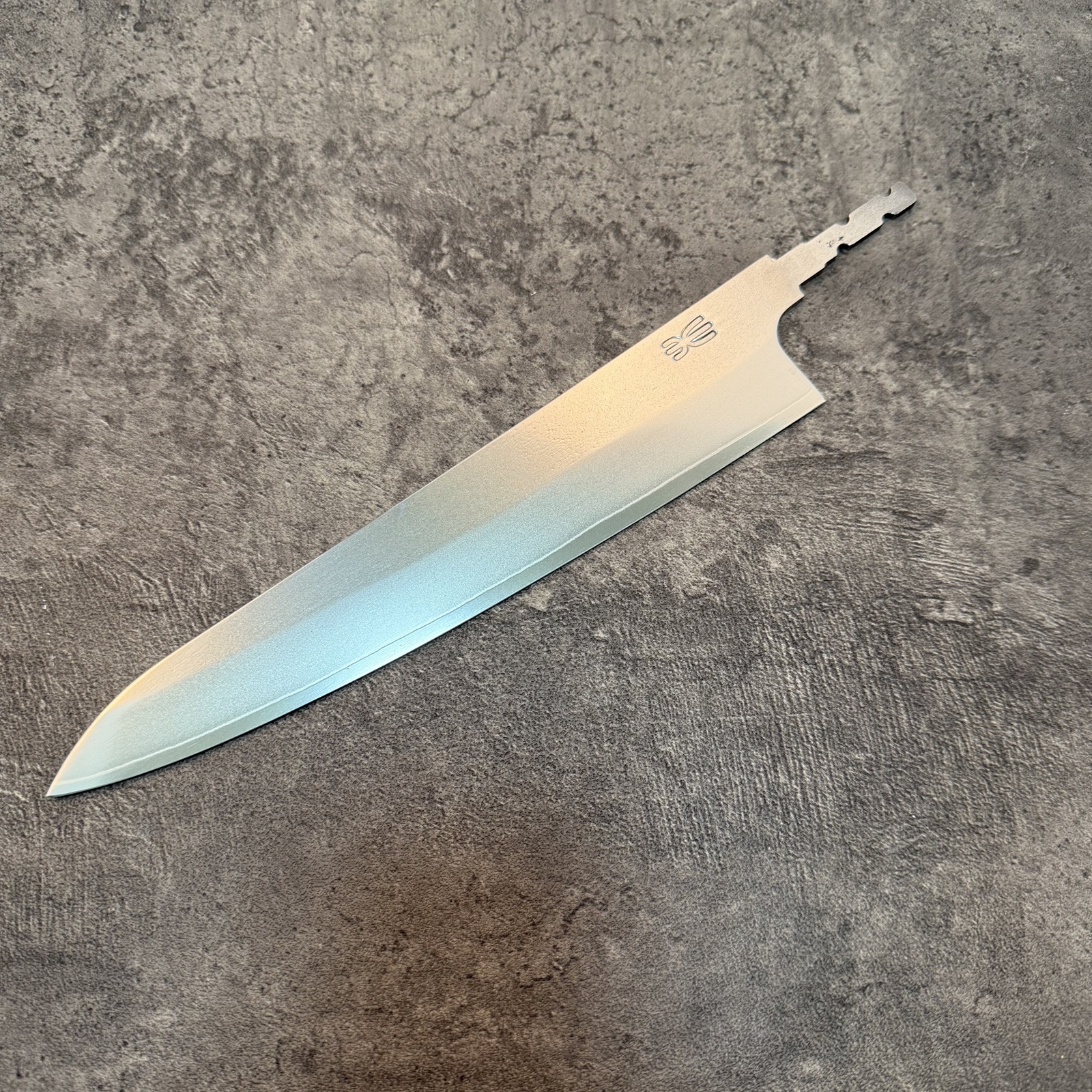
3. Custom engraving and logo stamping on knife blanks
One of our most requested services for wholesale buyers is custom engraving and logo stamping directly on the blank. This allows you to brand the blade before handle fitting — giving you a finished knife that carries your maker’s mark, your retail brand, or your customer’s logo without any additional production step on your end.
What we can engrave or stamp
• Maker’s marks and brand logos
• Store or restaurant names
• Custom text (knife series name, steel grade, country of origin)
• QR codes or serial numbers for traceability
How it works
Custom engraving is available on volume orders. You provide your artwork or logo file (vector format preferred — AI, EPS, or SVG), and we apply it to the ricasso (the flat area near the blade heel) or the blade face, depending on your preference and the blank profile. Engraving is done before dispatch so your blanks arrive branded and ready for handle fitting.
Why this matters for your business
A branded blade is the difference between selling a knife and selling your knife. For retailers positioning at the premium end, a custom engraved blade stamp on a Damascus or copper-mai blank signals authenticity and craftsmanship to the end customer in a way that a sticker or packaging never can. For OEM buyers supplying restaurant groups or culinary schools, a house logo on the blade reinforces the institutional identity of the knife programme.
Note: *** Custom engraving note: minimum order quantities apply for custom engraving. Contact Joseph with your logo file and required quantity for a quote and sample approval process. Lead time for first-run engraved orders is typically 2–3 weeks after artwork sign-off. ***
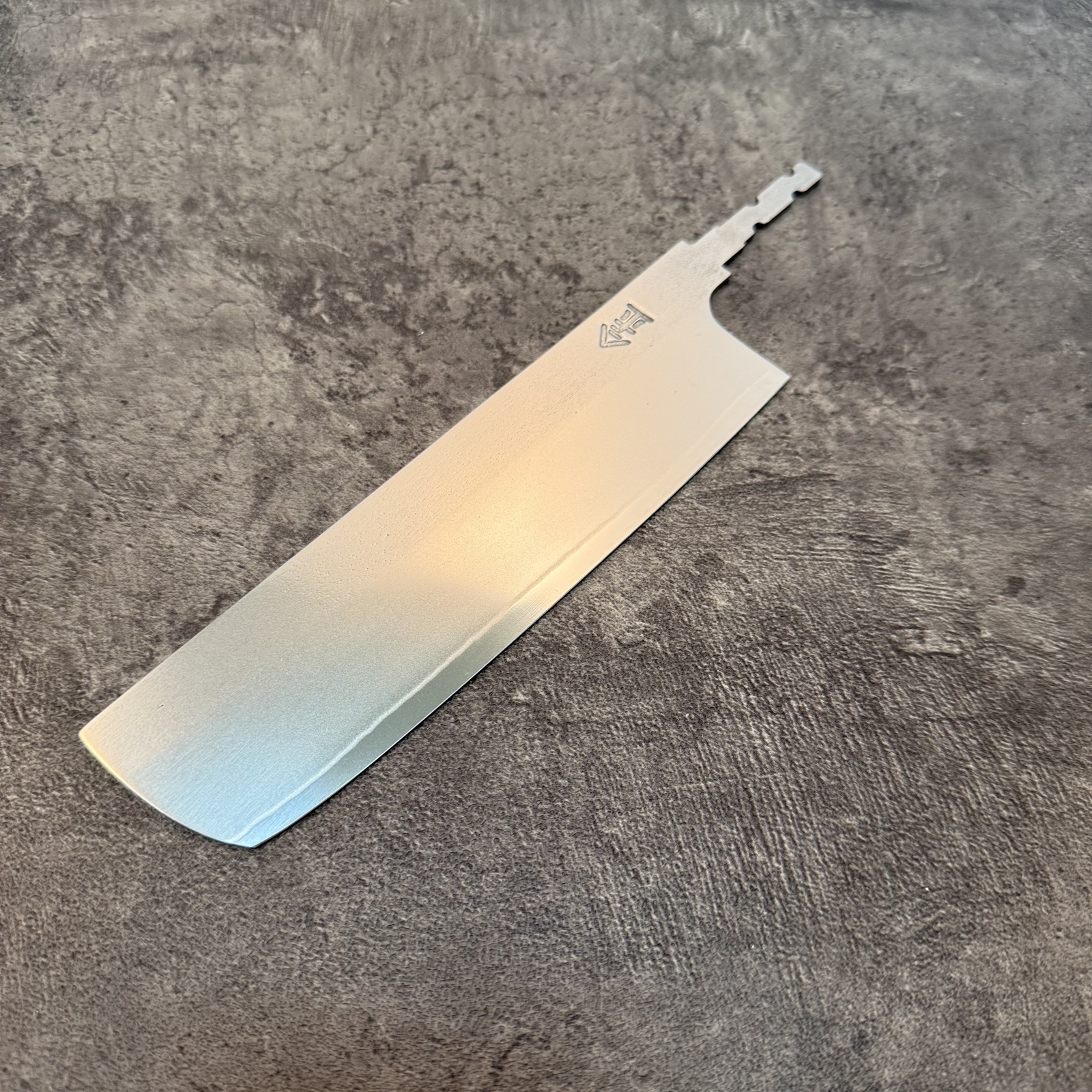
4. Steel types: what we carry
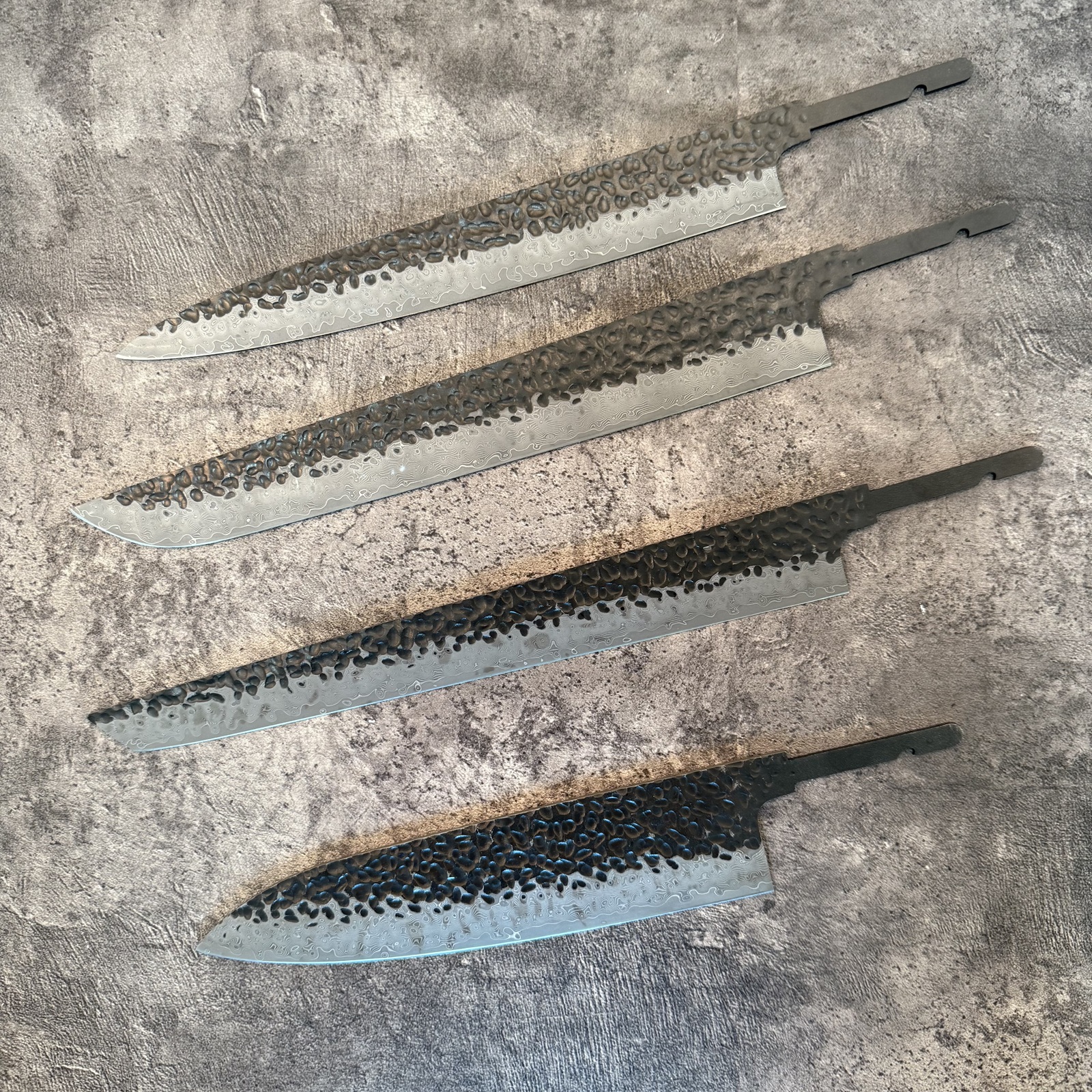
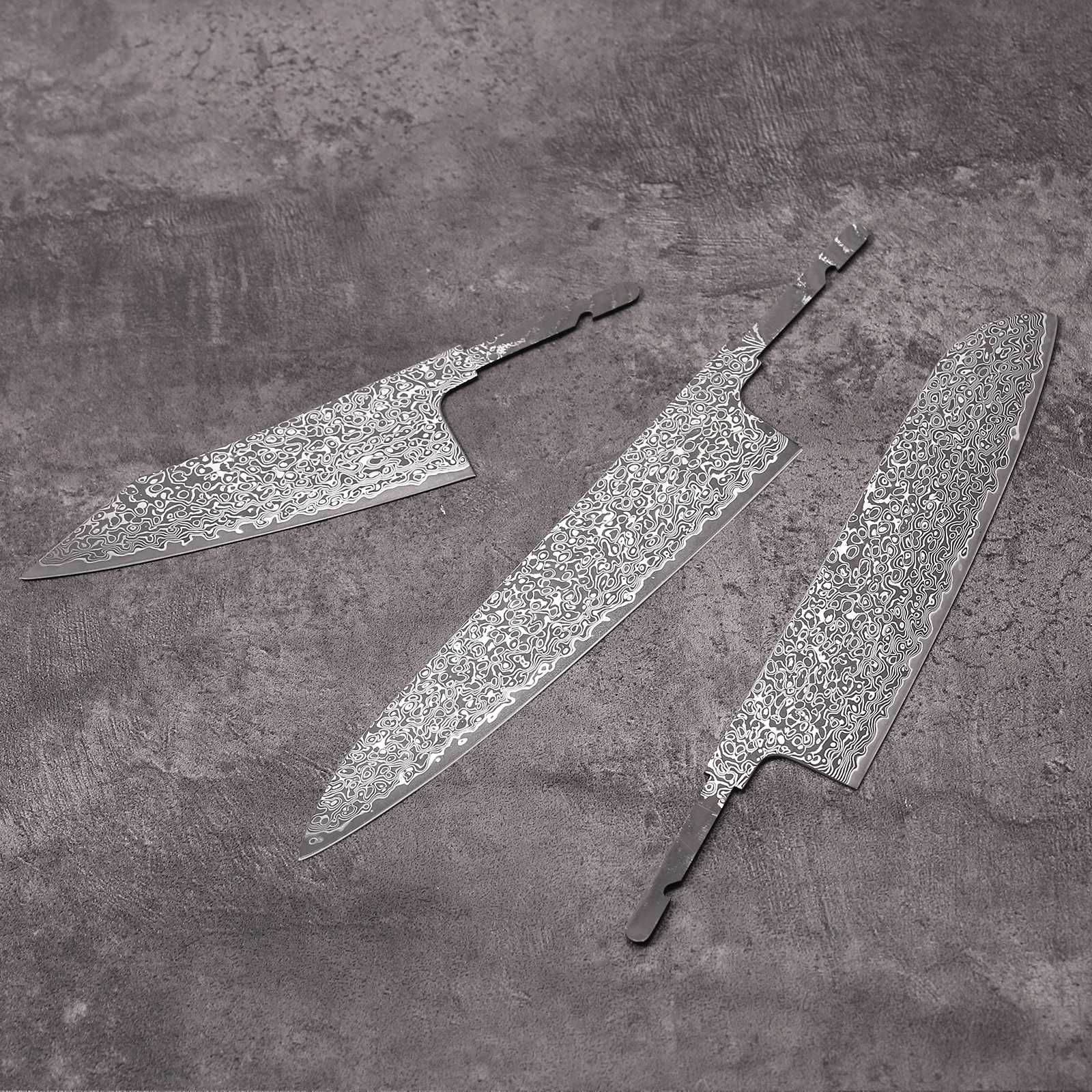
Damascus steel — pattern-welded, 67-layer
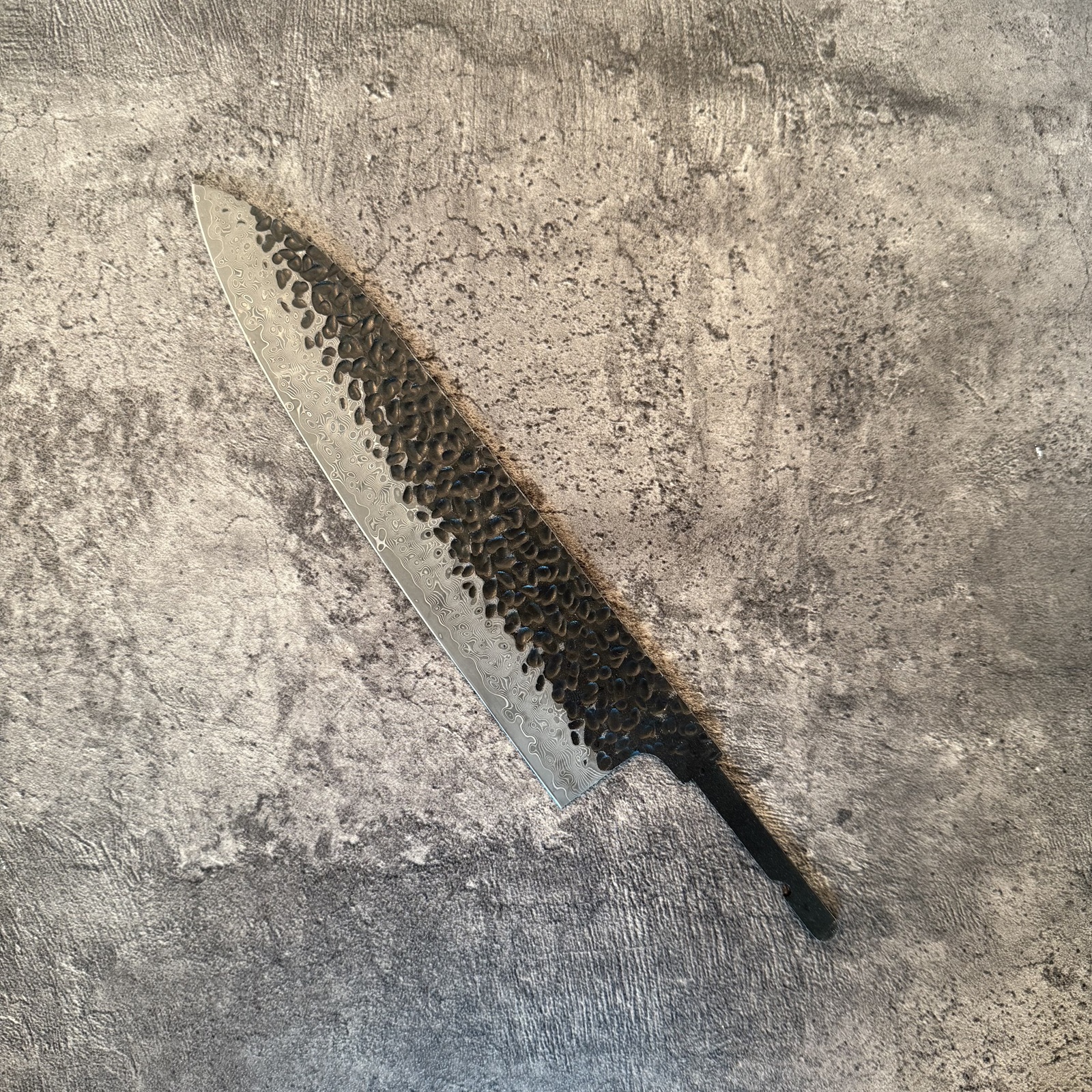
Damascus blanks are produced by forge-welding alternating layers of high-carbon and stainless steel, then drawing and folding the billet to produce the characteristic flowing grain pattern. The pattern is revealed through acid-etching after grinding.
• Core steel: high-carbon for cutting performance
• Cladding: 67-layer / 45-layer Damascus pattern
• HRC: 59-60
• Visual differentiation: the patterned surface is a powerful retail differentiator that justifies premium pricing
• Best profiles: gyuto, kiritsuke, santoku, sujihiki, nakiri
Damascus blanks are the most popular steel choice among our customers building premium retail knife lines. The visual appeal is immediate, the edge performance is strong, and the affordable factory pricing means the margin between blank cost and retail price is substantial.
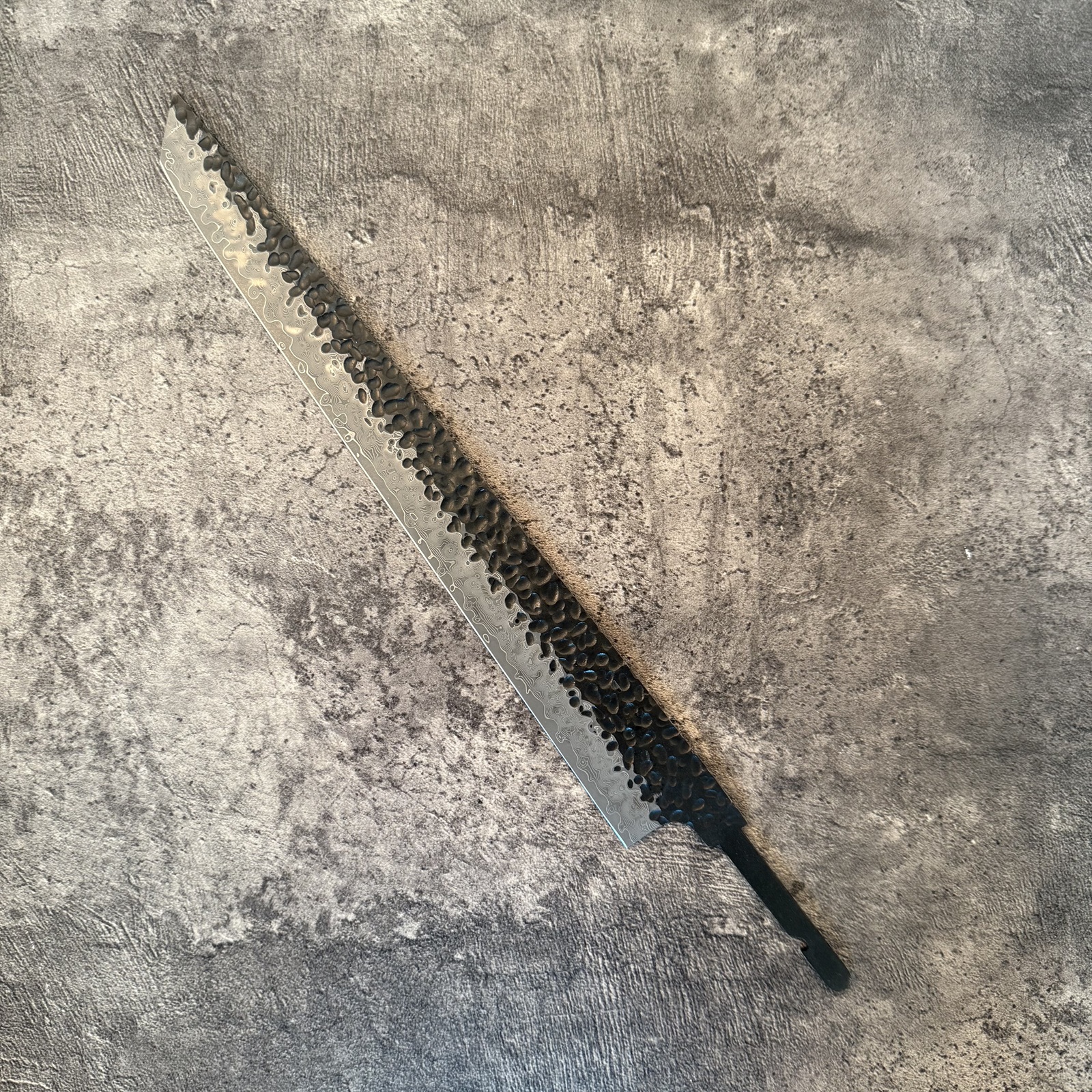
San-mai — three-layer cladding
San-mai (literally “three layers” in Japanese) sandwiches a hard, high-carbon or tool steel core between two layers of softer stainless steel. The result delivers the edge retention of hard steel with the corrosion resistance of stainless cladding.
• Core steel: high-carbon or tool steel (Aogami #2, White #2, or equivalent)
• Cladding: stainless steel on both faces
• The cladding line (hagane line) is visible on the finished blade — a valued aesthetic feature
• HRC: 59–60 on the core
• Best profiles: gyuto, yanagiba, deba, petty, kiritsuke
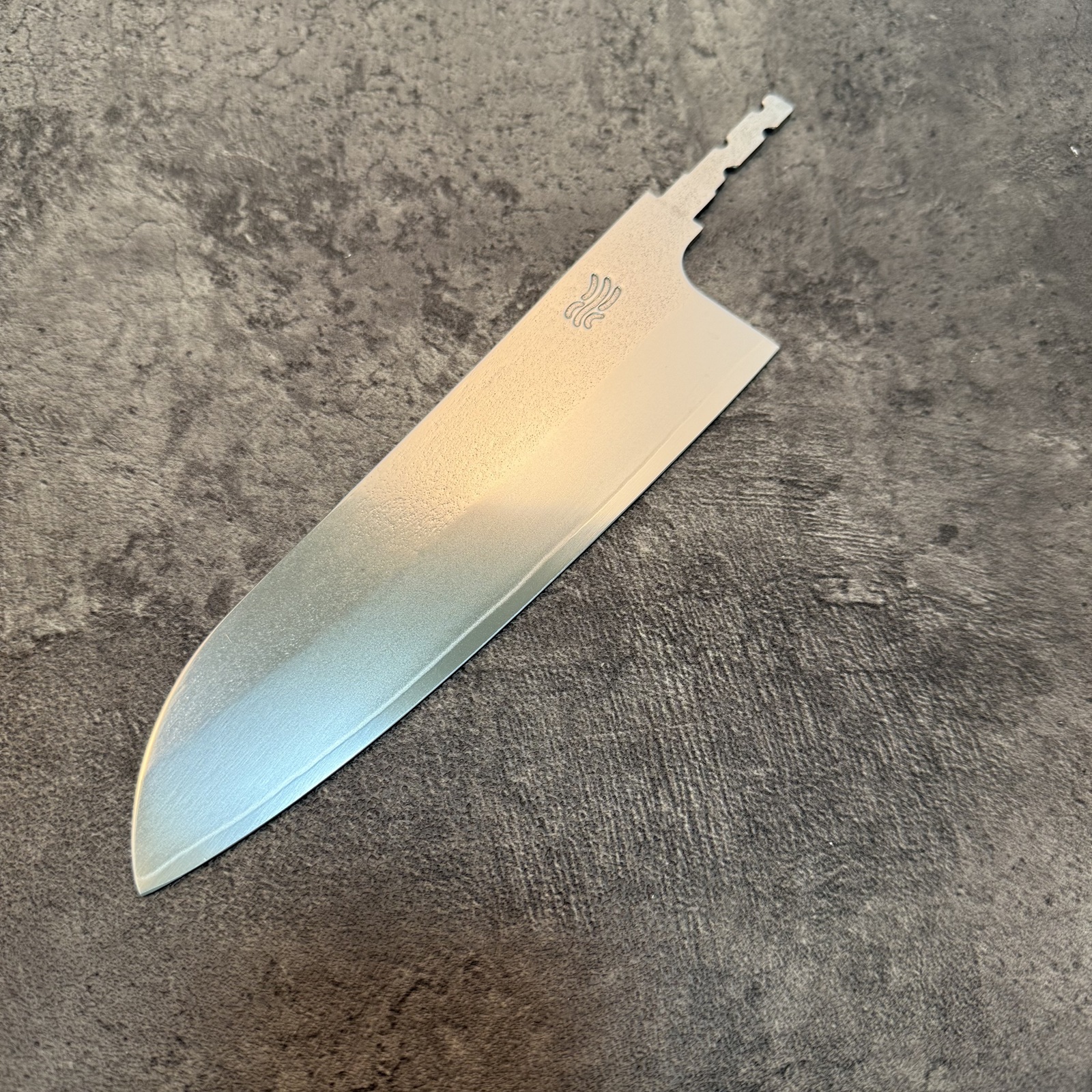
Aogami (Blue steel) — high-carbon Japanese tool steel
Aogami — Blue Paper Steel — is produced by Hitachi Metals and is one of the most respected knife steels in professional Japanese cutlery. Tungsten and chromium additions over standard White steel improve wear resistance and edge retention without sacrificing sharpenability.
• Aogami #1: highest carbon and tungsten content, exceptional edge retention, for experienced sharpeners
• Aogami #2: most widely used — excellent balance of toughness, edge retention, and sharpening ease
• Aogami Super: adds molybdenum and vanadium for maximum wear resistance
• HRC: 62–65 depending on grade
• Important: Aogami is a reactive steel (not stainless) and will develop a patina. Best sourced as a san-mai blank for buyers requiring stainless performance.
• Best profiles: yanagiba, deba, usuba (single-bevel), and san-mai gyuto / nakiri
Note: The high carbon steel knife is more prone to get rust please dry and oil it after uses.
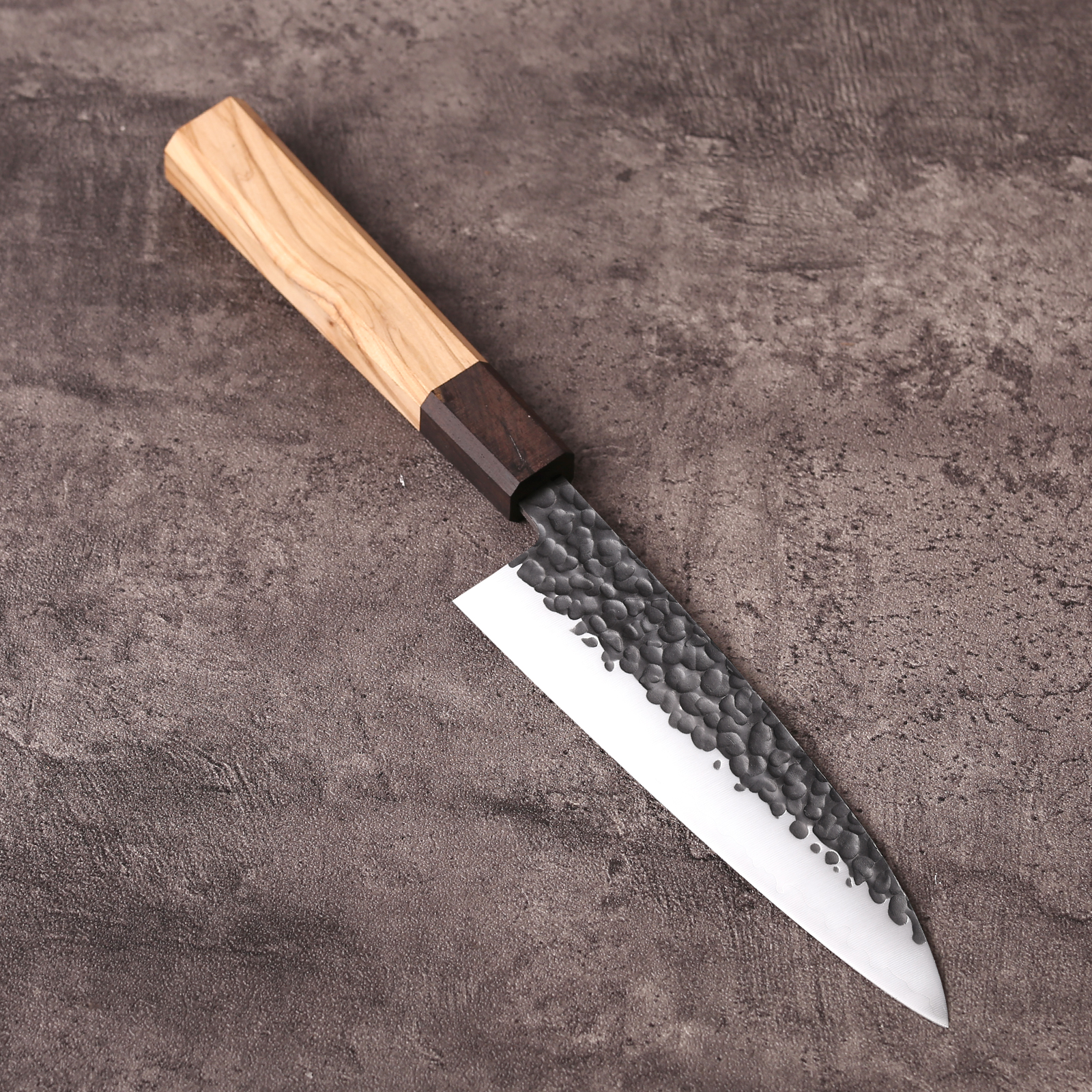
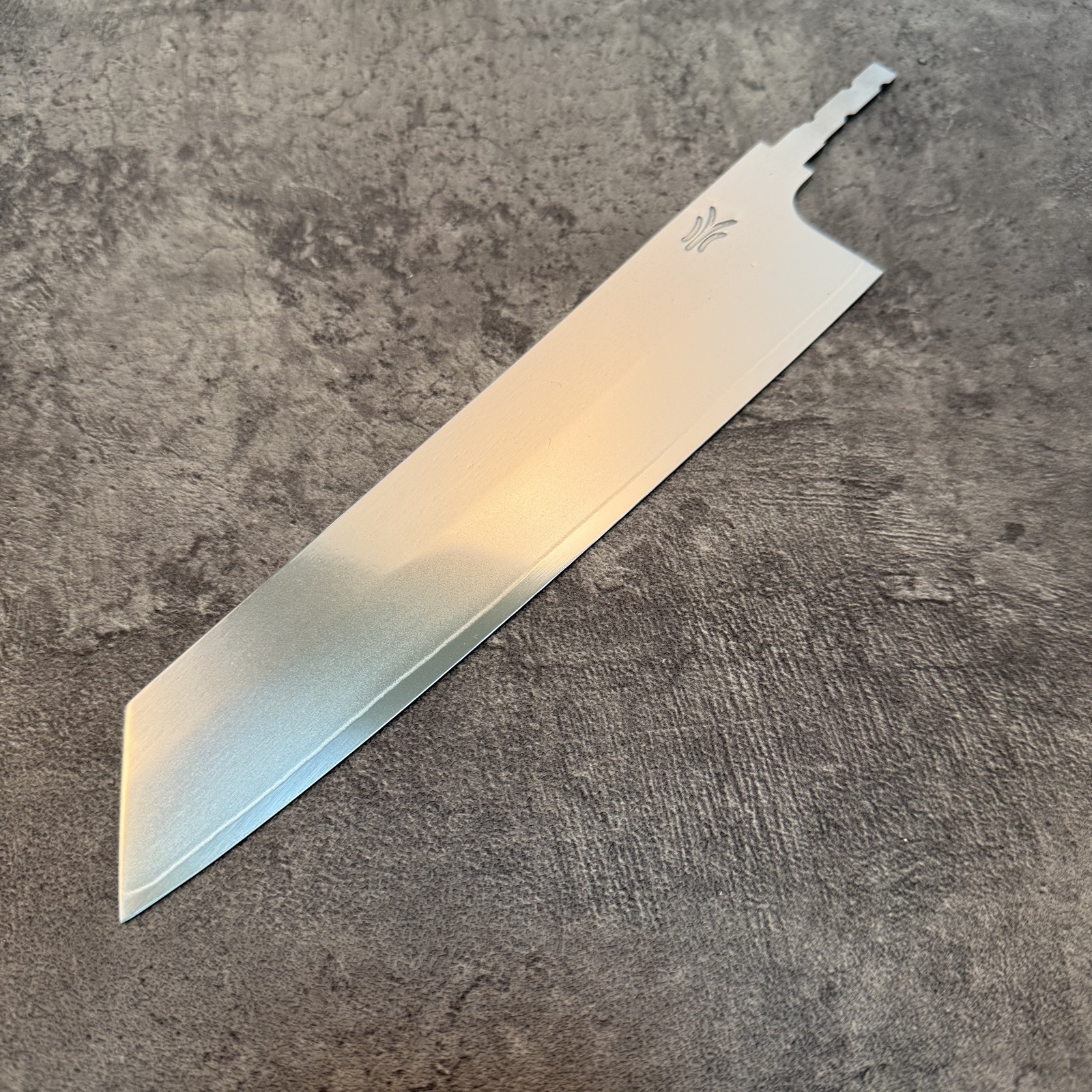
Copper-mai san-mai — decorative copper cladding
Copper-mai is a san-mai variant where copper is incorporated into the outer cladding layers. The visible copper line at the cladding boundary creates a distinctive two-tone aesthetic that commands premium retail pricing. This is our most visually striking blank.
• Core steel: high-carbon tool steel
• Cladding: copper-clad san-mai with visible copper hagane line
• HRC: 59 on the core
• The copper cladding is structurally and functionally sound — not merely cosmetic
• Best profiles: gyuto, kiritsuke, petty — profiles where the full blade face is visible to the buyer
Japanese knife makers particularly favour copper-mai blanks for premium custom work. The copper line photographs extremely well for e-commerce product listings and social media, which directly supports the higher retail prices their finished knives command.
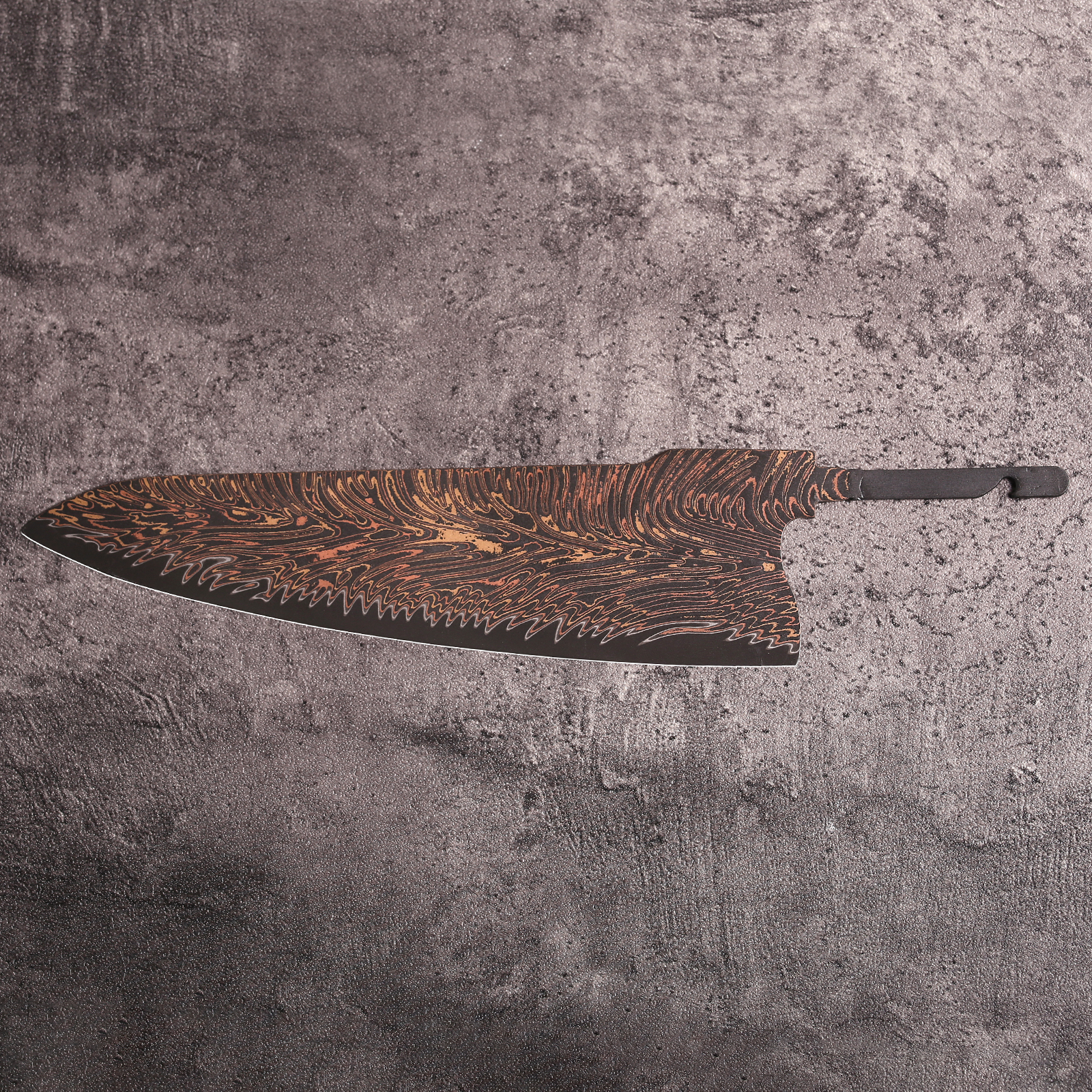
VG10 — single-layer stainless steel
VG10 (V Gold No. 10) is produced by Takefu Special Steel and is the most widely used steel in production Japanese chef knives globally. It combines corrosion resistance, strong edge retention, and ease of maintenance in a fully stainless package — the right choice for production environments and retail knife lines where stainless performance is a requirement.
• Steel: VG10 (1% carbon, 15% chromium, 1% molybdenum, 0.2% vanadium, 1.5% cobalt)
• Fully stainless — suitable for commercial kitchens and dishwasher-resistant retail positioning
• HRC: 60–61
• Consistent batch-to-batch performance — reliable for high-volume production
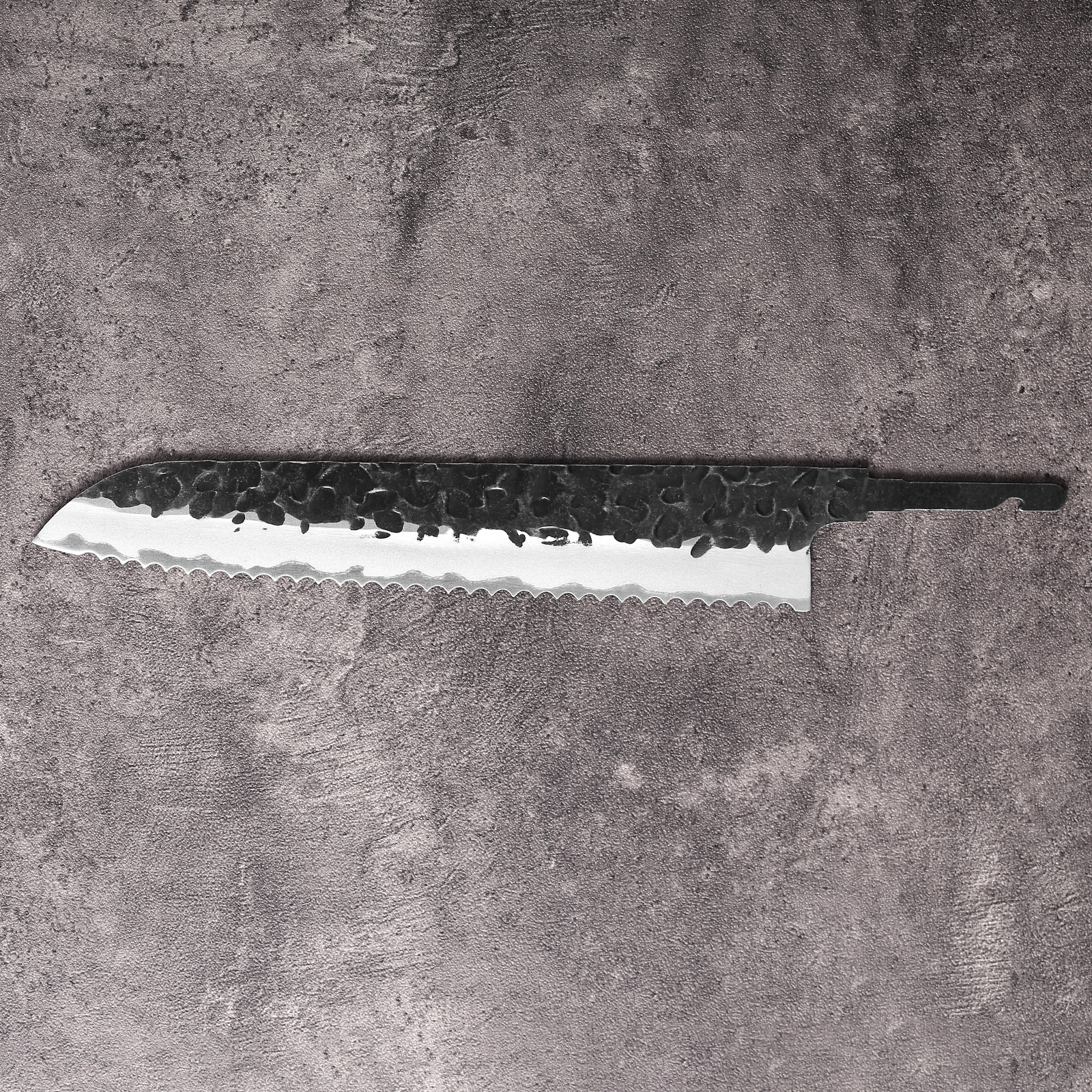
• Best profiles: gyuto, santoku, nakiri, bread knife, petty
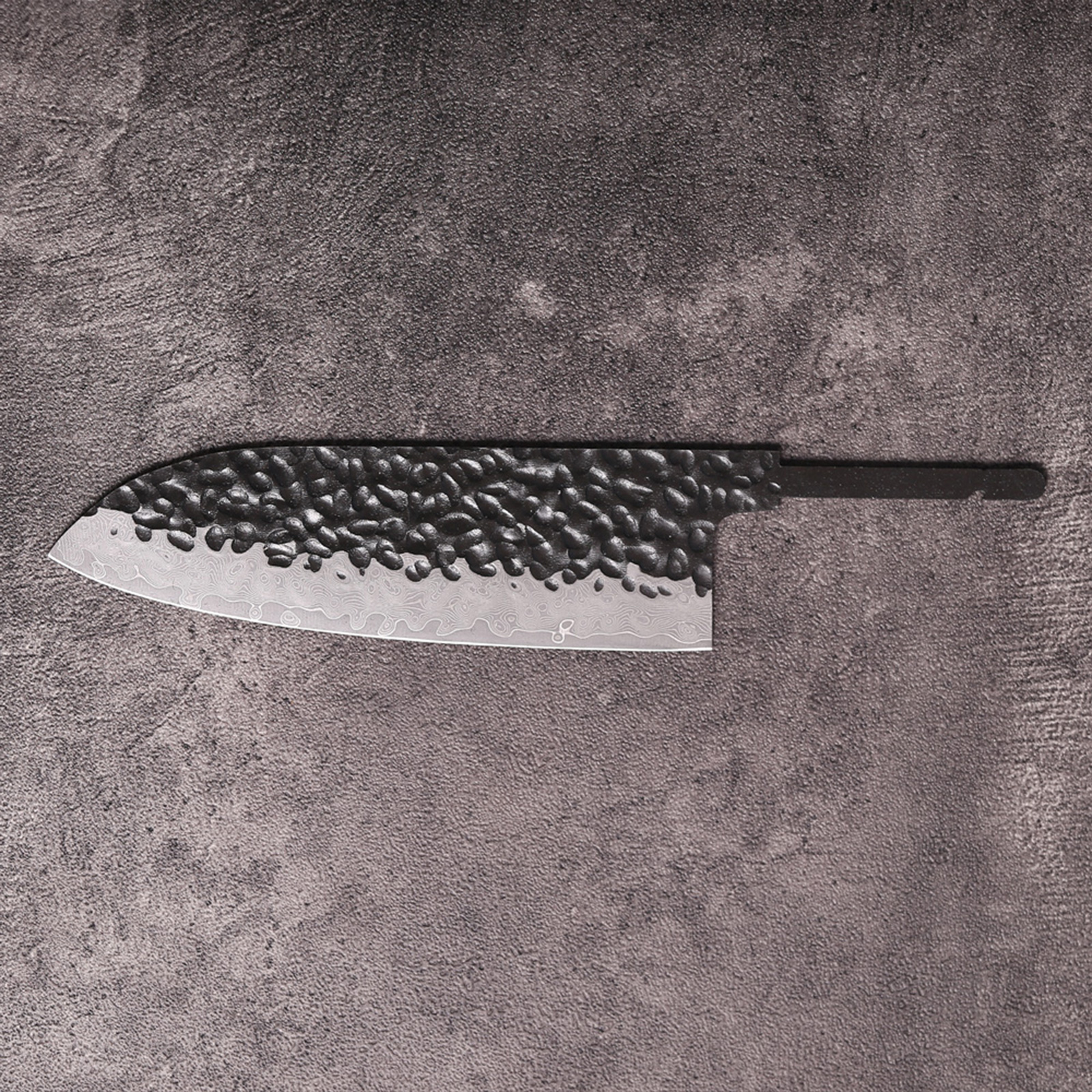
5. Steel comparison table
| Steel | Layers | HRC | Stainless? | Edge retention | Sharpenability | Visual appeal | Best for |
|---|---|---|---|---|---|---|---|
| Damascus | 67/45 | 59–60 | Core: no / Clad: yes | High | Moderate | ⭐⭐⭐⭐⭐ Very high | Premium retail lines |
| San-mai | 3 | 59–60 | Core: no / Clad: yes | Very high | Moderate | ⭐⭐⭐⭐ High | Pro & custom knives |
| Aogami #1 | 1 | 63–65 | No | Exceptional | Moderate | ⭐⭐ Rustic | Single-bevel, expert use |
| Aogami #2 | 1 | 62–64 | No | Very high | Good | ⭐⭐ Rustic | All-round professional |
| Aogami Super | 1 | 63–65 | No | Exceptional | Moderate | ⭐⭐ Rustic | Maximum wear resistance |
| Copper-mai | 3 + Cu | 59+/- | Core: no / Clad: yes | Very high | Moderate | ⭐⭐⭐⭐⭐ Exceptional | Artisan & luxury lines |
| VG10 | 1 | 60–61 | Yes — fully stainless | High | Excellent | ⭐⭐⭐ Moderate | Production & retail volume |
6. Blade profiles and full specifications
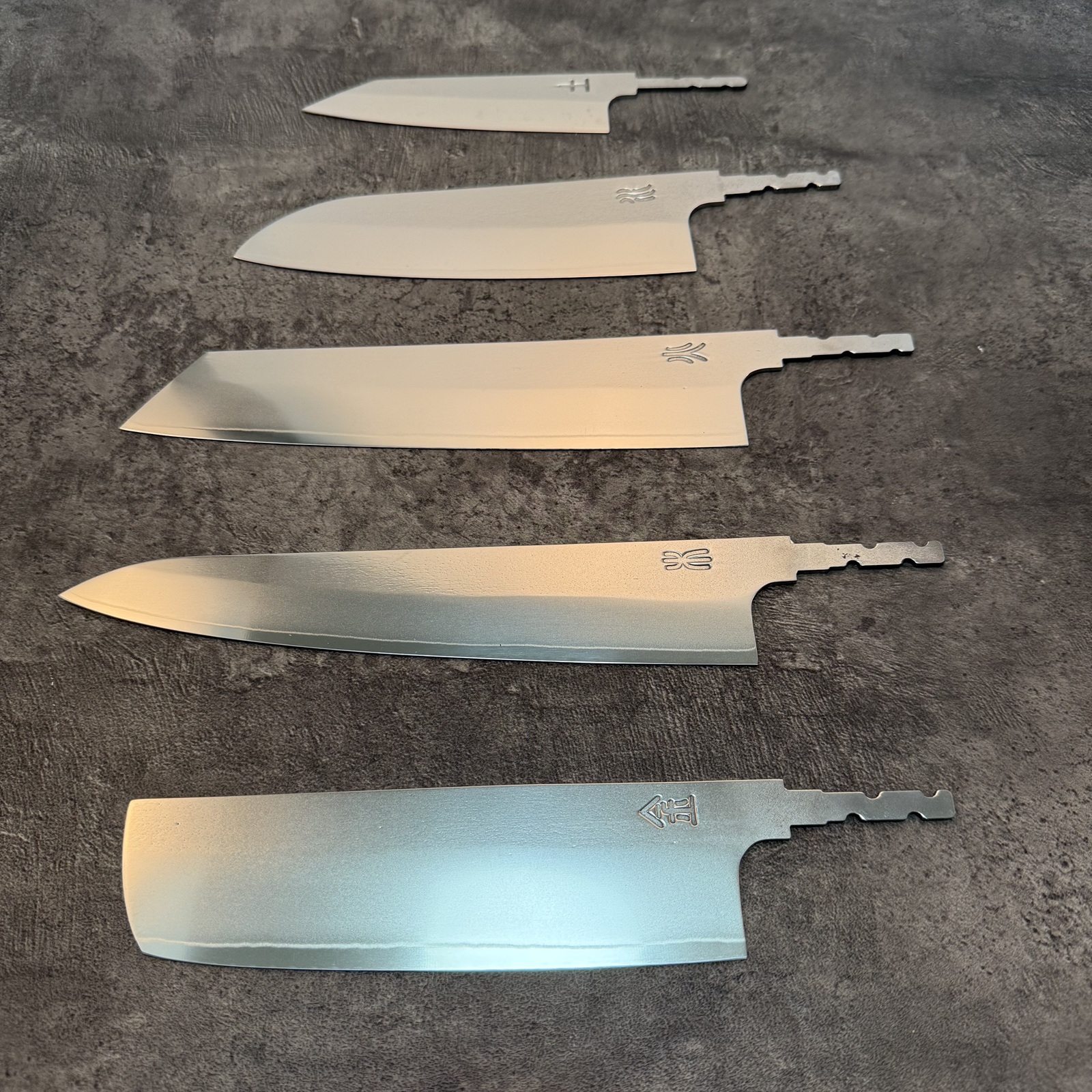
We carry all major Japanese knife profiles. Specifications below are from production samples and are consistent across batches (±2mm length, ±2g weight within normal manufacturing tolerance).
Large and mid-size blanks
| Profile | Blade length | Blade width | Weight | Handle tang | Notes |
|---|---|---|---|---|---|
| Gyuto (wide) | 240mm | 50mm | 146g | 45-55mm | Western chef knife — wide-belly profile |
| Gyuto (standard) | 240mm | 49mm | 138g | 45-55mm | Narrower spine, lighter balance |
| Bread / serrated | 255mm | 38mm | 114g | 45-55mm | Full serration — longest blank in range |
| Santoku | 210mm | 48mm | 128g | 45-55mm | Flat-to-curved edge, wide heel |
| Yanagiba / sujihiki | 215mm | 35mm | 108g | 45-55mm | Slender slicer, low spine profile |
| Small slicer | 205mm | 33mm | 96g | 45-55mm | Compact slicer, serrated option available |
Shorter and specialist blanks
| Profile | Blade length | Blade width | Weight | Handle tang | Notes |
|---|---|---|---|---|---|
| Gyuto (short) | 180mm | 48mm | 110g | 45mm | Compact chef knife, tight prep stations |
| Nakiri | 170mm | 49mm | 129g | 65mm | Flat vegetable cleaver — longer tang for western handle |
| Petty 150mm | 150mm | 38mm | 60g | 40mm | Utility / prep knife |
| Petty 133mm | 133mm | 30mm | 53g | 40mm | Narrow utility knife |
| Petty 120mm | 120mm | 25mm | 46g | 40mm | Small utility / paring |
| Deba | 80mm | 26mm | 34g | 40mm | Butcher / fish breakdown knife |
All profiles are available across multiple steel types. Use the product filter on our store to sort by profile, steel type, or blade length.
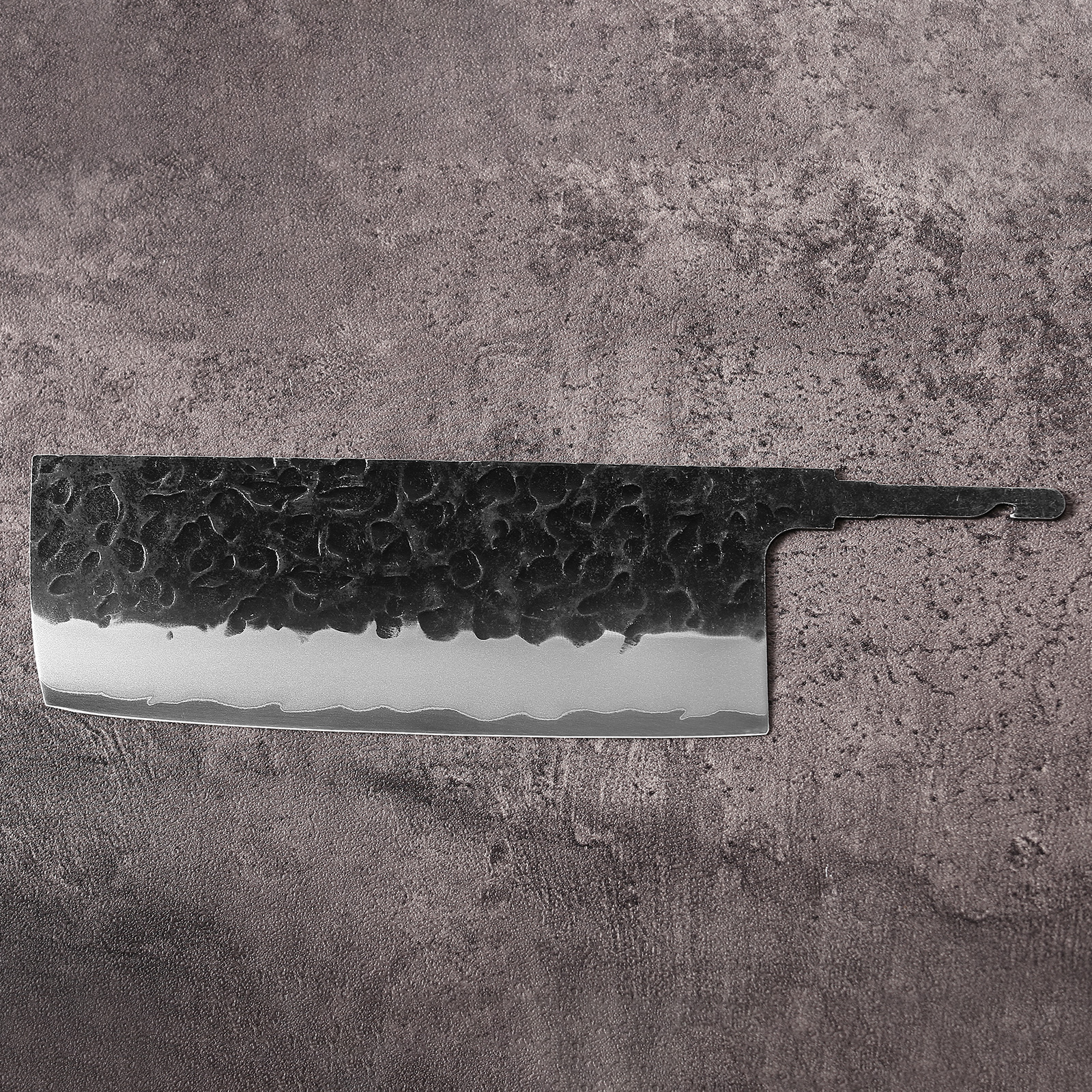
7. How to read knife blank specifications
When evaluating any knife blank — from us or from any supplier — these are the measurements that matter for production and handle-fitting compatibility.
Blade length: measured tip to heel (where blade meets tang). This is the primary sizing reference used globally and what most end buyers use to describe a knife size (e.g. “240mm gyuto”).
Blade width: measured at the heel — the widest point of the blade just before the tang. Affects knuckle clearance in use and the visual presence of the finished knife on the shelf.
Weight: the blank weight before handle fitting. Useful for calculating finished knife balance point. A heavier handle material (stabilised wood, buffalo horn, stainless bolster) shifts balance toward the handle. A lighter material (resin, ho wood) retains the blade-forward balance of the blank.
Handle tang length: the unground metal section that seats inside the handle. Longer tangs (65mm on the Nakiri above) suit full western handles with a bolster. Shorter tangs (40mm) suit wa-style handles with a simple collar fitting.
8. Choosing the right blank for your production run
Building a retail chef knife line
VG10 single-layer or Damascus over a VG10 core are the most commercially proven choices for retail. Fully stainless performance meets consumer expectations and retail warranty requirements. Damascus cladding adds visual differentiation at a modest cost premium and reliably supports higher retail price points.
Supplying professional kitchens or culinary schools
San-mai with an Aogami #2 core delivers the edge retention and sharpening ease that professional cooks value, with stainless cladding that performs in commercial kitchen conditions. The 240mm gyuto and 210mm santoku in Aogami #2 san-mai are our most requested profiles for foodservice buyers.
Custom and artisan knife work for premium retail
Copper-mai san-mai is the strongest differentiator in our range. The visible copper cladding line is immediately recognisable, photographs beautifully for e-commerce, and allows finished knife prices that significantly exceed the blank cost. Many Japanese custom makers build their retail positioning specifically around copper-mai and Damascus blanks sourced from us.
9. Wholesale ordering: MOQ, lead times, and custom options
All pricing on wholesalechefknife.com is sample retail. Wholesale accounts, bulk pricing tiers, custom engraving, and OEM options are all available — contact Joseph via the wholesale enquiry form to discuss your requirements and receive a tailored quote.
• Minimum order quantities (MOQ): On the store many models are in stock, we didn’t set MOQ. For custom made one and out stocked mdoels are varies by steel type and profile — contact for the current MOQ schedule
• Lead times: stock blanks ship within 3–5 business days; custom engraved or OEM orders 2–4 weeks after artwork or specification sign-off
• Sample orders: single-unit samples available for qualified wholesale buyers before a bulk commitment
• Custom engraving: maker’s marks, brand logos, text, and QR codes — vector artwork required, applied to ricasso or blade face
• Custom dimensions: blade length, width, tang length, and surface finish adjustable on volume OEM orders
• Material certificates: batch specification sheets available for wholesale account holders on request
• Shipping: worldwide via tracked freight — DDP and FOB options for large orders
10. Frequently asked questions
1. What is the difference between Damascus and san-mai knife blanks?
Both are multi-layer constructions but they serve different purposes. Damascus (pattern-welded) is primarily a visual technique — folded layers create the flowing grain pattern on the blade surface. San-mai is a functional cladding technique — a hard cutting core is sandwiched between protective stainless layers. Many of our Damascus blanks also use a san-mai construction, with the Damascus pattern on the outer cladding and a high-carbon core inside.
2. Are Aogami blanks stainless?
No. Aogami Blue steel is a high-carbon tool steel that will oxidise and develop a patina in contact with moisture and acidic foods. For professional knife users this is expected and manageable. For buyers requiring stainless performance, Aogami is best sourced as a san-mai blank, where stainless cladding provides corrosion protection while the Aogami core provides the cutting edge.
3. Can you engrave or stamp my logo on the blanks?
Yes. Custom logo engraving and maker’s mark stamping (MOQ=200 PCS and the logo need to be clean designed) are available on wholesale orders. You supply your logo in vector format (AI, EPS, or SVG), we apply it to the ricasso or blade face before dispatch. Contact Joseph (+1 986 209 8879) with your artwork and required quantity for a quote and sample sign-off.
4. Why are your blanks more affordable than other suppliers?
We are factory-direct. There are no agents, importers, or distributors between our production facility and your order. That cost saving passes directly to you. Many of our customers — particularly Japanese knife makers — take advantage of this to build high-margin finished knife businesses on top of our affordable blank pricing.
5. Can I get blanks in a custom size or geometry?
Yes, on volume OEM orders (The MOQ=150-300 PCS). Custom blade length, blade width, tang length, bevel geometry, and surface finish are all adjustable. Provide your technical drawings or specifications when you submit your wholesale enquiry and Joseph will confirm feasibility and lead time.
Ready to place a wholesale order?
We supply knife manufacturers, custom makers, culinary retailers, and distributors worldwide — factory-direct, at affordable wholesale pricing. All major Japanese profiles are in stock across Damascus, San-mai, Aogami, Copper-mai, and VG10 steels. Custom logo engraving is available on volume orders.
Browse the full range: wholesalechefknife.com
