

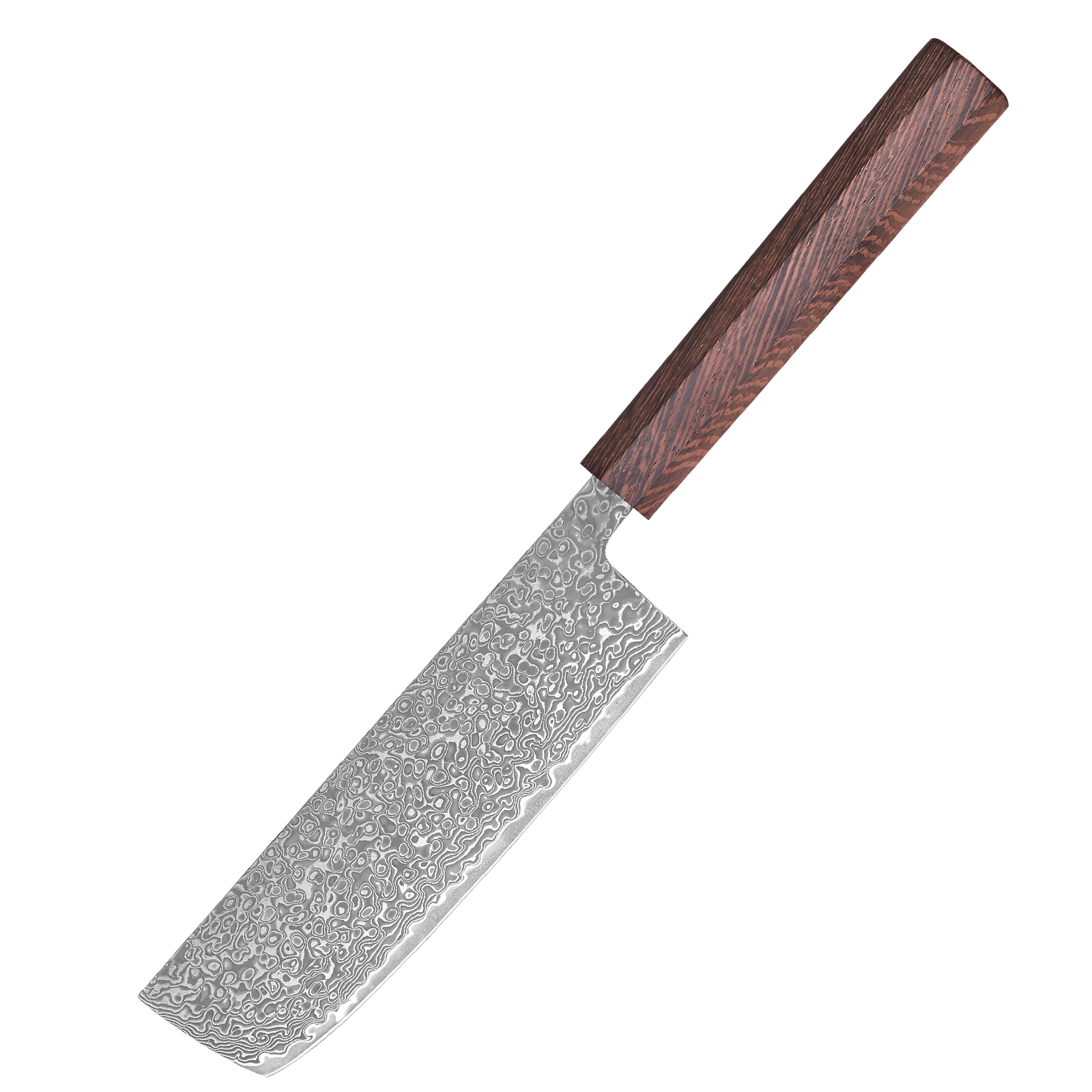
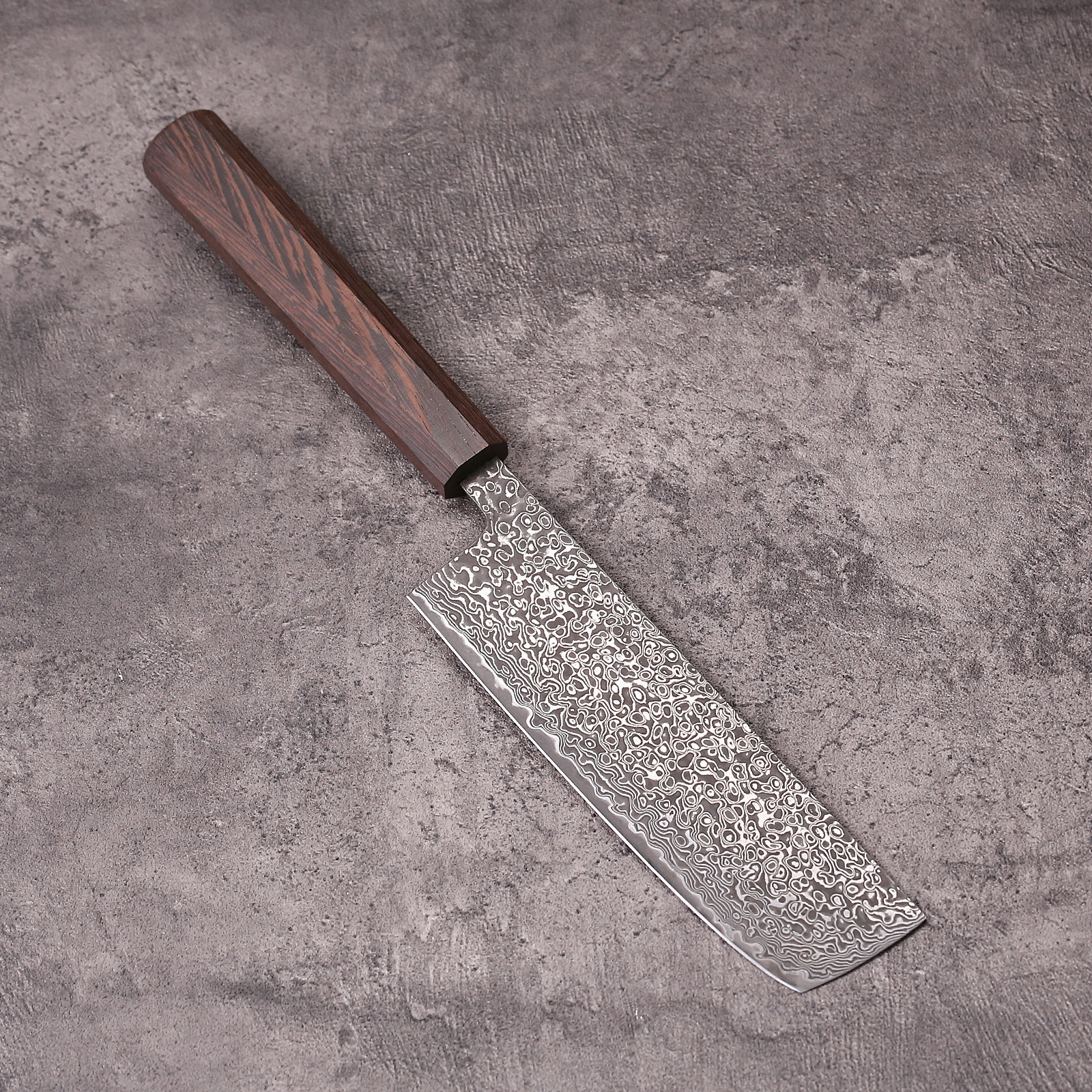
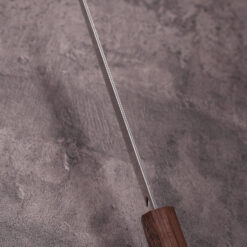
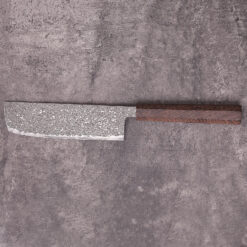
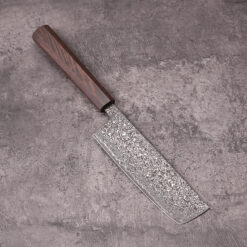
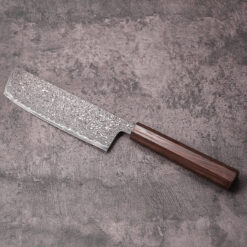

Damascus Nakiri Knife 180mm — Wenge Wood Handle
Most knives can cut vegetables. The nakiri was built for nothing else — and that single-minded focus changes everything about how it performs on the board.
菜切り. “Vegetable cutter.” The name says exactly what this knife is. No tip for piercing. No curved belly for rocking. No compromise for protein work. Just a wide, flat blade designed to travel in a straight line from heel to tip — making full contact with the cutting board on every stroke, leaving nothing uncut, requiring no pulling motion, producing no drag. When you need to break down 10kg of carrots, julienne cabbage for service, or brunoise shallots at speed, the nakiri doesn’t just work better than a chef knife — it works in a completely different way.
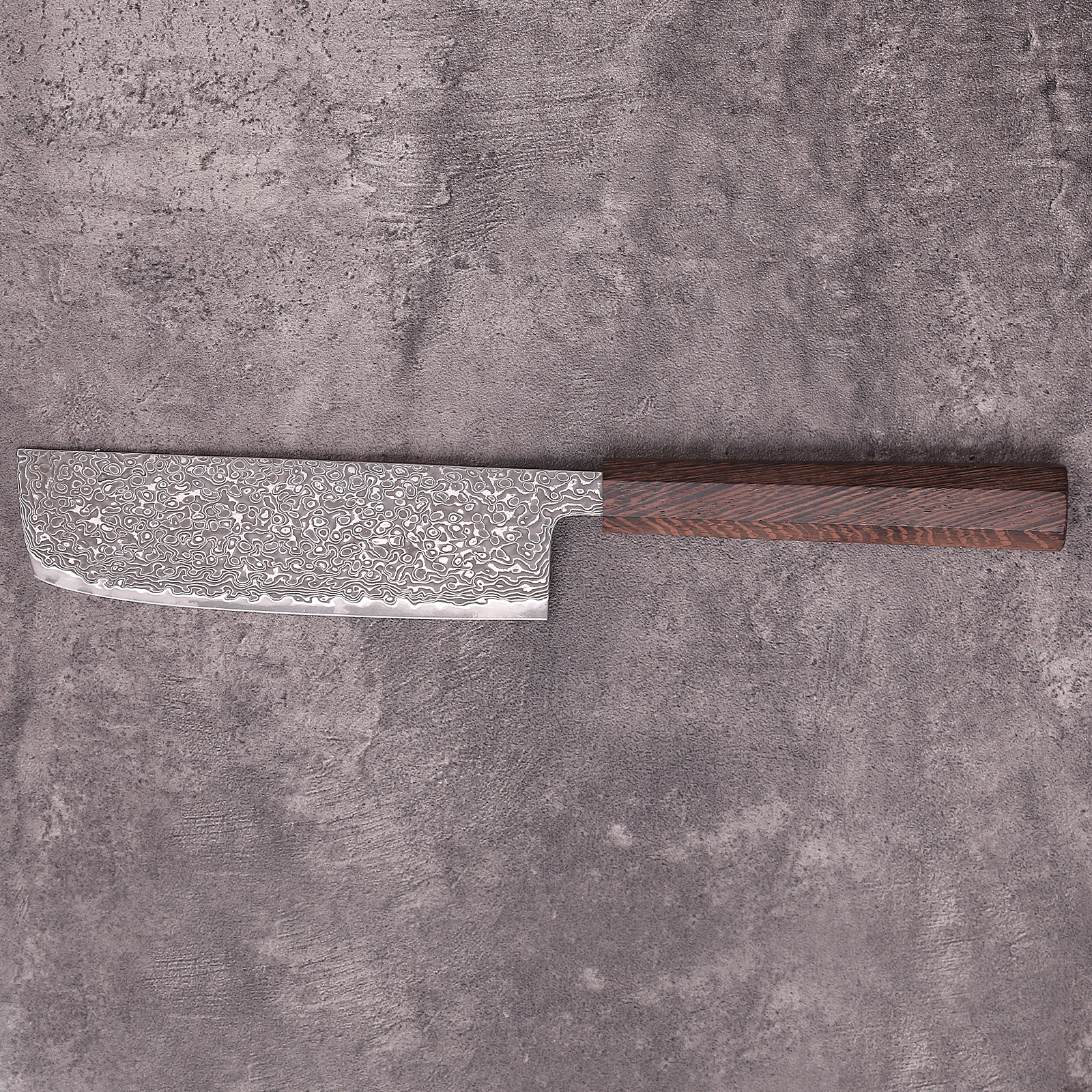
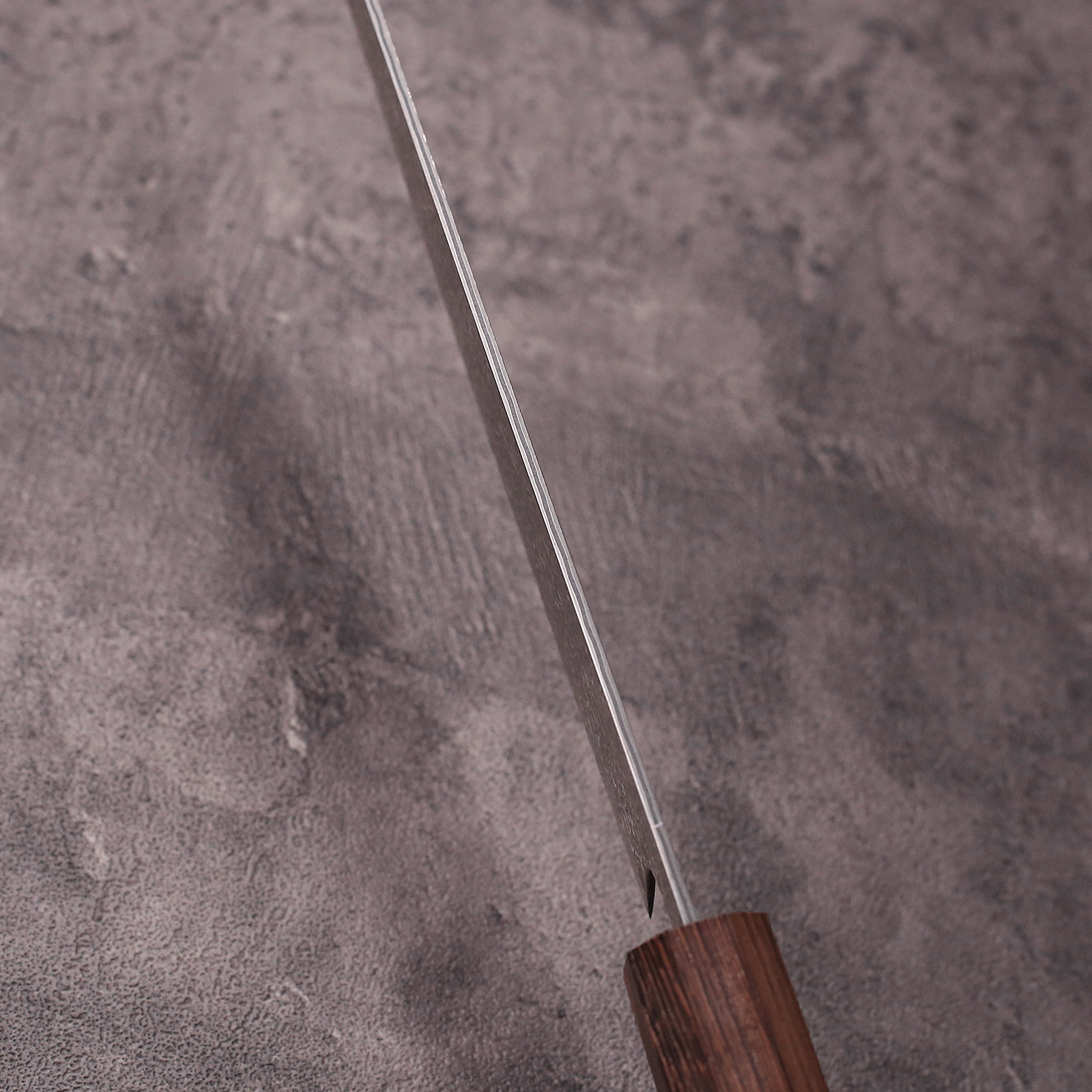
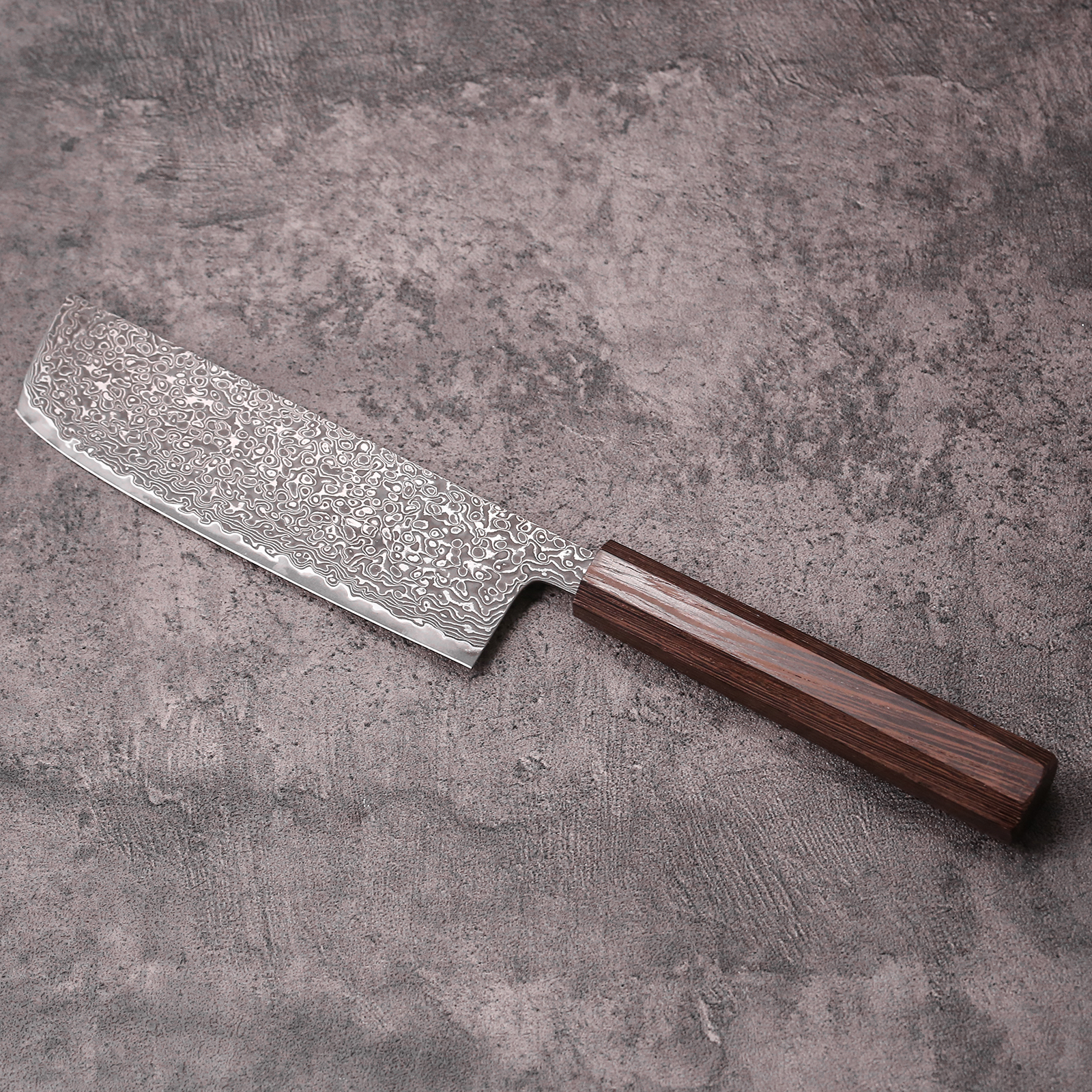
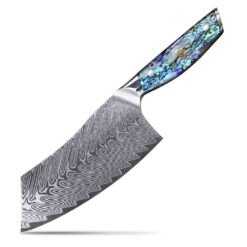
This 180mm Damascus Nakiri is forged from VG10 high-carbon stainless steel at HRC 60 — the same core steel as our gyuto, but expressed in a completely different blade geometry. The wide rectangular blade creates natural knuckle clearance as you work through large produce. The flat edge means every push-cut is clean and complete. The thin VG10 core behind the Damascus cladding means the knife glides rather than wedges — even through dense root vegetables like burdock, daikon, and celeriac that would cause a thicker blade to bind.
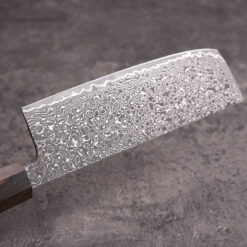
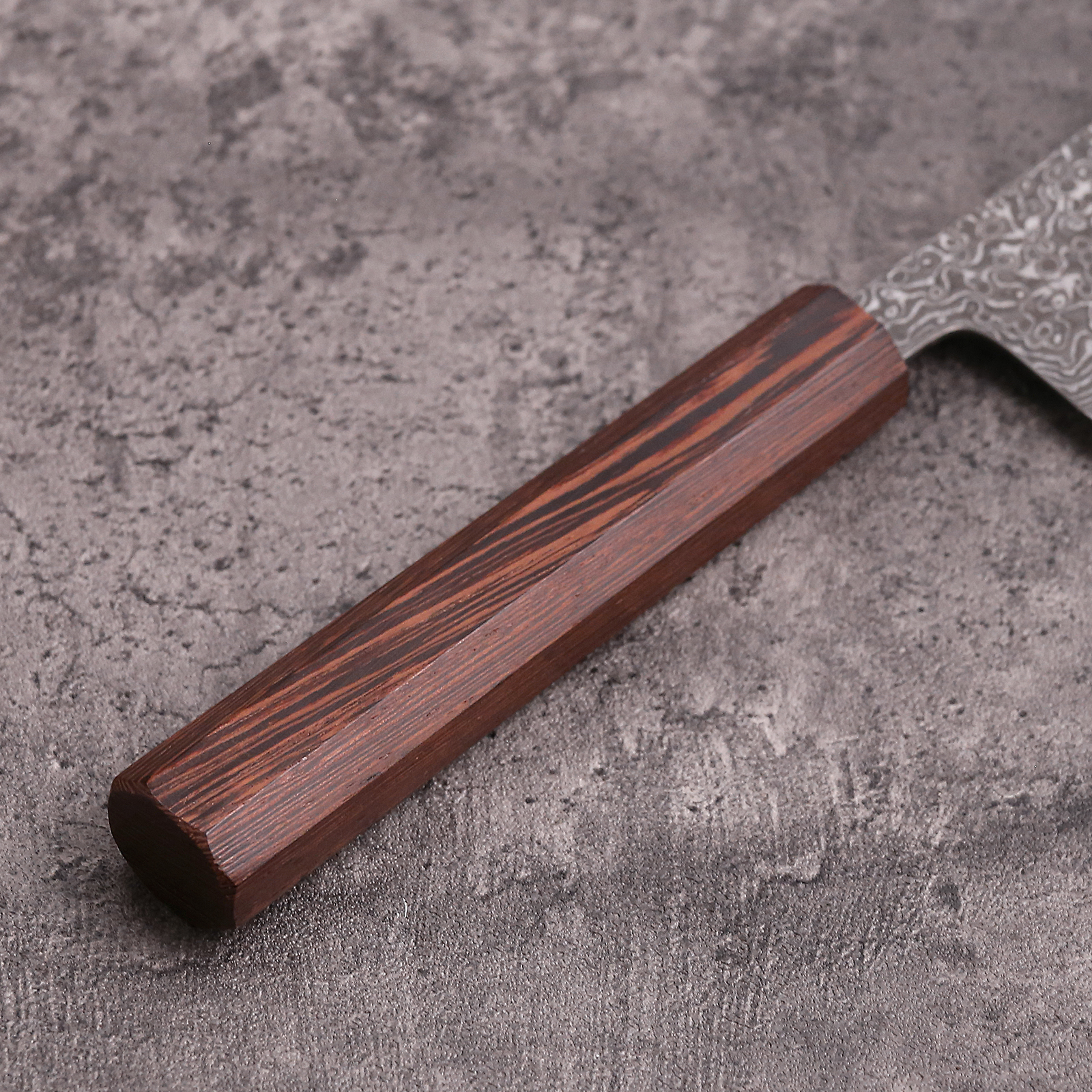
The Damascus pattern on this nakiri has a different visual character to a gyuto or bunka — the wide flat blade gives the layered steel more surface area to show, making the flowing Damascus pattern more dramatic and visible. In a retail display or product photograph, the nakiri stops people. It looks unlike any knife most buyers have seen before.
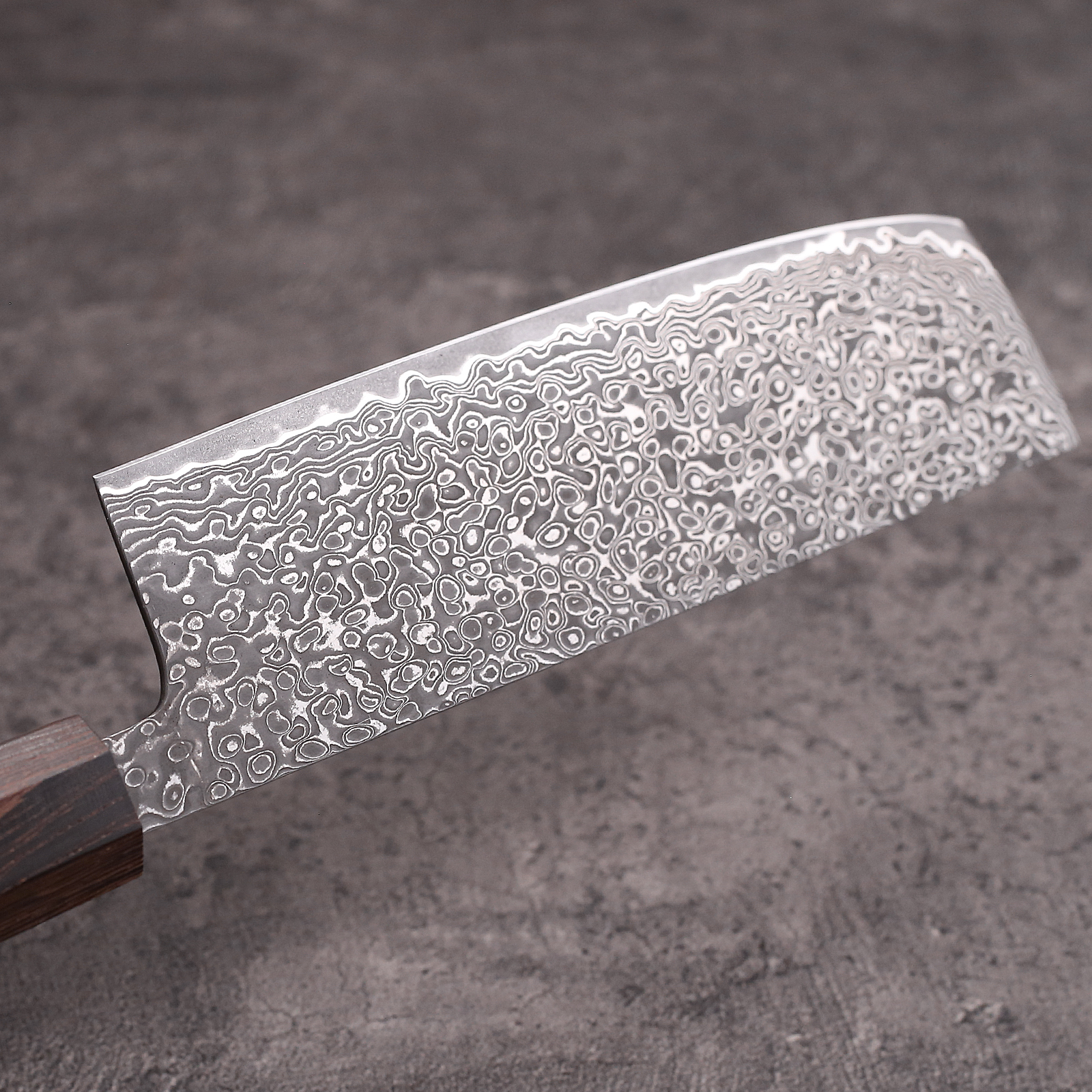
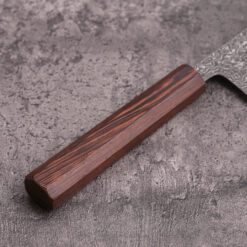
The wenge wood wa-handle completes the picture. Dark, dense, tight-grained — wenge has a natural visual weight that matches the nakiri’s broad blade. The octagonal profile sits differently in the hand than a Western handle: lighter grip pressure, more control at the fingertips, less fatigue during long prep sessions. For any kitchen doing serious vegetable work, this combination of flat blade geometry and Japanese handle design is not a preference — it is a meaningful upgrade in how the work feels.
Who orders this knife? Plant-based and vegetable-forward restaurants building a specialist prep toolkit. Ramen shops and Japanese restaurants where vegetable prep volume is high. Culinary retailers who want a Damascus knife with a genuinely different story to tell — not another gyuto in a different size. Private label brands targeting the fast-growing plant-based dining and home cooking market.
Custom branding: Laser engrave your logo or text directly on the blade — no minimum order, no setup fee. For custom branded packaging, minimum 100 pieces with a one-time $117 setup fee per box design, never charged again on reorders of the same design.
In stock. Ships from our warehouse. No production wait.
FAQ
The nakiri’s flat, squared-off blade is intentional — not a limitation. A pointed tip is useful for piercing and detail work on proteins and fish. A nakiri is designed exclusively for vegetables, where push-cuts through produce matter far more than a tip. Removing the tip keeps the blade geometry flat all the way to the end, so the entire cutting edge stays in full contact with the board. Nothing is left uncut. The flat profile is the feature, not a compromise.
The nakiri excels at any vegetable that benefits from clean, straight push-cuts: cabbage, carrots, daikon, burdock, courgette, cucumber, leeks, onions, herbs, and leafy greens. It is particularly fast for julienne, brunoise, chiffonade, and any high-volume fine-cut prep. Root vegetables like daikon and burdock — which can bind a chef knife — glide cleanly through the nakiri’s thin VG10 blade without resistance.
Technically yes, but it is not designed for it and not recommended for regular protein work. The nakiri’s flat blade geometry and thin edge are optimized for the straight push-cuts used in vegetable prep. Using it on bone or hard-skinned proteins risks chipping the edge. For protein work, the gyuto is the right tool. Many professional kitchens use both — the nakiri for vegetable stations, the gyuto for everything else.
Both have wide rectangular blades, but they serve different purposes and have very different weights. A Chinese cleaver is significantly heavier and thicker — designed for chopping through bone and dense ingredients using weight and force. A nakiri is thin and light — designed for precise vegetable cuts using a push-cut technique with minimal force. The nakiri is a finesse tool; the cleaver is a power tool. Most chefs who know both reach for the nakiri for fine vegetable work.
Information & Service
We are the largest manufacturer, exporter and wholesale distributor in Yangjiang, Guangdong. Your one stop kitchen knives source. We OEM and wholesale all kind of knives, knife parts, accessories and much more at wholesale price.Request a quote or contact us for more info. Exceptional customer service guaranteed!
| Weight | 0.4 kg |
|---|
1 review for Damascus Nakiri Knife
Add a review
Related products


Chef Knives

Vegetable Knives

Vegetable Knives

Vegetable Knives

Vegetable Knives

Vegetable Knives

Vegetable Knives

Cleaver
Anne –
Beautiful looking. Get the job done well.